
Written by Chad & Millie of Root Freedom
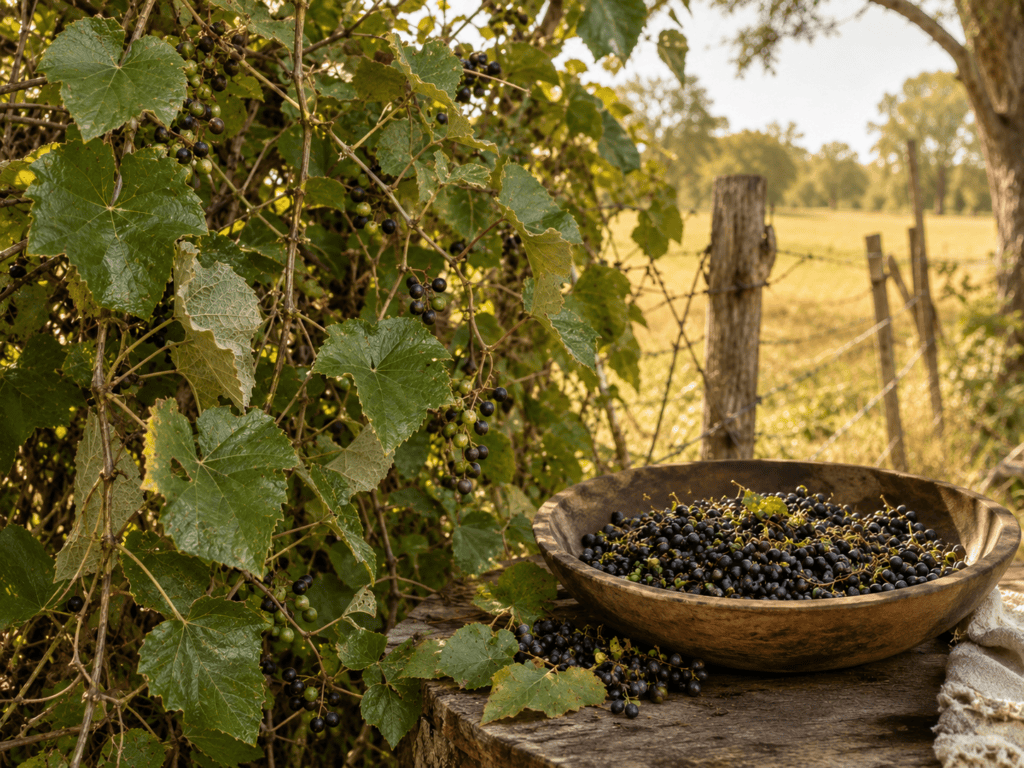
If you’ve got a vine climbing through the trees along a creek bank in Texas, there’s a good chance it’s Mustang Grape — a genuinely wild, genuinely native fruit that’s been turned into jelly, juice, and homemade wine by Texans for well over a century. The real mustang grape benefits aren’t just nutritional — this is a plant with real Texas history behind it, tangled up with everything from Civil War-era winemaking to a 19th-century naming dispute between two actual scientists.
Quick Answer
Mustang Grape (Vitis mustangensis) is a native wild grapevine found across Central, East, and South Texas, easily identified by leaves that are dark green and glossy on top but pale, white, and velvety underneath. The berries ripen in late summer, generally August into September, turning dark purple when ready. The raw fruit is very tart and can even irritate skin and mouth if handled or eaten in quantity, which is exactly why generations of Texans have turned it into jelly, juice, and wine instead of eating it fresh. Mustang grape benefits include real nutritional value — vitamin C, antioxidants, and polyphenols from the skin and seeds — once it’s properly prepared.
What You’ll Learn
- What Mustang Grape is and how to identify it with confidence
- The real history behind Texas’s oldest wild grape tradition
- Nutritional value and what modern research says about grape polyphenols
- How to safely handle and prepare the fruit
- South Texas specific foraging notes
- Important safety considerations before trying it
Understanding Mustang Grape
Mustang Grape is one of the most recognizable wild vines in Texas, and also one of the most historically significant — horticulturalist Thomas V. Munson used rootstock from Texas mustang vines to help save the world’s grape industry from a devastating disease outbreak in the late 1800s, work that still underpins much of the wine industry today. It’s a vigorous climbing vine, with stems reaching up to 50 feet long, often draping over shrubs and climbing high into trees along creek banks, fence rows, and the edges of woodlands.
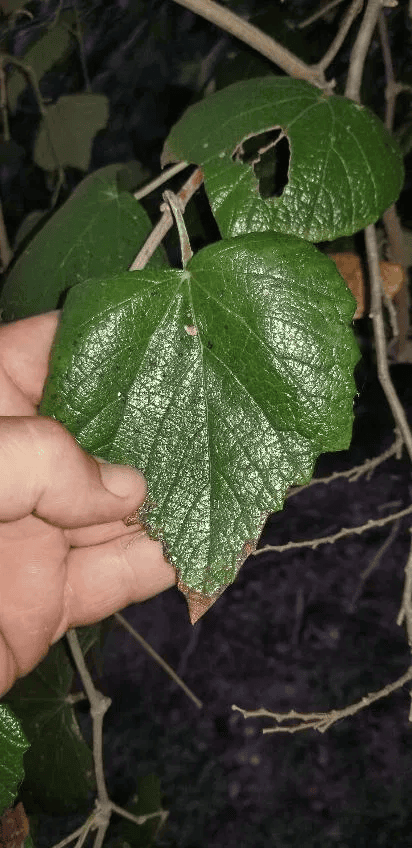
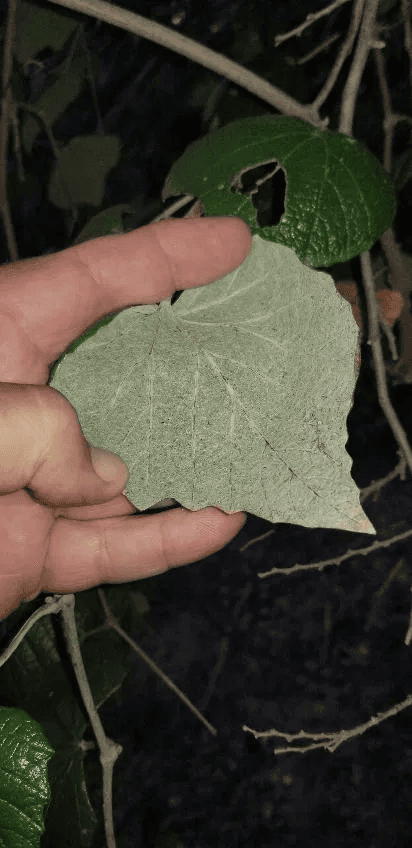
The single clearest way to identify it is the leaf. The top surface is dark green and glossy, while the underside is pale, white, and velvety — often described as looking and feeling like the fuzzy white nose of a horse, which may be exactly where the “mustang” name comes from. Interestingly, the name’s true origin was actually disputed by two real scientists in the 1800s — Texas state geologist S.B. Buckley, who officially named the species in 1861, insisted it referred to a specific creek, while botanist Asa Gray argued it referred to the wild horse. Their exchange was even interrupted by the Civil War before Buckley got the final word in 1870.
The grapes themselves are small, up to about 3/4 inch across, growing in loose clusters rather than the dense bunches of a table grape, ripening from green to a deep, dark purple in late summer.
Important Note Before We Begin
This post covers a wild native plant with a long tradition of culinary use, not a clinically studied remedy. The raw fruit is genuinely irritating if mishandled — high acidity can cause a burning sensation on skin and in the mouth, which is why virtually every traditional preparation involves cooking it down with sugar rather than eating it fresh. Always positively identify any wild plant before consuming it and consult a healthcare professional before using any plant medicinally. If you’re new to foraging or plant identification, Herbal Academy’s courses are a solid place to build that foundation safely — much like we did before writing about Texas Persimmon, another native fruit that rewards careful identification.
The Best Traditional Uses of Mustang Grape
1. Jelly, Juice, and the Real Mustang Grape Benefits of Cooking It Down
Cooking transforms this tart, irritating fruit into one of Texas’s most beloved traditional preserves.
Best for: Traditional jelly, juice, and preserves, sweetened to balance the natural acidity
What research shows: Grapes broadly are well documented as a source of flavonoids, resveratrol, and other polyphenols associated with antioxidant benefits, and Mustang Grape specifically carries notable vitamin C content in its fresh fruit, alongside antioxidant compounds concentrated in the skin and seeds. Most of these compounds are far more accessible once the fruit is cooked and the skins broken down, which happens naturally in traditional jelly-making.
How to use it: Cook the ripe fruit down with sugar and, if making jelly, pectin — old family recipes typically use a generous amount of sugar specifically to offset the grape’s high natural acidity.
Where to get it: Foraged locally from an identified vine, typically August into September.
2. Mustang Wine — A Texas Tradition Older Than the State’s Modern Wine Industry
Long before Texas had a commercial wine industry, settlers were already fermenting this native grape.
Best for: Traditional home winemaking
What research shows: Mustang wine has real documented history — Scottish immigrant and planter Thomas Affleck was making and commercially selling mustang wine on his Texas plantation before the Civil War, describing it as a tonic for those recovering from illness. The tradition continued well into the 20th century as a genuinely Texan homemade wine style.
How to use it: Traditional preparation ferments the cooked-down, sweetened fruit with yeast in a cool, dark place — a process most home foragers would want to research thoroughly before attempting, given the food safety considerations of home fermentation.
Where to get it: Foraged from an identified vine; homemade wine preparation is a project best approached with a dedicated fermentation guide in hand.
3. Traditional Dye — An Overlooked Use
Beyond the kitchen, this native grape had a practical role in traditional textile work too.
Best for: Historical/traditional textile dyeing
What research shows: The fruit and leaves of Mustang Grape were traditionally used to dye wool purple or violet, a practice documented among Native American communities and early Texas settlers alike.
How to use it: This is a historical practice rather than a modern how-to, worth knowing as part of the plant’s fuller story rather than something most foragers will try today.
Where to get it: Same identified vine as the fruit — leaves and fruit both contribute pigment.
South Texas Foraging Notes
| Consideration | Detail |
|---|---|
| Identification | Leaves dark green and glossy on top, pale white and velvety underneath — the clearest identifying feature |
| Look-alike caution | Distinguish from Muscadine, which has thicker, firmer, individually-hanging berries rather than loose clusters, and lacks the fuzzy leaf underside |
| Harvest window | Late summer, generally August into September |
| Handling caution | Wear gloves if handling large quantities — the acidity can irritate skin |
| Habitat | Woodland edges, thickets, creek and river banks, fence rows |
When to See a Doctor
Seek medical attention for any allergic reaction, skin irritation that doesn’t resolve, or digestive symptoms after handling or eating wild mustang grape. This is not a fruit to eat raw in any quantity given its acidity, and folk or traditional preparations are not a substitute for medical care. Young children, pregnant or nursing individuals, and anyone managing a chronic health condition should check with a doctor before trying wild foods or traditional remedies.
Key Takeaways
- The real mustang grape benefits come from a genuinely native Texas vine with a documented history stretching back before the Civil War
- The clearest identifying feature is the leaf — glossy dark green on top, pale white and velvety underneath
- Raw fruit is too acidic and irritating to eat fresh — virtually every traditional use involves cooking it down with sugar
- Mustang wine, jelly, and juice are all long-standing Texas traditions, not modern inventions
- Grapes broadly carry real antioxidant and polyphenol content, and Mustang Grape’s vitamin C content is notable
- This vine even played a role in saving the global wine industry, when its rootstock was used to combat a devastating vine disease in the 1800s
- Positive identification matters — confirm the fuzzy white leaf underside before harvesting
At a Glance
| Trait | Detail |
|---|---|
| Scientific name | Vitis mustangensis |
| Native range | Central, East, and South Texas; also AL, AR, LA, OK |
| Harvest season | Late summer, generally August into September |
| Edible parts | Fruit (cooked/sweetened), leaves and tendrils (cooked) |
| Traditional uses | Jelly, juice, wine, traditional wool dye |
| Caution | Raw fruit is highly acidic and can irritate skin/mouth |
Frequently Asked Questions
Can you eat mustang grapes raw?
Technically yes, but it’s not recommended — the raw fruit is very tart and acidic, and can cause a burning sensation in the mouth. Nearly every traditional use cooks the fruit down with sugar instead.
What are the main mustang grape benefits?
The main benefits are traditional and nutritional — real vitamin C and antioxidant content in the fruit, plus a genuine Texas culinary heritage in jelly, juice, and wine, once the fruit is properly prepared.
How do you tell Mustang Grape apart from other wild grapes?
The leaf underside is the clearest tell — Mustang Grape has a distinctly pale, white, velvety underside, unlike Muscadine and most other wild Texas grapes.
When do mustang grapes ripen?
Generally in late summer, August into September, depending on local conditions.
Is mustang grape safe for everyone?
As with any wild food, positive identification matters most. Because the raw fruit can irritate skin and mouth, it’s worth handling with care and cooking it down before consuming, rather than eating it fresh off the vine.
Related Posts You’ll Love
- Texas Persimmon Benefits — Native Fruit of South Texas — another native Texas fruit with real traditional history
- Wild Mulberry Benefits — Native Red Mulberry Guide — more creek-bank native foraging
- Prickly Pear Cactus Benefits — The South Texas Superfood — a fellow native Texas superfood
- Cenizo Benefits — The South Texas Rain Predictor — a native plant with real local legend behind it
- How to Make Corn Silk Tea — Benefits and Easy Recipe — more DIY prep from things growing right at home
Not sure which herbs are right for your specific situation? Take our free Natural Wellness Assessment and get a personalized herbal remedy report delivered straight to your inbox.
Get Your Free Natural Home Remedies Quick Reference Card
12 common ailments, the herb that helps, and exactly how to use it — free instant download.
This post contains affiliate links. Root Freedom may earn a commission when you purchase through our links at no extra cost to you. This content is for informational purposes only and is not intended as medical advice. Always consult a healthcare professional before beginning any new herbal regimen