
Written by Chad & Millie of Root Freedom
Prickly pear cactus (Opuntia engelmannii) is one of the most recognizable plants in South Texas — and one of the most nutritionally and medicinally underappreciated. We have it growing wild across both of our properties, and what most people see as a thorny nuisance is actually one of nature’s most impressive superfoods. From blood sugar regulation to anti-inflammatory support to gut health, prickly pear cactus benefits are backed by both centuries of traditional use and a growing body of modern research.
Quick Answer
Prickly pear cactus provides exceptional antioxidant protection through its betalain pigments, meaningful blood sugar regulation through fiber and pectin, anti-inflammatory support through flavonoids, and digestive health benefits through prebiotic fiber. Both the pads (nopales) and the fruit (tunas) are edible and medicinal — and if you live in South Texas you likely have this superfood growing wild on your property right now.
What You’ll Learn
- The science-backed health benefits of prickly pear cactus pads and fruit
- How to identify, harvest, and prepare prickly pear safely
- Which part of the plant provides which specific benefits
- How to incorporate prickly pear into your daily wellness routine
- The traditional South Texas and Mexican herbal uses of this remarkable plant
Understanding Prickly Pear Cactus
Opuntia engelmannii — Engelmann’s prickly pear — is the most common prickly pear species in South Texas and one of the most widespread cacti in North America. It thrives in the rocky, alkaline soils of the Edwards Plateau and South Texas brush country, requiring virtually no water and producing abundantly year after year without any cultivation.
The two edible parts:
The pads (nopales or nopalitos) — the flat green paddle-shaped segments — are harvested young and tender, typically in spring through early summer. They have a mild, slightly tart flavor and a mucilaginous texture that contributes significantly to their digestive and blood sugar benefits.
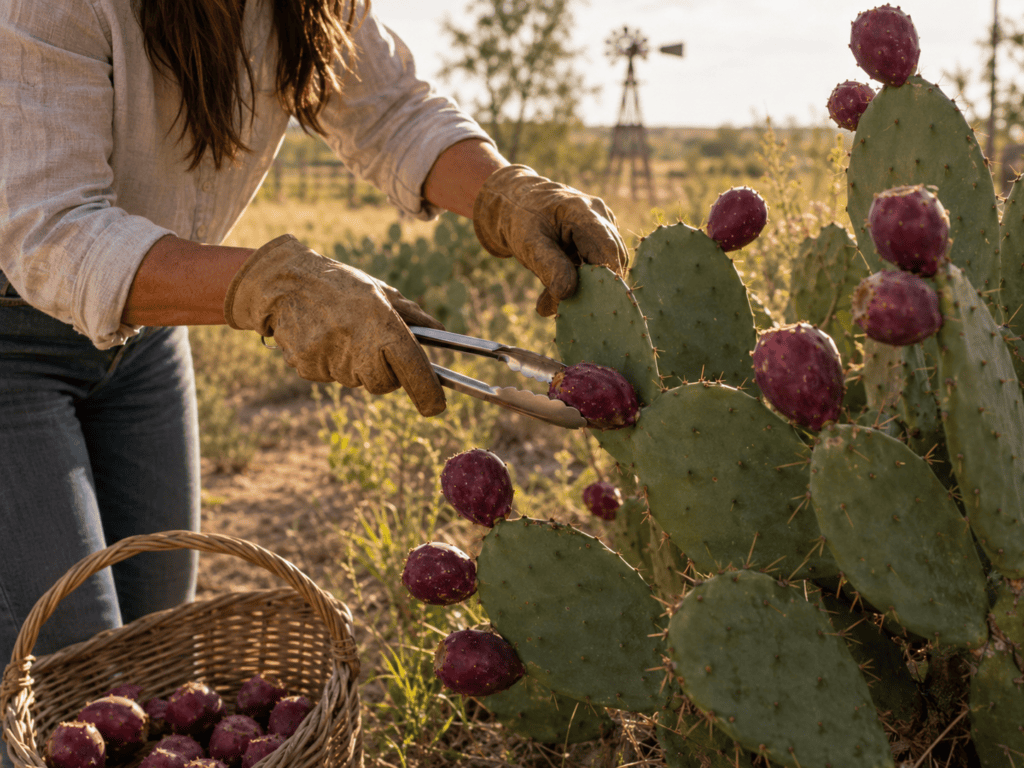
The fruit (tunas) — the colorful oval fruits that appear on the edges of the pads — ripen from green to red, purple, or yellow depending on the variety from late summer through fall. They are sweet with a watermelon-like flavor and contain the highest concentration of betalain antioxidants.
On our South Texas properties:
Prickly pear grows wild across our land — we didn’t plant it, it simply thrives in this environment the way it has for thousands of years. The same plants that sustain deer, javelina, and coyotes through the driest summers are the ones we’re now learning to use for our own wellness.
Important Note Before We Begin
Always wear thick leather gloves and use tongs when handling prickly pear — both the large visible spines and the nearly invisible glochids (fine hair-like spines) can embed in skin and cause significant irritation. Glochids are particularly deceptive because they are almost invisible but extremely irritating. Remove glochids by burning them off with a gas flame, scrubbing under running water with a stiff brush, or using duct tape. Never handle prickly pear with bare hands.
The Best Prickly Pear Cactus Benefits
1. Exceptional Antioxidant Protection — Betalains
Prickly pear fruit contains betalains — a class of antioxidant pigments found in very few plants worldwide. The same compounds that give the fruit its vivid red and purple color provide antioxidant protection that research shows surpasses many commonly consumed fruits.
Best for: Cellular antioxidant protection, reducing oxidative stress, anti-aging support, immune system support, anyone with high inflammatory burden
What research shows: Betalains in prickly pear have demonstrated antioxidant activity significantly higher than vitamin C in laboratory studies. Research shows betalains protect cells from oxidative damage, reduce markers of inflammation, and may have protective effects against oxidative stress-related conditions. Prickly pear fruit ranked among the highest antioxidant foods in multiple comparative analyses.
How to use it: Eat fresh prickly pear fruit (tunas) when ripe — the deeper the color the higher the betalain content. Make prickly pear juice by blending peeled fruit and straining through cheesecloth. Add fresh or frozen prickly pear to smoothies. Dried prickly pear fruit powder can be added to water, yogurt, or smoothies year-round.
Where to get it: Harvest from your own property if you have prickly pear growing — peak harvest is late summer through fall when fruit is deep red or purple. Prickly pear powder and supplements on Amazon for year-round access.
2. Blood Sugar Regulation — Fiber and Pectin
Prickly pear cactus pads (nopales) have one of the strongest evidence bases of any food for blood sugar regulation. Their high soluble fiber and pectin content slows glucose absorption, while their unique mucilage compounds appear to directly affect insulin sensitivity.
Best for: Blood sugar balance, post-meal glucose spikes, insulin sensitivity support, type 2 diabetes management alongside medical care, metabolic syndrome support
What research shows: Multiple clinical trials confirm prickly pear cactus significantly reduces post-meal blood glucose levels. A landmark study found nopal consumption reduced blood glucose by up to 46% in type 2 diabetic patients. The mechanism involves the viscous fiber and pectin forming a gel in the digestive tract that slows glucose absorption — similar to the mechanism of pharmaceutical acarbose but through a food-based approach.
How to use it: Eat fresh nopales — clean young pads, remove spines and glochids, dice or slice, and cook by grilling, sautéing, or boiling. Traditionally served scrambled with eggs (nopales con huevos) — a staple South Texas breakfast with genuine blood sugar benefits. Drink nopal juice — blend fresh cleaned pads with water and strain. Most effective when consumed before or with carbohydrate-containing meals.
Important: If you take diabetes medications consult your healthcare provider before adding prickly pear regularly — the blood sugar effects are clinically significant and may require medication adjustment.
Where to get it: Fresh nopales from Mexican grocery stores or Latin markets. Harvest young tender pads from your own prickly pear plants in spring. Nopal powder on Amazon.
3. Anti-Inflammatory Properties — Flavonoids and Betalains
Prickly pear contains a combination of flavonoids, betalains, and polyphenols that work together to reduce systemic inflammation through multiple pathways — making it valuable for anyone dealing with chronic inflammatory conditions.
Best for: Chronic inflammation, inflammatory joint conditions, inflammatory digestive conditions, general anti-inflammatory dietary support
What research shows: Research confirms prickly pear extract reduces multiple inflammatory markers including C-reactive protein (CRP) and interleukin-6 (IL-6). Studies show anti-inflammatory effects comparable to aspirin in some laboratory models. The combination of betalains, flavonoids, and polyphenols provides multi-pathway anti-inflammatory coverage.
How to use it: Regular consumption of both pads and fruit provides ongoing anti-inflammatory support. Fresh nopales 3-4 times per week provides meaningful flavonoid and polyphenol intake. Prickly pear fruit juice daily provides betalain-based anti-inflammatory support. Prickly pear extract capsules provide a concentrated consistent dose.
Where to get it: Fresh from your property or Latin markets. Prickly pear extract capsules on Amazon.
4. Digestive Health — Prebiotic Fiber and Mucilage
The mucilaginous nature of prickly pear pads — the slightly slimy texture when cooked — is one of their most medicinally valuable properties. This mucilage soothes and coats the digestive tract while the prebiotic fiber feeds beneficial gut bacteria.
Best for: Digestive inflammation, leaky gut support, constipation, gut microbiome support, IBS with constipation predominance, acid reflux
What research shows: Prickly pear mucilage has demonstrated protective effects on the gastric lining in research — similar to the mechanism of slippery elm. The prebiotic fiber significantly increases populations of beneficial Lactobacillus and Bifidobacterium bacteria in the gut microbiome. Traditional Mexican herbal medicine has used prickly pear for digestive complaints for centuries.
How to use it: Fresh cooked nopales eaten regularly provide the most complete digestive benefit — the mucilage is most potent in fresh preparation. Nopal juice provides liquid-form mucilage and fiber. Dried nopal powder stirred into water or smoothies provides convenient ongoing digestive support.
Where to get it: Fresh nopales from your property or Latin markets. Nopal powder on Amazon.
5. Hangover Relief — Unique Research-Backed Application
Prickly pear has one of the more surprising research-backed applications — meaningful reduction of hangover symptoms. This is one of the few natural hangover remedies supported by a proper randomized controlled trial.
Best for: Hangover prevention and symptom reduction, liver support, nausea and inflammation from alcohol consumption
What research shows: A Tulane University randomized controlled trial found that prickly pear extract taken before alcohol consumption significantly reduced hangover severity — specifically nausea, dry mouth, and loss of appetite — by reducing the inflammatory response that drives hangover symptoms. The mechanism is the anti-inflammatory and liver-protective compounds in the fruit.
How to use it: Take prickly pear extract capsules before alcohol consumption — as used in the research study. Fresh prickly pear juice consumed before or after drinking provides similar compounds in food form. This is not a license to drink excessively — it reduces symptom severity, not the effects of alcohol itself.
Where to get it: Prickly pear extract capsules on Amazon.
6. Cholesterol Support — Fiber and Phytosterols
Prickly pear’s soluble fiber and phytosterol content may help maintain healthy cholesterol levels through the same mechanism as other high-fiber foods — binding to bile acids in the digestive tract and reducing LDL cholesterol absorption.
Best for: Healthy cholesterol maintenance, cardiovascular wellness support, metabolic health alongside blood sugar benefits
What research shows: Studies show regular nopal consumption reduces total cholesterol and LDL cholesterol while maintaining or slightly improving HDL cholesterol. The soluble fiber mechanism is well established for cholesterol management across multiple food sources including prickly pear.
How to use it: Regular nopal consumption 3-4 times weekly provides ongoing cholesterol support through its soluble fiber content. Most effective as part of an overall heart-healthy diet rather than as a standalone intervention.
Where to get it: Fresh nopales from your property or Latin markets year round.
7. Immune Support — Vitamin C and Antioxidants
Prickly pear fruit is an excellent source of vitamin C — with some varieties providing more vitamin C per serving than oranges. Combined with its betalain antioxidants this makes it a strong immune-supporting food particularly relevant during cold and flu season.
Best for: Immune system support, seasonal illness prevention, vitamin C replenishment, antioxidant-based immune protection
How to use it: Eat fresh ripe prickly pear fruit during peak season (late summer through fall) for maximum vitamin C content. Make prickly pear agua fresca — blend peeled fruit with water and a squeeze of lime. Freeze prickly pear pulp during peak season for year-round immune support.
Where to get it: Harvest from your own property during peak season — the deeper red and purple varieties have the highest vitamin C and betalain content. Fresh tunas available at Latin markets seasonally.
How to Harvest Prickly Pear Safely
Harvesting the Pads (Nopales)
When to harvest: Spring through early summer when new pads are young and tender — about the size of your hand. Older pads are tougher and more fibrous.
How to harvest: Wear thick leather gloves. Use tongs to grip the pad and a sharp knife to cut it away from the parent pad at the joint. Place in a paper bag or bucket — never a plastic bag which traps moisture.
How to prepare: Hold the pad with tongs over a gas flame to burn off glochids — you’ll see them singe. Alternatively scrub vigorously under cold running water with a stiff brush. Trim the edges and any remaining spine bases with a sharp knife. Dice or slice and cook — boil, grill, or sauté.
Harvesting the Fruit (Tunas)
When to harvest: Late summer through fall when fruit has turned deep red, purple, or yellow depending on variety. Fruit should come off with gentle twisting pressure.
How to harvest: Use tongs to grip the fruit and twist gently. Place directly into a bucket. Never touch with bare hands — the glochids on fruit are particularly fine and irritating.
How to prepare: Hold fruit with tongs and burn off glochids over a gas flame or scrub under running water. Cut off both ends, score the skin lengthwise, and peel away. The interior is soft, sweet, and seed-filled — eat fresh or blend and strain for juice.
Your Prickly Pear Wellness Protocol
Daily Integration
| Use | Preparation | Benefit |
|---|---|---|
| Morning | Nopal juice or nopal powder in water | Blood sugar and digestive support |
| With meals | Fresh cooked nopales 3-4x weekly | Blood sugar, fiber, anti-inflammatory |
| Seasonal | Fresh prickly pear fruit daily when ripe | Betalain antioxidants, vitamin C |
| Year round | Prickly pear powder in smoothies | Ongoing antioxidant support |
| Supplement | Prickly pear extract capsules | Concentrated consistent dosing |
Traditional South Texas Uses
Prickly pear has been used by indigenous peoples and Mexican communities across South Texas for centuries — long before modern research confirmed its benefits. Traditional applications include:
- Nopales as a staple food and blood sugar remedy for diabetics
- Prickly pear fruit juice for kidney and urinary support
- Pad mucilage applied topically to burns and skin inflammation
- Roasted pad applied as a poultice for wounds and infections
- Prickly pear syrup for coughs and sore throats
The Herbal Academy offers excellent coursework on traditional North American and Mesoamerican plant medicine that covers the indigenous uses of plants like prickly pear in their proper cultural and historical context.
When to See a Doctor
Prickly pear is a food-based wellness addition with an excellent safety profile for most healthy adults. However if you take diabetes medications the blood sugar effects of regular nopal consumption are clinically significant and may require medication adjustment — always inform your healthcare provider. Consult your healthcare provider before using prickly pear therapeutically if you have kidney disease, take blood thinners, or are pregnant.
Key Takeaways
- Prickly pear betalain antioxidants provide exceptional cellular protection — the deep red and purple fruit has the highest concentration
- Nopal pads have clinical research support for reducing post-meal blood glucose by up to 46% — one of the strongest food-based blood sugar interventions available
- The mucilaginous texture of cooked nopales is a sign of their prebiotic and gut-soothing compounds — don’t cook it away
- A Tulane University randomized controlled trial confirms prickly pear extract reduces hangover severity — one of the few natural hangover remedies with clinical research support
- Both pads and fruit are edible and medicinal — each provides somewhat different primary benefits
- If you live in South Texas you likely have this superfood growing wild on your property right now
- Always wear leather gloves and use tongs — glochids are nearly invisible but extremely irritating
At a Glance
| Benefit | Part of Plant | Key Compounds |
|---|---|---|
| Antioxidant protection | Fruit (tunas) | Betalains, polyphenols |
| Blood sugar regulation | Pads (nopales) | Soluble fiber, pectin, mucilage |
| Anti-inflammatory | Both | Flavonoids, betalains |
| Digestive health | Pads (nopales) | Mucilage, prebiotic fiber |
| Hangover relief | Fruit extract | Anti-inflammatory compounds |
| Cholesterol support | Pads (nopales) | Soluble fiber, phytosterols |
| Immune support | Fruit (tunas) | Vitamin C, betalains |
Frequently Asked Questions
Is prickly pear cactus safe to eat?
Yes — both the pads (nopales) and fruit (tunas) have been eaten safely across Mexico and the American Southwest for thousands of years. The key safety consideration is proper handling to remove spines and glochids before eating. Always wear leather gloves and use tongs when harvesting and handling.
What does prickly pear taste like?
The pads (nopales) have a mild, slightly tart, and slightly mucilaginous flavor similar to green beans or okra. The fruit (tunas) is sweet with a watermelon or bubble gum-like flavor depending on variety. Both are versatile in cooking and pair well with lime, chili, and traditional South Texas flavors.
Can prickly pear lower blood sugar too much?
In healthy adults without diabetes the blood sugar effects of prickly pear are generally modest and safe. In people taking diabetes medications the effects can be additive and clinically significant — potentially causing hypoglycemia if medications aren’t adjusted. Always consult your healthcare provider if you take blood sugar medications.
When is the best time to harvest prickly pear in South Texas?
Nopales (pads) are best harvested in spring when new growth is young and tender. Tunas (fruit) ripen late summer through fall — in South Texas typically August through October. The fruit is ready when it has fully colored to deep red, purple, or yellow and comes off with gentle pressure.
How do I get rid of glochids if they get in my skin?
Glochids are notoriously difficult to remove because they are nearly invisible. The most effective method is applying and removing duct tape or a commercial hair removal wax repeatedly over the affected area. Tweezers under magnification help with visible glochids. Avoid rubbing the area which embeds them deeper. White glue applied and allowed to dry then peeled off also works for fine glochids.
Is prickly pear the same as the nopal in Mexican restaurants?
Yes — nopales are the prepared pads of the prickly pear cactus. The nopal salad, nopales con huevos, and nopal juice common in Mexican and South Texas cuisine all come from prickly pear cactus pads. If you’ve eaten at a traditional Mexican restaurant in San Antonio or the South Texas area you’ve likely already eaten prickly pear.
Related Posts You’ll Love
- Chilli Pequin Benefits — The Wild Texas Pepper — another South Texas native with powerful medicinal properties growing wild on our farm
- How to Harvest and Preserve Wild Chilli Pequin — harvesting and preserving wild plants from our South Texas property
- Natural Remedies for Blood Sugar Balance — comprehensive herbs and strategies for blood sugar regulation that complement prickly pear
- Best Herbs for Gut Health and Microbiome Support — digestive health herbs that work alongside nopal’s prebiotic fiber
- Best Herbs for Detox and Cleansing — liver and detox support herbs that complement prickly pear’s antioxidant protection
Not sure which herbs are right for your specific situation? Take our free Natural Wellness Assessment and get a personalized herbal remedy report delivered straight to your inbox.
Get Your Free Natural Home Remedies Quick Reference Card
12 common ailments, the herb that helps, and exactly how to use it — free instant download.
This post contains affiliate links. Root Freedom may earn a commission when you purchase through our links at no extra cost to you. This content is for informational purposes only and is not intended as medical advice. Always consult a healthcare professional before beginning any new herbal regimen.