
Written by Chad & Millie of Root Freedom
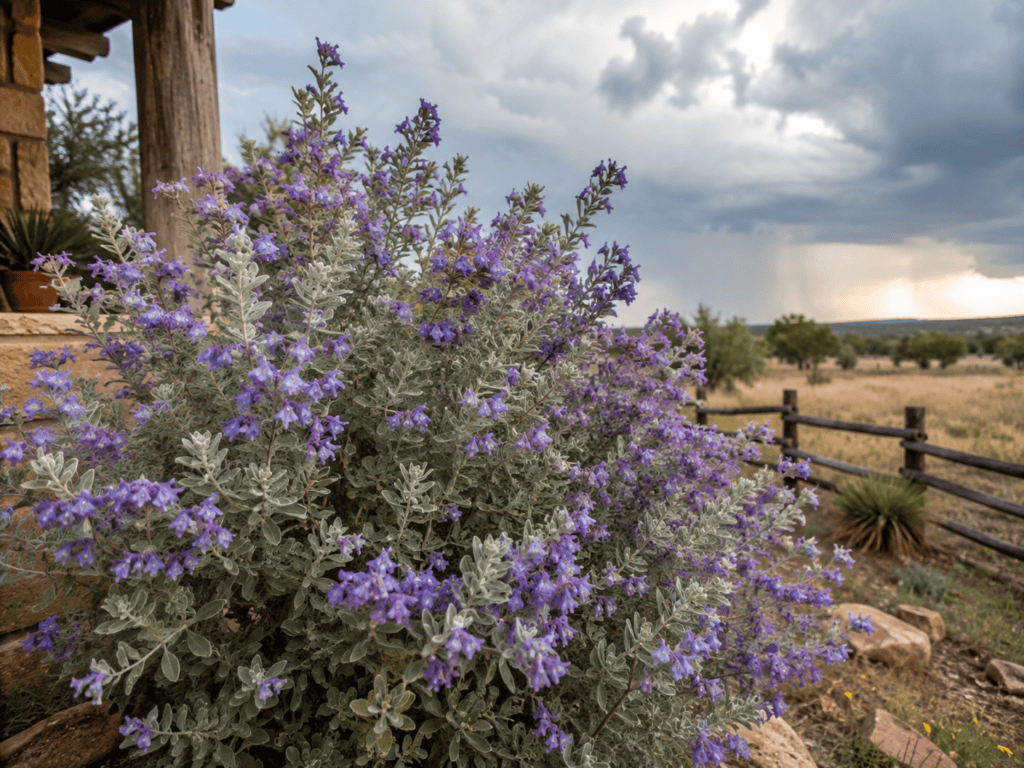
We’ve always called them Saneeza bushes. Every South Texas rancher and country family knows what it means when the Saneeza goes into full purple bloom — rain is coming. Sure enough, our Cenizo bushes bloomed brilliantly just days ago and the rain followed right on schedule. That’s the magic of Leucophyllum frutescens — a plant so deeply woven into South Texas life that most people never stop to wonder what else it might be good for. In this post we are going to explore the cenizo benefits nature has provided us.
Quick Answer
Cenizo — also called Texas Purple Sage, Barometer Bush, and Saneeza in local South Texas tradition — has a long history of medicinal use in Mexican and indigenous herbal medicine for fever reduction, respiratory support, and antimicrobial applications. Its stunning purple blooms appear in response to humidity changes before rain — earning it the name Barometer Bush — and the entire plant contains compounds with documented anti-inflammatory and antimicrobial properties.
What You’ll Learn
- Why Cenizo blooms before rain and the science behind this remarkable phenomenon
- The traditional medicinal uses of Cenizo in South Texas and Mexican herbal medicine
- How to identify Cenizo on your property and harvest it responsibly
- How to prepare Cenizo tea and other simple preparations
- Why this underappreciated native plant deserves a place in your natural wellness cabinet
Understanding Cenizo — The South Texas Barometer Bush
Leucophyllum frutescens is one of the most recognizable native plants of the South Texas brush country and Chihuahuan Desert. Known by many names — Cenizo (Spanish for ash-colored, referring to its silvery grey leaves), Texas Purple Sage, Barometer Bush, Texas Ranger, and locally as Saneeza — this evergreen shrub is as much a part of South Texas identity as mesquite and prickly pear.
The rain prediction phenomenon:
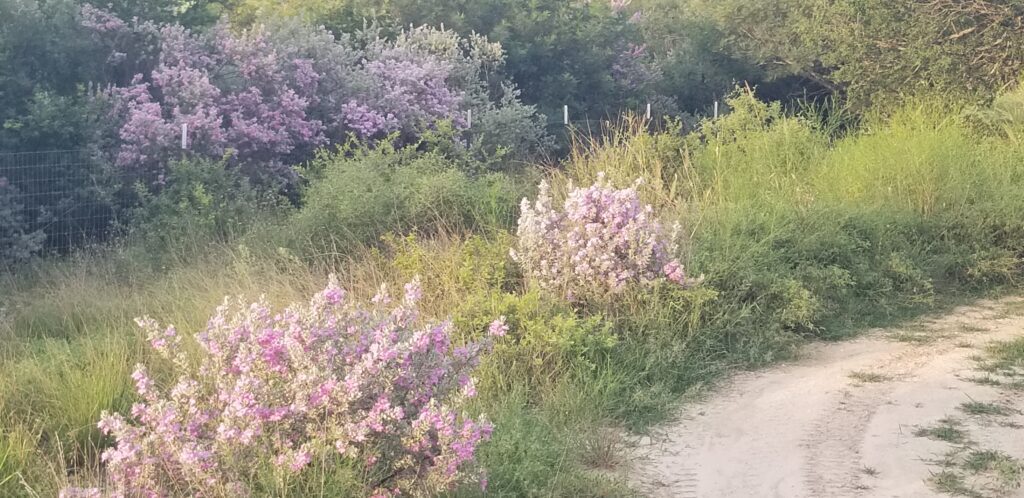
Cenizo blooms in direct response to humidity changes in the air — specifically the increase in atmospheric moisture that precedes rainfall. The plant’s cells detect the humidity shift and trigger blooming almost immediately. In South Texas this is so reliable that generations of ranchers, farmers, and country families have used Cenizo bloom as a rain predictor — often more accurate than any weather forecast.
On our South Texas properties we’ve watched this happen our entire lives. We call them Saneeza bushes and when they burst into purple bloom we know to expect rain within a day or two. A few days ago our Saneeza bushes went into spectacular full bloom — and the rain came right on schedule that night.
Distribution and habitat:
Cenizo grows wild across South Texas, the Trans-Pecos, and into northern Mexico — thriving in exactly the rocky, alkaline, drought-prone conditions that define our region. It requires virtually no care once established, tolerates extreme heat and drought, and rewards patience with one of the most beautiful blooming displays of any native plant when conditions are right.
Important Note
While Cenizo has a long traditional medicinal use history the research base is still developing. Use the traditional preparations described here as supportive wellness herbs — not as replacements for medical care. Consult your healthcare provider for any serious health concern.
Cenizo Benefits — Traditional and Emerging Uses
1. Fever Reduction — The Primary Traditional Use
Cenizo’s most documented traditional use across Mexican and indigenous South Texas herbal traditions is as a febrifuge — an herb that helps reduce fever. Tea made from the leaves was used by generations of South Texas and northern Mexican families as a home remedy for fever, particularly in children.
Best for: Mild fever support, general immune support during illness, traditional fever management alongside proper medical care
What research shows: Cenizo contains flavonoids and terpenoids with documented anti-inflammatory properties. Laboratory research has confirmed antimicrobial activity against several bacterial strains. While human clinical trials are limited the traditional use record across multiple cultures spanning centuries provides meaningful historical validation.
How to use it: Brew Cenizo leaf tea — steep 1-2 teaspoons of dried Cenizo leaves in hot water for 10 minutes. Drink 1-2 cups. The tea has a pleasant mild earthy flavor. Fresh leaves can be used but dried leaves produce a more consistent preparation.
Where to get it: If you live in South Texas you likely have Cenizo growing on your property or nearby. Harvest responsibly — take only small amounts from established plants. Dried Cenizo is occasionally available at Mexican herb markets (yerberas) in South Texas cities.
2. Respiratory Support — Traditional Cold and Flu Herb
Alongside fever reduction Cenizo was traditionally used for respiratory complaints — coughs, congestion, and the general malaise of cold and flu illness. The antimicrobial compounds in the leaves provided broad spectrum support for the respiratory tract.
Best for: Mild respiratory congestion, cough support, cold and flu season immune support, sinus congestion
How to use it: Strong Cenizo leaf tea drunk warm with honey provides both the medicinal compounds and the soothing warmth beneficial for respiratory complaints. A steam inhalation — leaning over a bowl of hot Cenizo tea with a towel over the head — brings the aromatic compounds directly to the respiratory tract.
Where to get it: Harvest fresh from established plants on your property. Take only small quantities of leaves from large established plants — never strip a plant entirely.
3. Antimicrobial Properties — Skin and Wound Support
Research confirms Cenizo extracts have antimicrobial activity against several bacterial strains — supporting its traditional use for skin conditions and wound care in South Texas folk medicine.
Best for: Minor wound support, skin irritation, topical antimicrobial applications
What research shows: Laboratory studies have demonstrated Leucophyllum frutescens extracts inhibit growth of several bacterial species including some common skin pathogens. This provides scientific support for the traditional topical applications used historically across South Texas and northern Mexico.
How to use it: Strong cooled Cenizo tea applied as a wash to minor skin irritations and wounds. Cenizo-infused oil — dried leaves infused in olive oil for 4-6 weeks — applied topically to affected skin.
4. Anti-Inflammatory Support
The flavonoid compounds in Cenizo leaves have demonstrated anti-inflammatory activity in laboratory research — suggesting the plant may have broader applications for inflammation management beyond its traditional fever use.
Best for: General anti-inflammatory dietary support, complementing other anti-inflammatory herbs, ongoing wellness support
How to use it: Regular Cenizo leaf tea — 1-2 cups daily — provides ongoing flavonoid and anti-inflammatory compound intake. Combine with turmeric and ginger for enhanced anti-inflammatory support.
Where to get it: Harvest small amounts regularly from established plants on your property through the growing season. Dry and store in an airtight glass jar for year-round use.
5. Ornamental and Pollinator Value — The Broader Ecosystem Role
While not strictly medicinal this is worth noting for the homesteading and farm wellness audience — Cenizo is one of the most important native pollinator plants in South Texas. Its purple blooms attract massive numbers of bees, butterflies, and other beneficial insects that support the health of your entire property ecosystem.
For Root Freedom’s farm:
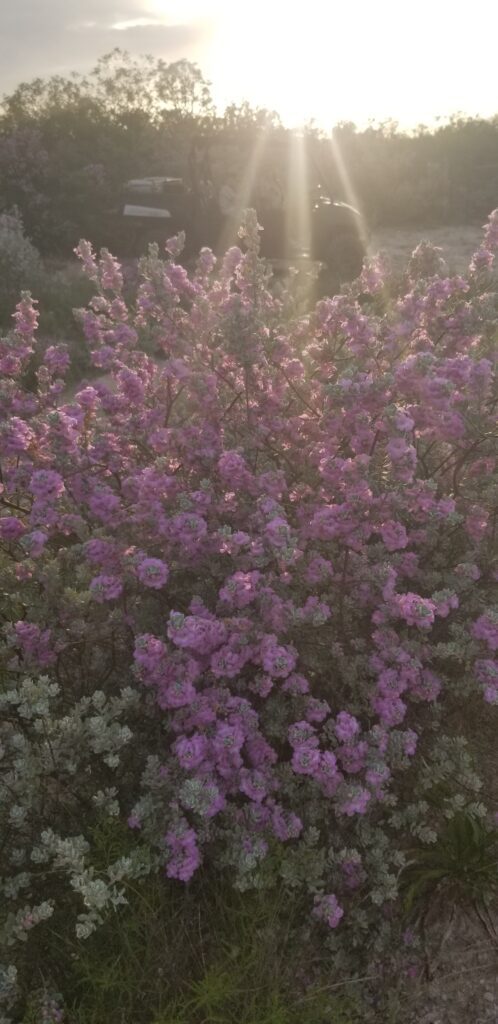
When our Saneeza bushes bloom the buzzing of bees in them is audible from a distance. That pollinator activity supports every other plant on our property — from the garden to the wild herbs growing in the brush. A property with healthy Cenizo stands is a property with healthy pollinator populations.
How to Identify Cenizo on Your Property
Key identifying features:
- Silvery grey-green leaves — small, oval, densely covered in fine silvery hairs that give the plant its ash-colored appearance and Spanish name
- Vivid purple tubular flowers — appearing in response to humidity and pre-rain conditions
- Compact evergreen shrub — typically 3-8 feet tall and wide
- Found on rocky, limestone, alkaline soils — dry hillsides and brush country
- South Texas, Trans-Pecos, and northern Mexico native range
Distinguishing from similar plants:
Cenizo is fairly distinctive — the silvery leaves and purple flowers together are unmistakable. No other common South Texas native looks quite like it in full bloom.
How to Harvest and Prepare Cenizo
Harvesting Guidelines
Harvest small amounts of leaves from large established plants — never more than 10-15% of any single plant. The best time to harvest is during or just after flowering when the plant’s medicinal compounds are most concentrated. Use clean scissors or pruning shears and make clean cuts just above a leaf node to encourage regrowth.
Dry harvested leaves in a single layer in a well-ventilated spot away from direct sunlight. In South Texas humidity a dehydrator at 95-105°F for 2-3 hours produces consistent results. Store dried leaves in an airtight glass jar away from light and heat for up to 12 months.
Cenizo Leaf Tea — Basic Preparation
Steep 1-2 teaspoons of dried Cenizo leaves in 8 ounces of hot water for 10 minutes. Strain and drink warm. Add raw honey to taste. Drink 1-2 cups daily for ongoing wellness support or 2-3 cups during illness.
Cenizo Steam Inhalation
Bring 4 cups of water with 2 tablespoons of dried Cenizo leaves to a simmer. Remove from heat. Lean over the pot with a towel over your head creating a steam tent. Inhale deeply for 5-10 minutes. This brings the aromatic antimicrobial compounds directly to the respiratory tract.
Cenizo Infused Oil
Pack a clean glass jar loosely with dried Cenizo leaves. Cover completely with olive oil. Seal and place in a warm sunny window for 4-6 weeks shaking daily. Strain through cheesecloth and store in a dark glass bottle. Apply topically to skin irritations, minor wounds, and inflamed areas.
When to See a Doctor
Cenizo is a supportive traditional herb — not a medical treatment. Seek medical care for high fever especially in children, persistent respiratory symptoms, infected wounds, or any serious health concern. Use Cenizo preparations as supportive complements to appropriate medical care not as replacements.
Key Takeaways
- Cenizo blooms in response to atmospheric humidity changes that precede rainfall — earning it the name Barometer Bush and Saneeza in South Texas tradition
- The primary traditional medicinal use across South Texas and Mexican herbal traditions is fever reduction — with antimicrobial and anti-inflammatory properties supporting this use
- Cenizo contains flavonoids and terpenoids with documented antimicrobial activity against several bacterial strains
- Harvest responsibly from established plants — take no more than 10-15% of any single plant
- Dry and store properly for year-round medicinal use from your own property
- Cenizo is one of the most important native pollinator plants in South Texas — its ecosystem value extends far beyond its medicinal uses
At a Glance
| Topic | Detail |
|---|---|
| Botanical name | Leucophyllum frutescens |
| Common names | Cenizo, Texas Purple Sage, Barometer Bush, Saneeza, Texas Ranger |
| Native range | South Texas, Trans-Pecos, northern Mexico |
| Bloom trigger | Atmospheric humidity increase before rain |
| Primary traditional use | Fever reduction |
| Key compounds | Flavonoids, terpenoids, antimicrobial compounds |
| Harvest timing | During or after flowering |
| Tea preparation | 1-2 tsp dried leaves, steep 10 minutes |
| Storage | Airtight glass jar, up to 12 months |
Frequently Asked Questions
Why does Cenizo bloom before rain?
Cenizo’s cells contain specialized receptors that detect changes in atmospheric humidity. When humidity increases — as it does before rainfall — the plant triggers a rapid blooming response. This mechanism is so reliable in South Texas that generations of locals have used it as a rain predictor. Scientists believe this may be an evolutionary adaptation that maximizes pollination success by synchronizing flowering with conditions that also bring out pollinators seeking moisture.
Is Cenizo safe to drink as a tea?
Cenizo leaf tea has a long history of traditional use across South Texas and northern Mexico with no documented reports of toxicity at normal tea preparation doses. Use 1-2 teaspoons of dried leaves per cup — the same amount you would use for any medicinal herb tea. As with any herb avoid excessive amounts and consult your healthcare provider if you have health conditions or take medications.
Can I grow Cenizo in my garden?
Cenizo is an excellent landscaping plant for South Texas and dry climates — drought tolerant, deer resistant, low maintenance, and spectacularly beautiful when in bloom. It prefers well-drained alkaline soil and full sun. Once established it requires virtually no supplemental water and rewards you with blooms throughout the warm season whenever humidity rises.
What does Cenizo tea taste like?
Cenizo leaf tea has a mild, pleasant, slightly earthy flavor with subtle herbal notes. It is nothing like strong medicinal teas — it is quite gentle and palatable. Raw honey pairs beautifully with it and enhances both the flavor and the medicinal value.
How do I know if my Cenizo is ready to harvest?
The best time to harvest is during or just after blooming when medicinal compounds are most concentrated. Leaves should be a healthy silvery green with no yellowing or damage. Harvest in the morning after any dew has dried but before the heat of the day.
Is Cenizo the same as garden sage?
No — Cenizo (Leucophyllum frutescens) is not related to garden sage (Salvia officinalis) despite sharing the common name Texas Purple Sage. They are entirely different plants from different plant families with different medicinal profiles. Cenizo is native to South Texas and northern Mexico while garden sage is native to the Mediterranean.
Related Posts You’ll Love
- Chilli Pequin Benefits — The Wild Texas Pepper — another South Texas native with powerful medicinal properties growing wild on our farm
- Prickly Pear Cactus Benefits — The South Texas Superfood — the native cactus superfood growing wild across our properties
- How to Harvest and Preserve Wild Chilli Pequin — harvesting and preserving wild plants from our South Texas property
- Natural Remedies for Cold and Flu Season — herbs for cold and flu support that complement Cenizo’s traditional uses
- Natural Remedies for Fever — comprehensive fever support herbs alongside Cenizo’s traditional fever use–COMING SOON!
Not sure which herbs are right for your specific situation? Take our free Natural Wellness Assessment and get a personalized herbal remedy report delivered straight to your inbox.
Get Your Free Natural Home Remedies Quick Reference Card
12 common ailments, the herb that helps, and exactly how to use it — free instant download.
This post contains affiliate links. Root Freedom may earn a commission when you purchase through our links at no extra cost to you. This content is for informational purposes only and is not intended as medical advice. Always consult a healthcare professional before beginning any new herbal regimen.