
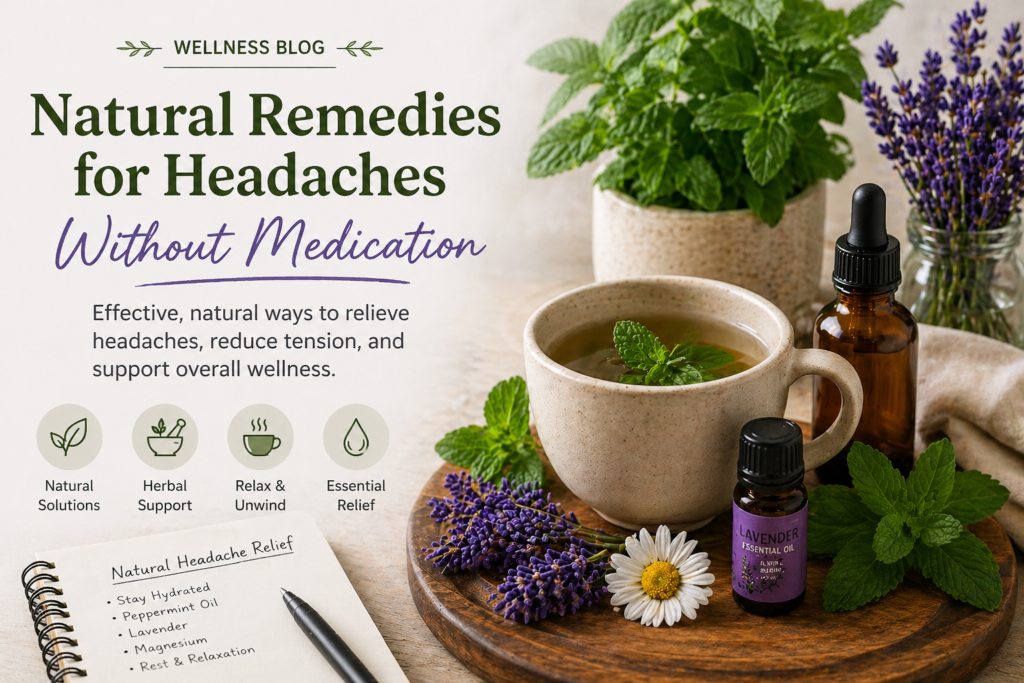
Written by Chad & Millie of Root Freedom
If you’ve ever reached for ibuprofen three times in a week and thought there has to be a better way — you’re not alone. Millions of people deal with recurring headaches and are quietly looking for natural options that actually work.
The good news: herbs and plant-based remedies have been used for centuries to relieve headache pain, reduce inflammation, and address the root causes that keep headaches coming back. Whether you’re dealing with tension headaches from stress, hormonal headaches tied to your cycle, or sinus pressure that won’t quit — nature has something for you.
This guide covers the most effective natural remedies for headaches without medication, organized by headache type so you can find exactly what applies to you.
Quick Answer — What Are the Best Natural Remedies for Headaches Without Medication?
Peppermint essential oil applied to the temples is the fastest natural remedy for tension headaches — clinical research shows it’s as effective as acetaminophen with results in 15-20 minutes. For migraines ginger tea taken at the very first symptom reduces severity comparably to sumatriptan. Feverfew taken daily prevents migraines long term. Match your remedy to your headache type — tension, migraine, hormonal, sinus, or dehydration — for best results.
What You’ll Learn
- How to identify your headache type and match it to the right natural remedy
- Why peppermint oil works as well as acetaminophen for tension headaches
- The migraine-specific herbs with clinical research backing
- How magnesium-rich herbs address the root cause of chronic headaches
- A complete natural headache kit you can build for under $30
- When natural remedies are enough and when to see a doctor
Headache Types — Find Your Match
Not all headaches respond to the same remedies. Here’s a quick guide to matching your headache type to the right natural treatment:
Tension headaches — the tight band feeling across your forehead and temples. Start with peppermint oil (#1 below) and rosemary scalp massage (#7).
Hormonal headaches — arrive before or during your period when estrogen drops. Feverfew (#4) and magnesium-rich herbs (#5) are your best tools. See our full guides: Best Herbs for PMS Relief and Best Herbs for Women’s Hormonal Balance.
Stress headaches — tied to anxiety, nervous tension, jaw clenching. Lavender (#3) works quickly; combine with chamomile tea for a deeper nervous system effect. See: Best Adaptogenic Herbs for Stress Resilience.
Migraine headaches — neurological, often with light sensitivity and nausea. Ginger (#2) and feverfew (#4) are your primary herbs. See our complete guide: Natural Remedies for Migraine Headaches.
Tension headaches from neck and jaw — see our in-depth guide: Natural Remedies for Tension Headaches.
Sinus headaches — pressure around your forehead, cheeks, and eyes. Eucalyptus steam and ginger tea are most effective. See: Natural Remedies for Allergies and Hay Fever.
Dehydration headaches — dull ache that gets better quickly after drinking water. Jump straight to remedy #6 below.
1. Peppermint Oil — For Tension Headaches
Peppermint essential oil is one of the most well-researched natural headache remedies available. A 2016 study found that topically applied peppermint oil was as effective as acetaminophen for tension headaches.
How to use it: Dilute 2-3 drops of peppermint essential oil in a teaspoon of coconut or jojoba oil. Apply to your temples, forehead, and the back of your neck. Massage gently in circular motions. Repeat every 30 minutes as needed.
The cooling sensation from menthol increases blood flow to the area and relaxes the muscles that cause tension headaches.
Where to get it Cliganic Peppermint Essential Oil is our favorite provider, or If you prefer a quick Amazon option, this USDA organic peppermint oil is a reliable choice. — look for 100% pure therapeutic grade.
2. Ginger Tea — For Migraine and Nausea
Ginger is a powerful anti-inflammatory that works on headaches from the inside out. Research shows ginger can be as effective as sumatriptan — a common migraine medication — for reducing migraine severity.
How to use it: Slice a 1-inch piece of fresh ginger root. Steep in hot water for 10 minutes. Add honey and lemon. Drink at the first sign of a headache or migraine.
Ginger also tackles the nausea that often accompanies migraines — a two-for-one remedy.
Where to get it: Fresh ginger from any grocery store. Dried ginger root powder from Starwest Botanicals Ginger root.
3. Lavender Essential Oil — For Stress Headaches
Stress is one of the most common headache triggers. Lavender essential oil directly targets the stress response that causes tension to build in your head, neck, and shoulders.
How to use it: Add 5 drops to a diffuser and inhale for 15-30 minutes. Or apply diluted lavender oil to your temples and wrists. A 2012 study found that inhaling lavender oil for 15 minutes significantly reduced migraine severity.
Where to get it: Cliganic Lavender Oil
4. Feverfew — The Migraine Herb
Feverfew has been used specifically for migraines for centuries. Modern research confirms it — feverfew contains parthenolide, a compound that reduces the inflammation and blood vessel constriction that trigger migraines.
How to use it: Take feverfew as a daily supplement (100-300mg) for migraine prevention rather than acute treatment. It works best as a preventative herb taken consistently over time. Fresh feverfew leaves can also be eaten — though they’re quite bitter.
Where to get it: Dried feverfew from Starwest Botanicals Dried feverfew. Grow your own with seeds from Amazon — it’s a beautiful garden plant that comes back every year.
5. Magnesium-Rich Herbs — For Chronic Headaches
Magnesium deficiency is one of the leading causes of chronic headaches and migraines. Several herbs are naturally high in magnesium and can help address the root cause rather than just the symptom.
Best magnesium-rich herbs: Nettle leaf, chamomile, and peppermint tea all contain meaningful amounts of magnesium.
How to use them: Drink 2-3 cups of nettle or chamomile tea daily as part of your regular routine. Consistency matters more than quantity here — this is a long-term strategy for chronic headache sufferers.
Where to get them: Dried nettle leaf from Starwest Botanicals Dried Nettle leaf, and chamomile from Starwest Botanicals dried chamomile flowers.
6. Hydration + Electrolytes — The Overlooked Remedy
Dehydration is the most common and most overlooked cause of headaches. Before reaching for anything else — drink 16oz of water immediately when a headache starts.
Add a pinch of sea salt and a squeeze of lemon for electrolytes. Many headaches resolve within 20-30 minutes of proper hydration alone.
Herbal teas count toward your hydration — ginger, peppermint, and chamomile teas all hydrate while delivering additional headache-fighting compounds.
7. Scalp Massage With Rosemary Oil
Rosemary essential oil improves circulation and reduces pain perception. Combined with a scalp massage it’s one of the most immediately relieving remedies for tension headaches.
How to use it: Mix 3 drops of rosemary essential oil with a teaspoon of carrier oil. Massage into your scalp, temples, and the base of your skull for 5-10 minutes. Focus on any tight or tender spots.
Where to get it: Dried rosemary from Cliganic Rosemary Oil. Grow fresh rosemary from Seeds Now — it thrives in pots on a sunny windowsill.
Build Your Natural Headache Kit
Keep these items on hand so you’re ready with natural remedies for headaches without medication:
| Remedy | Best for | Time to relief |
|---|---|---|
| Peppermint oil | Tension headaches | 15-30 minutes |
| Ginger tea | Migraines + nausea | 30-60 minutes |
| Lavender oil | Stress headaches | 15-20 minutes |
| Feverfew supplement | Migraine prevention | Daily use |
| Water + electrolytes | Dehydration headaches | 20-30 minutes |
| Rosemary oil massage | Tension + circulation | 10-20 minutes |
Key Takeaways
- Match your remedy to your headache type — not all headaches respond to the same treatment
- Peppermint essential oil applied to temples is clinically proven as effective as acetaminophen for tension headaches — keep it in your kit at all times
- Ginger tea taken at the very first migraine symptom is your most powerful acute migraine tool — timing is everything
- Feverfew must be taken daily as a preventive — it doesn’t work well for acute treatment once a migraine has started
- Dehydration is the most overlooked headache cause — drink 16oz of water immediately at the first sign of any headache before reaching for anything else
- Magnesium-rich herbs taken consistently over weeks address the nutritional root cause of chronic recurring headaches
Frequently Asked Questions
What is the fastest natural remedy for a headache? Peppermint essential oil applied to the temples works within 15 to 20 minutes for most tension headaches. For migraines, ginger tea at the very first sign of symptoms gives the best results.
What herb is best for headaches? Feverfew is the most researched herb specifically for headaches and migraines. For immediate tension headache relief, peppermint is the strongest option. For stress-related headaches, lavender and chamomile work well together.
Can herbs prevent headaches from coming back? Yes — feverfew taken daily has solid research behind it for migraine prevention. Adaptogenic herbs like ashwagandha address chronic stress, which is a root cause of recurring tension headaches. For hormonal headaches, magnesium-rich herbs taken consistently over time make a noticeable difference.
Are natural headache remedies safe during pregnancy? Many herbs are not recommended during pregnancy. Ginger tea in moderate amounts is generally considered safe, but always check with your midwife or healthcare provider before using any herbal remedy while pregnant or breastfeeding.
What should I keep in a natural headache kit at home? Peppermint essential oil, lavender essential oil, dried feverfew or feverfew supplements, dried ginger root or ginger tea bags, and dried nettle or chamomile for daily magnesium support. See the table above for a full reference.
When to See a Doctor
Natural remedies work well for tension headaches, stress headaches, and mild to moderate migraines. See a doctor if your headaches are sudden and severe, accompanied by fever or stiff neck, getting progressively worse, or following a head injury.
If you want to go deeper on understanding how herbs work for pain relief and inflammation and build a real herbal practice, the Herbal Academy is where we’d point you — we put together an honest review here if you want to see what’s inside.
Related Posts You’ll Love
- 3 Everyday Herbs to Calm Your Nerves — chamomile, lemon balm, and lavender for natural stress and tension relief
- Best Herbs for Anxiety — A Complete Beginner Guide — when headaches are driven by anxiety and nervous tension
- Natural Remedies for Stress and Burnout — address the root cause of stress headaches naturally
- Natural Sleep Routine Using Herbs Step by Step — poor sleep is one of the most common headache triggers
- 10 Herbs Every Natural Wellness Cabinet Needs — build your complete home remedy toolkit
- Herbal Academy Review — Is It Worth It? — learn herbalism properly so you can tackle headaches and beyond with confidence
- Natural Longevity Supplements and Herbs — Evidence Based Guide to Healthy Aging — herbs and supplements that target the biological mechanisms of aging
Not sure which herbs are right for your specific health situation? Take our free Natural Wellness Assessment and get a personalized herbal remedy report delivered straight to your inbox.
Get Your Free Natural Home Remedies Quick Reference Card
12 common ailments, the herb that helps, and exactly how to use it — free instant download.
Disclaimer: This post contains affiliate links. Root Freedom may earn a commission when you purchase through our links at no extra cost to you. This content is for informational purposes only and is not intended as medical advice. Always consult a healthcare professional for persistent or severe headaches.