
Written by Chad & Millie of Root Freedom
If you’ve ever laid in bed staring at the ceiling while your mind races through tomorrow’s to-do list — you already know that sleep isn’t just about being tired. It’s about your nervous system being calm enough to let go.
Most sleep problems aren’t a melatonin deficiency. They’re a stress and cortisol problem. Your body is stuck in fight-or-flight mode when it should be winding down. Herbs work by addressing that root cause — calming the nervous system, lowering cortisol, and preparing your body for genuine restorative sleep.
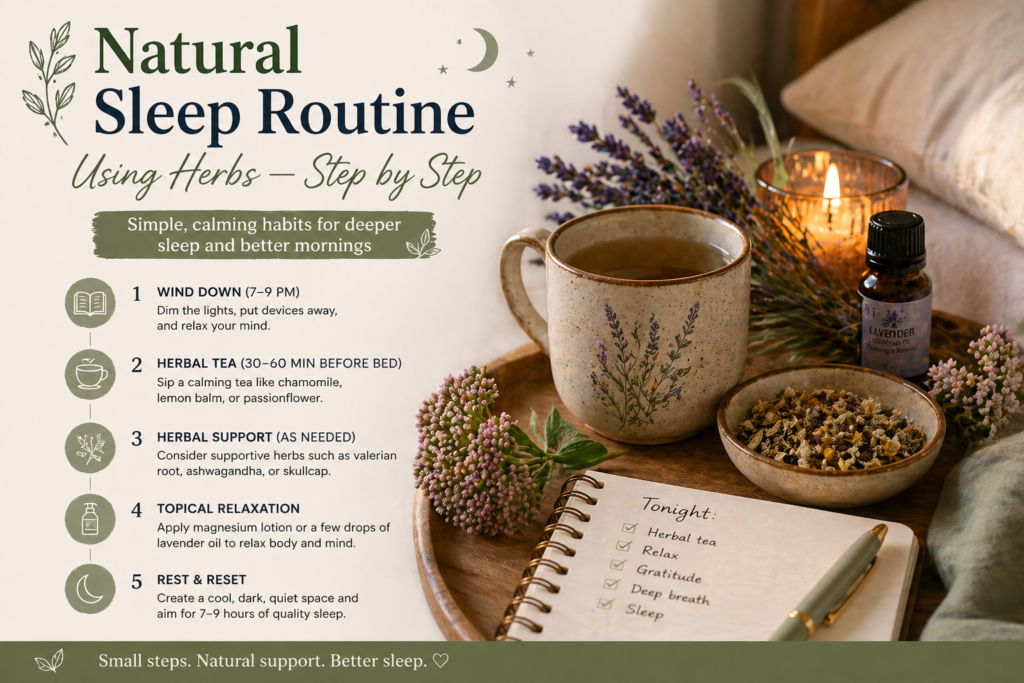
Here’s a complete Natural Sleep Routine Using Herbs – step-by-step so you can start tonight.
Why an Herbal Sleep Routine Works Better Than a Single Supplement
Most people try one thing — melatonin, magnesium, or a single sleep herb — and when it doesn’t work they give up. The problem isn’t the herb. It’s the approach.
Sleep is a process not a switch. Your body needs signals over the course of 1-2 hours that it’s time to wind down. A layered herbal routine sends multiple signals through multiple pathways — aromatherapy, tea, topical application — creating a cumulative calming effect that a single supplement can’t replicate.
Your Complete Herbal Sleep Routine
2 Hours Before Bed — Dim the Environment
Your cortisol naturally drops as light decreases. Help it along by dimming your lights and starting your herbal wind-down.
Start diffusing lavender essential oil. Add 5-7 drops to your diffuser and let it run for the next 2 hours. Lavender’s linalool compounds begin working on your nervous system within minutes of inhalation — reducing heart rate and blood pressure before you even notice you’re feeling calmer.
Where to get it: Pure lavender essential oil on Starwest Botanicals Lavender Oils.
90 Minutes Before Bed — Brew Your Sleep Tea Blend
This is the cornerstone of your herbal sleep routine. Brew a blend of two or three calming herbs for maximum effect.
The Root Freedom Sleep Blend:
- 1 teaspoon dried chamomile flowers
- 1 teaspoon dried lemon balm leaves
- ½ teaspoon dried passionflower
Steep in hot water for 10-15 minutes. Cover while steeping to keep the volatile oils from escaping. Add raw honey to taste.
This blend works on three separate calming pathways simultaneously — chamomile binds to GABA receptors, lemon balm inhibits GABA breakdown, and passionflower increases GABA availability. Together they’re significantly more effective than any single herb alone.
Where to get the herbs: Dried chamomile HERE, lemon balm HERE, and passionflower from HERE. Grow your own chamomile and lemon balm from seed with Seeds Now.
60 Minutes Before Bed — Take Valerian or Ashwagandha
If your sleep problems are chronic or your mind is particularly active tonight add an herbal supplement to your routine.
For difficulty falling asleep: Take 300-600mg of valerian root extract 60 minutes before bed. Valerian increases GABA activity significantly and is one of the most studied herbs for insomnia.
For anxiety-driven sleep problems: Take 300mg of ashwagandha extract. It specifically targets the cortisol elevation that keeps anxious minds awake.
Don’t take both on the same night until you know how each affects you individually.
Where to get them: Valerian root HERE and ashwagandha HERE.
30 Minutes Before Bed — Topical Application
Your skin absorbs essential oils directly into the bloodstream making topical application one of the fastest delivery methods for herbal compounds.
Create a simple sleep oil: Mix 3 drops lavender essential oil + 2 drops Roman chamomile essential oil into 1 teaspoon of coconut or jojoba oil.
Apply to your wrists, temples, and the back of your neck. Massage gently in circular motions for 2-3 minutes. The massage itself activates your parasympathetic nervous system on top of the herbal benefits.
Where to get it: Lavender oil from Starwest Botanicals Lavender Oils and chamomile essential oil on Starwest Botanicals Chamomile Oils.
15 Minutes Before Bed — Magnesium Support
Magnesium deficiency is one of the most common and overlooked causes of poor sleep. Magnesium is required for GABA production and muscle relaxation — two things essential for sleep.
Herbal sources of magnesium: Nettle leaf tea is one of the richest herbal sources of magnesium. If you didn’t include it in your evening tea blend drink a cup of nettle tea alongside your sleep blend earlier in the evening.
Topical magnesium: Magnesium lotion or oil applied to your legs and feet before bed is absorbed transdermally and works quickly for muscle relaxation. Find it on Amazon.
At Bedtime — Create Your Sleep Environment
Your herbal routine works best in a sleep-optimized environment.
Temperature: Keep your bedroom between 65-68°F. Your body temperature naturally drops during sleep — a cool room accelerates this process.
Darkness: Complete darkness signals melatonin production. Use blackout curtains or a sleep mask.
Keep your lavender diffuser running or place a few drops on your pillow directly.
One final herbal tool: Keep a small roller bottle of lavender essential oil on your nightstand. If you wake in the night and can’t fall back asleep apply it to your wrists and take 10 slow deep breaths. Works within minutes for most people.
The Complete Sleep Herb Shopping List
| Herb | Form | Purpose |
|---|---|---|
| Chamomile | Dried flowers | Evening tea |
| Lemon balm | Dried leaves | Evening tea |
| Passionflower | Dried herb | Evening tea |
| Valerian root | Capsule | Deep sleep support |
| Ashwagandha | Capsule/powder | Cortisol reduction |
| Lavender | Essential oil | Aromatherapy + topical |
| Nettle leaf | Dried herb | Magnesium support |
How Long Until It Works?
Night 1-3: You may notice feeling calmer and falling asleep slightly faster. The tea and aromatherapy work immediately.
Week 1-2: Sleep quality improves noticeably. You wake less frequently and feel more rested.
Month 1-2: Valerian and ashwagandha reach full effectiveness with consistent use. Your nervous system is genuinely calmer baseline.
The key is consistency. Do the full routine every night — not just when you can’t sleep. You’re retraining your nervous system to associate these herbs and rituals with sleep.
If you want to go deeper on understanding sleep herbs and how to build protocols for chronic sleep issues, the Herbal Academy covers the nervous system and herbal sleep support in detail — we put together an honest review here if you want to see what’s inside.
Related Posts You’ll Love
- 3 Everyday Herbs to Calm Your Nerves — chamomile, lemon balm, and lavender are the foundation of any herbal sleep routine
- Best Herbs for Anxiety — A Complete Beginner Guide — anxiety and sleep problems share overlapping herbal treatments
- Natural Remedies for Insomnia — What Actually Works — go deeper on chronic insomnia remedies
- Best Adaptogenic Herbs for Stress Resilience — adaptogens lower the cortisol driving your sleep problems
- Herbal Academy Review — Is It Worth It? — learn herbalism properly including how to work with sleep and nervous system herbs
Get the Free Herbal Wellness Checklist
Want a printable reference for all your sleep and wellness herbs? Download our free Herbal Wellness Checklist — 10 essential herbs, their benefits, and how to use them.
Click here to download your free Root Freedom Herbal Wellness Checklist →
Disclaimer: This post contains affiliate links. Root Freedom may earn a commission when you purchase through our links at no extra cost to you. This content is for informational purposes only and is not intended as medical advice. Consult a healthcare professional for chronic sleep disorders.