
Written by Chad & Millie of Root Freedom
If there’s one herb every natural wellness home should grow, chamomile is it. This cheerful daisy-like flower is one of the most versatile and forgiving herbs in the garden — easy to grow from seed, generous in its harvest, and useful in dozens of ways once dried. And once you’ve brewed a cup of chamomile tea from flowers you grew yourself, you’ll never go back to the boxed version.
Chamomile has been cultivated for its medicinal properties since ancient Egypt. Today it remains one of the most consumed herbal teas in the world — and for good reason. Whether you’re growing it for sleep support, digestive relief, skin healing, or simply the beauty it adds to your garden, this guide covers everything you need to know about how to grow chamomile at home successfully.
Quick Answer
German chamomile is the best variety for home growing — it reaches 24-36 inches, blooms prolifically, and self-seeds year after year. Sow seeds directly on the soil surface in early spring, harvest flowers when petals begin to reflex backward, and dry at 95-115°F in a dehydrator for best results. A 3×3 foot patch provides months of daily chamomile tea from your own garden.
What You’ll Learn
- The difference between German and Roman chamomile and which to grow for medicinal use
- Exactly when and how to plant chamomile from seed in garden beds and containers
- How to care for chamomile through the growing season
- When and how to harvest chamomile at peak potency
- The best drying and storage methods to preserve medicinal quality
German vs Roman Chamomile — Which Should You Grow?
Before you plant, it helps to know there are two main types of chamomile and they have important differences.
German Chamomile (Matricaria chamomilla) is the most commonly grown for medicinal and tea use. It grows as an annual reaching 24 to 36 inches tall, produces abundant flowers throughout the season, and self-seeds prolifically — meaning once you plant it once you’ll likely have it forever. This is the chamomile used in most commercial chamomile teas and herbal preparations. It has a stronger apple-like fragrance and higher levels of the active compound apigenin.
Roman Chamomile (Chamaemelum nobile) is a low-growing perennial that spreads as a ground cover reaching only 4 to 12 inches tall. It has a sweeter, fruitier fragrance and is sometimes used for lawns in mild climates. It produces fewer flowers than German chamomile making it less practical for tea harvesting in most home gardens.
For medicinal use and tea: grow German chamomile. That’s what this guide focuses on.
Get your seeds here: Seeds Now German Chamomile Seeds — open-pollinated, non-GMO seeds that will self-seed year after year in your garden.
What Chamomile Needs to Thrive
Chamomile is genuinely one of the easiest herbs to grow. It thrives in conditions that many other plants find challenging.
Sunlight: Full sun to partial shade. Chamomile prefers full sun — at least 6 hours per day — but tolerates partial shade, especially in hot climates where afternoon shade prevents bolting.
Soil: Well-drained, moderately fertile soil. Chamomile actually prefers slightly poor, sandy soil over rich amended soil. Too much fertility produces lush leafy growth at the expense of flowers. If your garden soil is clay-heavy amend with coarse sand or grow in containers with a well-draining potting mix.
Water: Moderate. Water when the top inch of soil is dry. Chamomile is drought tolerant once established and does not like wet feet. Overwatering is the most common mistake with chamomile.
Temperature: Cool to moderate. Chamomile is a cool season herb that performs best in spring and autumn. In hot Texas summers it may go to seed quickly — that’s normal. Plant in early spring for a spring harvest and again in late summer for a fall harvest.
pH: 5.6 to 7.5 — very adaptable.
When to Plant Chamomile
Direct sow outdoors: 2 to 3 weeks before your last frost date in spring. Chamomile seeds need light to germinate — do not cover them with soil. Simply press them onto the surface of moist soil and keep them consistently damp until germination.
Starting indoors: Start seeds 6 to 8 weeks before your last frost date. Use a seed tray with a fine seed starting mix. Press seeds onto the surface — do not cover. Keep moist and warm (65-70°F) until germination in 7 to 14 days. Transplant outdoors after last frost.
How to Plant Chamomile — Step by Step
In garden beds:
- Choose a sunny spot with well-draining soil
- Loosen the soil to 6 inches depth and remove any weeds
- Rake the surface smooth
- Scatter seeds thinly across the prepared area — chamomile can be broadcast sown like a wildflower
- Press seeds gently into the soil surface — do not cover with soil
- Water gently with a fine mist so seeds don’t wash away
- Keep the soil consistently moist until germination in 7 to 14 days
- Thin seedlings to 8 to 10 inches apart once they reach 2 inches tall
In containers:
Chamomile grows beautifully in containers — ideal for patios, balconies, or small gardens. Use a pot at least 12 inches wide and deep with drainage holes. Fill with a well-draining potting mix. Sow seeds on the surface, press in gently, and water. Container chamomile needs more frequent watering than in-ground plants — check daily in warm weather.
Growing and Caring for Chamomile
Watering: Water at the base of the plant — avoid wetting the foliage and flowers. Allow the soil to dry slightly between waterings. Container plants need more frequent watering than in-ground plants.
Fertilizing: Chamomile generally doesn’t need fertilizing. If your plants look pale or leggy a light application of a balanced organic fertilizer in spring is sufficient. Avoid high-nitrogen fertilizers which promote leafy growth over flowering.
Deadheading: Remove spent flowers regularly to encourage continuous blooming throughout the season. Simply pinch off flowers that have fully opened and begun to drop their petals. This delays the plant going to seed and extends your harvest season.
Pests and disease: Chamomile is remarkably pest-resistant. Aphids occasionally attack young plants — knock them off with a strong stream of water or treat with diluted neem oil spray. Good air circulation prevents the fungal issues that can occur in humid conditions.
Self-seeding: German chamomile is a prolific self-seeder. If you allow some flowers to go to seed at the end of the season you’ll have chamomile returning in the same spot — and spreading to new spots — year after year without replanting.
When and How to Harvest Chamomile
Harvesting at the right time is essential for potency. The highest concentration of beneficial compounds — particularly apigenin — is found when flowers are freshly opened with petals just beginning to reflex backward.
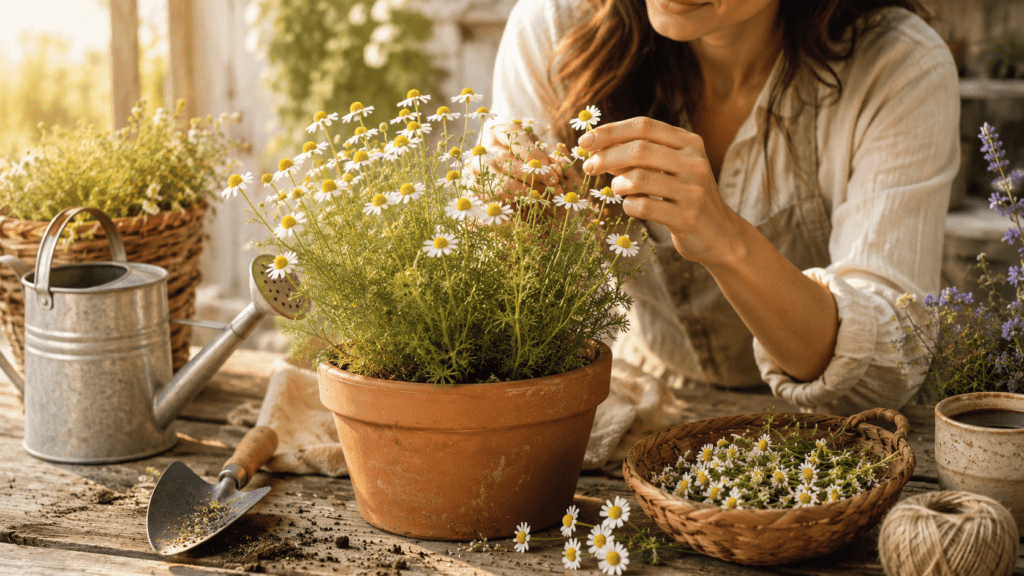
Signs your chamomile is ready to harvest: The flower has fully opened, the yellow center dome is prominent, and the white petals are beginning to bend backward away from the center. At this stage the flower is at peak potency and fragrance.
How to harvest: Pinch or snip individual flower heads just below the head. Harvest in the morning after the dew has dried but before the afternoon heat. A chamomile rake — a comb-like tool that strips flowers from the stems as you pull through — speeds up harvesting significantly when you have a large planting.
How often to harvest: Chamomile produces a continuous flush of flowers throughout the season. Check your plants every 2 to 3 days during peak bloom and harvest any flowers that have reached the ready stage. Regular harvesting encourages more flower production.
How to Dry and Store Chamomile
Fresh chamomile flowers must be dried promptly after harvesting to preserve their medicinal compounds and prevent mold.
Air drying: Spread flowers in a single layer on a clean screen or drying rack. Place in a warm, dry, well-ventilated area out of direct sunlight. Turn flowers daily. Flowers are fully dry when they feel papery and the centers are completely dry — typically 1 to 2 weeks.
Dehydrator: Set your dehydrator to the lowest setting (95-115°F) and dry for 1 to 4 hours checking regularly. This is faster than air drying and produces excellent results.
Storage: Store completely dried chamomile flowers in an airtight glass jar away from light and heat. Properly dried and stored chamomile retains its potency for 1 to 2 years.
See also: How to Dry and Store Herbs From Your Garden
How to Use Your Homegrown Chamomile
Chamomile tea: Steep 1 to 2 teaspoons of dried flowers per cup of hot water for 5 to 10 minutes. Cover while steeping to retain volatile oils. Add honey to taste.
Chamomile tincture: Pack a jar with dried chamomile flowers and cover completely with 80-proof vodka. Seal and store in a cool dark place for 4 to 6 weeks shaking daily. Strain and bottle. Take 30 drops in water up to three times daily.
Chamomile infused oil: Pack a clean dry jar with dried chamomile flowers. Cover completely with olive or jojoba oil. Infuse in a warm spot for 4 to 6 weeks or use a slow cooker on the lowest setting for 24 to 48 hours. Strain and store in a dark glass bottle. Use topically for skin inflammation and irritation.
Chamomile steam: Add a handful of fresh or dried chamomile flowers to a bowl of just-boiled water. Drape a towel over your head and inhale the steam for 5 to 10 minutes. Excellent for sinus congestion, skin opening, and stress relief.
If you want to go deeper on working with chamomile and other medicinal herbs, the Herbal Academy covers herbal preparations in detail — we put together an honest review here.
See also: How to Make Herbal Infused Oil at Home and How to Make Herbal Tea Blends at Home
If you want to go deeper on chamomile’s medicinal uses and how to incorporate it into a complete herbal wellness practice, the Herbal Academy offers excellent courses covering medicinal herb growing and preparation from seed to remedy.
At a Glance — Growing Chamomile
| Factor | Details |
|---|---|
| Type | Annual (German) / Perennial (Roman) |
| Sun | Full sun to partial shade |
| Soil | Well-draining, moderately fertile |
| Water | Moderate — drought tolerant once established |
| Spacing | 8-10 inches apart |
| Height | 24-36 inches (German) |
| Days to flower | 60-65 days from seed |
| Harvest | When petals begin to reflex backward |
| Seed source | Seeds Now |
Frequently Asked Questions
How long does chamomile take to grow from seed? German chamomile typically germinates in 7 to 14 days and begins flowering 60 to 65 days after germination. You can expect your first harvest approximately 10 weeks after sowing seeds.
Can I grow chamomile indoors? Chamomile can be started indoors but prefers outdoor growing conditions. It needs significant light — at least 6 hours of direct sun — which is difficult to provide indoors without grow lights. A sunny south-facing windowsill can work for starting seeds but plants should be moved outdoors as soon as weather permits.
Does chamomile come back every year? German chamomile is an annual but it self-seeds so prolifically that it effectively behaves as a perennial in most gardens. Allow some flowers to go to seed at the end of the season and chamomile will return in the same spot the following year.
How much chamomile do I need to grow for regular tea use? A single chamomile plant produces enough flowers for occasional use. For daily tea drinking plan on 5 to 10 plants — a 3×3 foot patch of chamomile can yield several ounces of dried flowers per season which provides months of daily tea.
Can I use fresh chamomile flowers for tea? Yes — fresh chamomile makes a delicate tea with a lighter flavor than dried. Use 2 to 3 tablespoons of fresh flowers per cup since fresh flowers have higher water content than dried. The medicinal potency is similar.
Key Takeaways
- German chamomile is the best choice for medicinal use and tea — more flowers, stronger apigenin content, and reliable self-seeding
- Chamomile seeds need light to germinate — never cover them with soil, just press onto the surface
- Harvest when petals begin to reflex backward — this is peak potency, not when fully open or starting to drop
- Dehydrator drying at 95-115°F produces better results than air drying especially in humid climates like South Texas
- One established chamomile planting will self-seed and return every year without replanting
- 5-10 plants provides enough flowers for daily tea use throughout the season
- Store dried chamomile in airtight glass jars away from light — retains potency for 1-2 years
Related Posts You’ll Love
- How to Grow Lavender at Home — Complete Guide — another easy-to-grow medicinal herb for your garden
- How to Grow Echinacea at Home — Complete Guide — build your medicinal herb garden one plant at a time
- How to Start a Medicinal Herb Garden From Scratch — plan your complete home herb garden
- How to Dry and Store Herbs From Your Garden — preserve your chamomile harvest properly
- How to Make Herbal Tea Blends at Home — blend your homegrown chamomile into custom tea recipes
- 3 Everyday Herbs to Calm Your Nerves — chamomile in action for daily calm
- Natural Sleep Routine Using Herbs Step by Step — use your homegrown chamomile in a complete sleep routine
- How to Grow Tulsi at Home — Complete Guide to Holy Basil — another easy warm weather herb that pairs beautifully with chamomile in teas
Growing your own herbs and not sure which ones are right for your wellness goals? Take our free Natural Wellness Assessment and get a personalized herbal remedy report delivered straight to your inbox.
Get Your Free Natural Home Remedies Quick Reference Card
12 common ailments, the herb that helps, and exactly how to use it — free instant download.
This post contains affiliate links. Root Freedom may earn a commission when you purchase through our links at no extra cost to you. This content is for informational purposes only and is not intended as medical advice. Always consult a healthcare professional before beginning any new herbal regimen.