
Written by Chad & Millie of Root Freedom
Echinacea is one of the most valuable medicinal plants you can grow at home. It’s beautiful, hardy, incredibly productive once established, and provides you with a steady supply of one of the most effective immune-boosting herbs available — completely free after the first season.
Most people buy echinacea supplements without realizing how easy it is to grow their own and make tinctures, teas, and preparations that are significantly more potent than anything sold in a store.
Here’s how to grow echinacea at home, everything you need to know to grow echinacea successfully in your own garden.
Why Grow Your Own Echinacea
Potency — freshly harvested echinacea contains significantly higher levels of active compounds than dried herb that has been sitting in storage or processed into supplements. Fresh plant tinctures made from your own garden are among the most potent herbal preparations available.
Cost — a packet of echinacea seeds costs $3-5 and produces plants that yield harvests for 10+ years. The equivalent in purchased echinacea supplements would cost hundreds of dollars over that time.
Abundance — one established echinacea plant produces enough aerial parts for teas and tinctures every season. A small patch of 5-6 plants provides more medicine than most families can use.
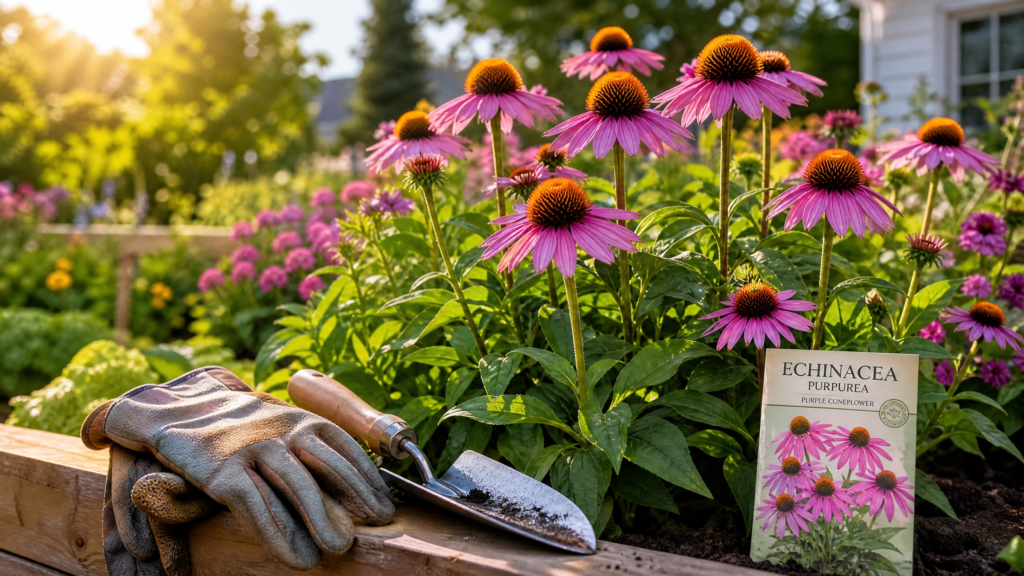
Beauty — echinacea purpurea produces stunning purple daisy-like flowers that bloom all summer, attract pollinators, and add significant ornamental value to any garden.
Understanding Echinacea Species
Three species are used medicinally and each has different strengths:
Echinacea purpurea — the most common and easiest to grow. High in polysaccharides that stimulate immune activity. Best for aerial parts — leaves, flowers, and seeds harvested during flowering. Fast growing and very productive from the first year.
Echinacea angustifolia — considered the most medicinally potent species, particularly the root. Slower growing and less productive than purpurea but higher in alkamides — the compounds responsible for that characteristic tingling sensation that indicates quality.
Echinacea pallida — intermediate potency. Less commonly grown but medicinally active.
For beginners: Start with Echinacea purpurea. It’s the easiest to grow, most productive, and still highly effective medicinally.
Get your echinacea seeds from: Seeds_Now
Growing Requirements
Sunlight: Full sun to partial shade. Echinacea prefers at least 6 hours of direct sunlight daily but tolerates partial shade better than most medicinal herbs. More sun generally means more flowers and higher medicinal compound production.
Soil: Well-drained soil with moderate fertility. Echinacea is native to the North American prairies and adapted to lean, well-drained conditions. Rich heavily amended soil produces lush growth but can reduce medicinal compound concentration. Avoid waterlogged soil — echinacea roots rot in consistently wet conditions.
pH: 6.0-7.0. Slightly acidic to neutral.
Watering: Drought tolerant once established. Water regularly during the first growing season to establish roots. After establishment water deeply but infrequently — every 1-2 weeks in dry conditions. Overwatering is more harmful than underwatering for established plants.
Temperature: Hardy in USDA zones 3-9 depending on species. Echinacea purpurea is the most cold hardy and reliable in most climates.
Space: Plant 18-24 inches apart. Echinacea spreads slowly by self-seeding and division over time.
Starting From Seed
Echinacea can be challenging to germinate without the right conditions. Here’s how to maximize success:
Cold stratification — the key step most beginners skip:
Echinacea seeds need a cold period to break dormancy — mimicking winter conditions they would experience naturally. Without stratification germination rates are poor and inconsistent.
Stratification method: Place seeds in a damp paper towel inside a zip-lock bag. Refrigerate for 4-8 weeks before planting. Check weekly and keep the paper towel moist.
Starting indoors:
Start seeds indoors 8-10 weeks before your last frost date. Sow stratified seeds in well-draining seed starting mix — press gently onto the surface and cover lightly with ¼ inch of mix. Echinacea needs light to germinate — don’t bury deeply.
Maintain soil temperature of 65-70°F. A heat mat improves germination significantly. Keep soil consistently moist but not waterlogged.
Germination takes 10-21 days after stratification. Be patient — echinacea is worth the wait.
Direct sowing outdoors:
Sow seeds directly in fall — the winter provides natural cold stratification and seeds germinate in spring. This is actually the most reliable method if you’re not in a hurry.
Transplanting and Establishment
Transplant seedlings outdoors after all frost danger has passed and plants have 4-6 true leaves. Handle roots carefully — echinacea has a taproot that doesn’t like disturbance.
Water in well after transplanting then back off. First year plants focus on root development and may produce few or no flowers. This is normal — don’t be discouraged.
First year: Mostly root development, possibly a few flowers late in the season Second year: Vigorous growth, abundant flowering, first meaningful aerial part harvest Third year and beyond: Established plants produce heavily. Root harvest becomes possible.
Caring for Established Echinacea
Watering: Once established echinacea is remarkably self-sufficient. Deep watering every 1-2 weeks during dry periods is usually sufficient.
Fertilizing: Echinacea needs minimal fertilization. A light application of compost in early spring is sufficient. Avoid high nitrogen fertilizers which promote leafy growth at the expense of flowers and medicinal compounds.
Deadheading: Removing spent flowers encourages continued blooming throughout summer. However leaving some seed heads standing provides winter interest, wildlife food, and self-seeding for new plants.
Dividing: Every 3-4 years divide established clumps in early spring or fall. This rejuvenates the plants and gives you additional plants to expand your medicinal garden.
Harvesting Echinacea
Different parts are harvested at different times for different uses:
Aerial parts — leaves, flowers, and seeds: Harvest during peak flowering — when 25-50% of flowers on each plant are fully open. This is when polysaccharide content is highest in the aerial parts.
Cut stems leaving at least one-third of the plant intact for regrowth. Multiple harvests per season are possible with careful harvesting.
Seeds: Harvest when seed heads are fully dry and beginning to drop naturally — typically late summer to fall. Collect seed heads and allow to dry completely indoors before separating seeds.
Roots: Harvest in fall of the third year or later when roots are fully mature. Carefully dig the entire plant — echinacea has a long taproot. Wash thoroughly, slice into pieces, and dry completely before use.
Time of day: Harvest in the morning after dew has dried for highest essential oil and compound content.
Using Your Homegrown Echinacea
Echinacea tea: Simmer 1-2 teaspoons of dried root or aerial parts in water for 20 minutes. Drink 3-4 cups daily at the first sign of illness. Check our complete echinacea tincture guide for step by step tincture making instructions.
Fresh plant tincture: Pack fresh aerial parts into a jar immediately after harvest and cover with 95% grain alcohol. The fresh plant tincture is considered more potent than dried plant preparations. Infuse for 4-6 weeks then strain.
Dried herb: Dry aerial parts using the air drying or dehydrator method. Check our complete herb drying guide for detailed instructions. Store dried echinacea in airtight glass jars away from light.
Dried root: Slice fresh roots and dry completely in a dehydrator at 95-105°F for 6-8 hours. Store in airtight glass jars. Simmer dried root pieces in water for 20 minutes for tea.
Echinacea in Your Medicinal Garden Plan
Echinacea works beautifully alongside other medicinal herbs in a dedicated medicinal garden. Companion plants that work well with echinacea:
Elderberry — provides aerial canopy while echinacea fills the understory. Both are immune support herbs that work synergistically.
Calendula — similar growing requirements, complementary medicinal uses. Both bloom throughout summer and are harvested during flowering.
Lavender — drought tolerant companions that both prefer well-drained soil and full sun.
Chamomile — self-seeds abundantly alongside echinacea creating a naturalistic medicinal meadow effect.
Check our complete guide on how to start a medicinal herb garden from scratch for a full medicinal garden design incorporating echinacea and companion plants.
Troubleshooting Common Echinacea Problems
Poor germination: Usually a stratification issue. Seeds need cold treatment — refrigerate in damp paper towel for 4-8 weeks before planting.
Plants not flowering in first year: Normal — echinacea focuses on root development in year one. Be patient.
Yellowing leaves: Usually overwatering or poor drainage. Check soil moisture and improve drainage if needed.
Powdery mildew: White powdery coating on leaves — caused by poor air circulation and humidity. Space plants properly and avoid overhead watering. Remove affected leaves.
Aster yellows disease: Causes distorted green flowers and stunted growth. Spread by leafhoppers — no cure, remove and destroy affected plants immediately to prevent spread.
Plants dying after 2-3 years: Some echinacea varieties are short-lived perennials. Allow self-seeding to maintain a continuous population or divide clumps every 3-4 years.
Related Posts You’ll Love
- How to Make Echinacea Tincture at Home — turn your harvest into powerful immune medicine
- Best Herbs for Immune Support — echinacea in context with other immune herbs
- Natural Remedies for Cold and Flu Season — how to use echinacea when illness strikes
- How to Start a Medicinal Herb Garden From Scratch — add echinacea to your complete herb garden
- How to Dry and Store Herbs From Your Garden — preserve your echinacea harvest properly
Get the Free Herbal Wellness Checklist
Click here to download your free Root Freedom Herbal Wellness Checklist →
Disclaimer: This post contains affiliate links. Root Freedom may earn a commission when you purchase through our links at no extra cost to you. This content is for informational purposes only and is not intended as medical advice.