
Written by Chad & Millie of Root Freedom
Your colon processes everything that passes through your digestive system — absorbing nutrients, eliminating waste, and housing the majority of your immune system. When it’s sluggish, congested, or out of balance the effects ripple through your entire body — fatigue, bloating, skin problems, brain fog, and compromised immunity.
A natural colon cleanse doesn’t mean expensive kits, extreme fasting, or uncomfortable procedures. The right herbs gently stimulate bowel function, soothe the intestinal lining, feed beneficial gut bacteria, and support the liver and bile system that drives healthy elimination — naturally and sustainably.
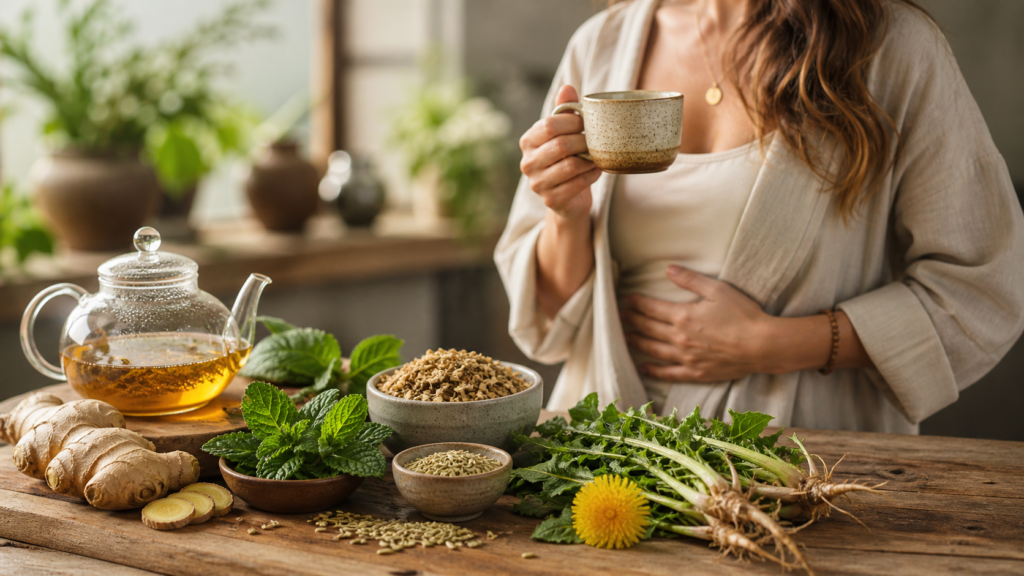
Here’s a natural colon cleanse — Herbs that actually work you.
Quick Answer
The most effective herbal colon cleanse combines psyllium husk for gentle bulk fiber, cascara sagrada or senna for short-term stimulant support, slippery elm to soothe and repair the intestinal lining, dandelion root to stimulate bile flow, and triphala for long-term colon toning. A complete 7-day protocol addresses elimination, inflammation, and gut flora simultaneously for lasting results.
What You’ll Learn
- The eight best herbs for a natural colon cleanse and exactly how each one works
- A complete 7-day gentle herbal colon cleanse protocol
- Which herbs are safe for long-term daily use and which are short-term only
- What to expect during the cleanse and how to manage initial symptoms
- Who should not do a colon cleanse without medical guidance
Signs Your Colon Needs Support
- Fewer than one bowel movement per day
- Bloating and gas that doesn’t resolve
- Feeling of incomplete elimination
- Skin breakouts and dull complexion
- Fatigue that doesn’t improve with rest
- Brain fog and difficulty concentrating
- Strong smelling or unusually dark stools
- History of antibiotic use disrupting gut flora
If several of these apply a gentle herbal colon cleanse protocol can make a significant difference in how you feel overall.
1. Psyllium Husk — The Gentle Bulk Laxative
Psyllium husk is the most well-researched natural colon cleanser available. It’s a soluble fiber that absorbs water in the colon forming a gel that softens stool, adds bulk, stimulates peristalsis, and carries waste through the colon more efficiently. It also feeds beneficial gut bacteria as a prebiotic.
Best for: Constipation, irregular bowel movements, IBS with constipation, cholesterol support alongside colon health, gentle daily colon maintenance
What research shows: Multiple clinical trials confirm psyllium husk effectively treats constipation, reduces transit time, improves stool consistency, and reduces cholesterol levels with consistent use.
How to use it: Stir 1-2 teaspoons of psyllium husk powder into a large glass of water — drink immediately before it thickens. Follow with another full glass of water. Take once or twice daily. Start with a smaller amount and increase gradually to avoid initial gas and bloating as your gut adjusts.
Critical: Always take psyllium with plenty of water — without adequate hydration it can cause constipation rather than relieve it.
Where to get it: Psyllium husk powder from Starwest Botanicals Psyllium husk powder.
2. Cascara Sagrada — Stimulant Laxative
Cascara sagrada — meaning sacred bark in Spanish — is one of the most effective herbal stimulant laxatives available. Its anthraquinone compounds stimulate the muscular contractions of the colon wall — peristalsis — that move waste through and out of the body.
Best for: Acute constipation, slow bowel transit, colon cleanse kickstart, short-term use before establishing healthier elimination habits
How to use it: Brew cascara sagrada bark tea — steep 1 teaspoon of dried bark in hot water for 10 minutes. Drink in the evening — it typically produces a bowel movement 6-8 hours later. Start with a weak brew and adjust strength as needed.
Important: Use cascara sagrada for short periods only — 1-2 weeks maximum. Long term use can cause dependency and electrolyte imbalance. It’s a cleanse tool not a daily habit.
Where to get it: Dried cascara sagrada bark from Starwest Botanicals Dried cascara sagrada bark.
3. Senna Leaf — Powerful Short-Term Cleanse
Senna is one of the most powerful herbal laxatives available and is actually FDA approved as an over-the-counter laxative. Like cascara sagrada it contains anthraquinones that stimulate colon contractions but it acts faster and more powerfully.
Best for: Acute constipation relief, short-term colon cleanse, preparation for medical procedures, immediate bowel movement stimulation
How to use it: Brew senna leaf tea — steep 1 teaspoon of dried senna leaves in hot water for 10 minutes. Drink in the evening. Effects typically begin within 6-12 hours.
Important: Senna is for short-term use only — maximum 1-2 weeks. Not for use during pregnancy, with inflammatory bowel conditions, or with certain medications. Consult your healthcare provider if you have any digestive conditions.
Where to get it: Dried senna leaf from Starwest Botanicals Dried senna leaf.
4. Slippery Elm — Intestinal Lining Repair
While the herbs above move waste through your colon slippery elm heals the lining it moves through. Its mucilage — a gel-like substance — coats and soothes the entire intestinal tract from esophagus to colon, reducing inflammation, repairing damage, and creating an environment where beneficial bacteria can thrive.
Best for: Leaky gut, IBS, inflammatory bowel conditions, intestinal lining repair, colon cleanse recovery support, acid reflux alongside colon issues
How to use it: Mix 1-2 tablespoons of slippery elm bark powder in warm water — stir vigorously as it thickens quickly. Drink before meals. It has a mild pleasant flavor. Alternatively mix into oatmeal or smoothies for an easier daily habit.
Where to get it: Slippery elm bark powder from Starwest Botanicals Slippery elm bark powder.
5. Dandelion Root — Liver and Bile Support
Healthy colon function depends on adequate bile production. Bile is produced by the liver and released by the gallbladder into the small intestine where it emulsifies fats and triggers the peristaltic wave that moves everything through the colon. When bile is sluggish so is your colon.
Dandelion root is the most effective herbal bile stimulant available.
Best for: Constipation from sluggish bile, liver congestion affecting colon function, fatty food digestion, gentle daily colon support, spring cleansing
How to use it: Brew dandelion root tea — simmer 1-2 teaspoons of dried dandelion root in water for 15 minutes. Drink 1-2 cups daily before meals to stimulate bile production before eating. Roasted dandelion root has a rich coffee-like flavor that makes it genuinely enjoyable as a morning ritual.
Where to get it: Dried dandelion root from Starwest Botanicals dandelion root.
6. Aloe Vera — Gentle Colon Soother
Aloe vera juice — made from the inner leaf gel rather than the whole leaf — is one of the gentlest colon cleansers available. It soothes intestinal inflammation, mildly stimulates bowel movements, supports beneficial gut bacteria, and reduces the gut inflammation that drives IBS and leaky gut.
Best for: Gentle daily colon support, IBS, intestinal inflammation, constipation with intestinal irritation, sensitive digestive systems
How to use it: Drink 2-4 oz of pure aloe vera inner leaf juice daily — first thing in the morning on an empty stomach for best results. Look for products that specify inner leaf gel only — whole leaf aloe contains aloin which is a powerful laxative that can cause cramping.
Where to get it: Pure aloe vera inner leaf juice on Amazon. Grow your own aloe vera plant from your local store garden center.
7. Triphala — The Ayurvedic Colon Tonic
Triphala is a traditional Ayurvedic formula made from three fruits — amalaki, bibhitaki, and haritaki. It’s one of the most comprehensive colon health formulas in herbal medicine — gently stimulating bowel movements, toning the colon wall, reducing inflammation, feeding beneficial bacteria, and supporting the liver simultaneously.
Best for: Long-term colon health maintenance, gentle daily cleansing, colon toning, IBS, chronic constipation, gut microbiome support
What research shows: Multiple studies show triphala improves constipation, reduces IBS symptoms, has prebiotic effects on beneficial gut bacteria, and has anti-inflammatory effects on the colon lining.
How to use it: Mix ½-1 teaspoon of triphala powder in warm water and drink before bed. It has a complex bitter-sour flavor — add honey if desired. Triphala is safe for long-term daily use unlike the stimulant laxative herbs above.
Where to get it: Triphala powder from Starwest Botanicals Triphala powder.
8. Fennel and Ginger — Gas and Bloating Relief
Any colon cleanse protocol will initially increase gas and bloating as waste moves through and gut bacteria adjust. Fennel and ginger are your tools for managing this comfortably.
How to use them: Brew a digestive tea after meals — steep 1 teaspoon of crushed fennel seeds with ½ teaspoon of dried ginger root in hot water for 10 minutes. Drink warm after meals throughout your cleanse period.
Where to get them: Dried fennel seeds and ginger root from Starwest Botanicals.
An Easier Option — Ready-Made Gut Support Blends
If you’d rather not track down and combine multiple gut-support ingredients individually, two pre-formulated blends offer a convenient alternative to building your own protocol from scratch — one for digestion, one for detox, and they’re designed to work together.
GI Rescue
Best for: Convenient daily digestive and gut-lining support, combining soothing and prebiotic ingredients in one dose
What research shows: The formula centers on L-glutamine, slippery elm, and soluble fiber sources like baobab and aloe vera — ingredients individually associated with gut-lining support and healthy digestion in both traditional use and modern nutrition.
How to use it: Mix 1-2 tablespoons into 6-8oz of water or juice, 1-2 times per day, preferably on an empty stomach, per label instructions.
Where to get it: GI Rescue from Dr. Tom Cowan combines L-glutamine, slippery elm, baobab fruit, lion’s mane extract, and wild-harvested sea moss into a single daily powder.
Detoxify
Best for: General detox support, binding and removing toxins from the GI tract
What research shows: The formula relies on natural binding agents and pectin, a soluble fiber that helps disperse and optimize the blend’s activity — a long-standing concept in natural detox practice, where certain materials bind to toxins in the gut so the body can eliminate rather than reabsorb them.
How to use it: Follow label instructions for daily use; often paired with GI Rescue for a more complete gut-and-detox approach.
Where to get it: Detoxify from Dr. Tom Cowan is designed to bind and help remove toxins including heavy metals and pesticides from the GI tract, while supplying iodine and pectin.
A 7-Day Gentle Herbal Colon Cleanse Protocol
Morning — on empty stomach:
- Large glass of warm lemon water
- 1-2 teaspoons psyllium husk in water followed by another full glass
- Dandelion root tea to stimulate bile
With breakfast:
- Slippery elm powder mixed into oatmeal or smoothie
After meals:
- Fennel and ginger digestive tea
Evening:
- Triphala powder in warm water before bed
- Cascara sagrada tea if bowel movements are fewer than 1 per day — use for maximum 7 days then discontinue
Throughout the day:
- Minimum 10 glasses of water — fiber needs water to work
- Bone broth or herbal teas for additional hydration and minerals
What to Expect During a Colon Cleanse
Days 1-2: Increased bowel movements as stimulant herbs take effect. Some gas and bloating as gut bacteria adjust — this is normal.
Days 3-4: Bowel movements become more regular and complete. Bloating typically reduces. Energy may begin improving.
Days 5-7: Most people notice improved energy, reduced bloating, clearer skin, and better mental clarity by the end of the first week.
After the cleanse: Transition to long-term gentle support — daily psyllium husk, triphala, and dandelion root tea — without the stimulant laxative herbs.
If you want to go deeper on digestive herbs and building a complete natural gut health protocol, the Herbal Academy offers excellent courses covering digestive system herbs from traditional and clinical perspectives.
Who Should Not Do a Colon Cleanse
Consult your healthcare provider before starting if you are pregnant or breastfeeding, have inflammatory bowel disease such as Crohn’s or ulcerative colitis, have a history of bowel obstruction, are taking prescription medications especially blood thinners or diabetes medications, or have kidney disease.
Key Takeaways
- Psyllium husk is the safest and most researched daily colon herb — always take with plenty of water or it worsens constipation
- Cascara sagrada and senna are powerful short-term tools only — maximum 1-2 weeks before taking a break
- Slippery elm heals the intestinal lining that cleansing herbs move waste through — use it throughout any cleanse
- Dandelion root addresses the liver-bile connection that drives healthy colon peristalsis
- Triphala is the only herb in this guide appropriate for indefinite long-term daily colon support
- Adequate hydration — minimum 10 glasses daily — is as important as any herb in a colon cleanse
- Most people notice improved energy, clearer skin, and reduced bloating within the first 5-7 days
Frequently Asked Questions
How often should I do a herbal colon cleanse?
A 7-day gentle herbal cleanse can be done quarterly — roughly every 3 months — as a reset. For ongoing colon health maintenance use the long-term safe herbs daily — psyllium husk, triphala, and dandelion root — without the stimulant laxative herbs.
Is a colon cleanse safe?
A gentle herbal colon cleanse using the herbs and protocol in this guide is generally safe for healthy adults. The key cautions are using stimulant laxatives like cascara sagrada and senna short-term only, always taking psyllium husk with plenty of water, and consulting your healthcare provider if you have any digestive conditions or take medications.
Will I lose weight doing a colon cleanse?
Any weight change during a colon cleanse is primarily water weight and waste elimination rather than fat loss. A colon cleanse is not a weight loss tool — it is a digestive reset. Sustainable weight management requires longer term dietary and lifestyle changes.
Can I eat normally during a colon cleanse?
Eating a clean whole food diet during the cleanse significantly improves results. Reduce sugar, alcohol, processed foods, and red meat which slow digestion and feed harmful gut bacteria. Increase vegetables, fruits, and water which support the cleansing process.
What is the difference between psyllium husk and cascara sagrada?
Psyllium husk is a bulk-forming fiber that works mechanically — it absorbs water and adds bulk to move waste through the colon. It is safe for long-term daily use. Cascara sagrada is a stimulant laxative that triggers colon contractions — it is more powerful and immediate but should only be used short-term.
Should I take probiotics during a colon cleanse?
Yes — taking a quality probiotic during and after a colon cleanse helps maintain and restore beneficial gut bacteria. The cleansing process affects gut flora broadly — restoring beneficial bacteria afterward supports the long-term gut health benefits of the cleanse.
Related Posts You’ll Love
- Best Herbs for Digestion and Bloating — address digestive issues at the root
- Best Herbs for Detox and Cleansing — whole body cleansing beyond the colon
- How to Make Elderberry Syrup at Home — support immunity during your cleanse
- 10 Herbs Every Natural Wellness Cabinet Needs — build your complete herbal toolkit
- Best Herbs for Skin Health and Healing — clear skin often follows a successful colon cleanse
Looking to support your digestive health naturally and not sure where to start? Take our free Natural Wellness Assessment and get a personalized herbal remedy report delivered straight to your inbox.
Get Your Free Natural Home Remedies Quick Reference Card
12 common ailments, the herb that helps, and exactly how to use it — free instant download.
This post contains affiliate links. Root Freedom may earn a commission when you purchase through our links at no extra cost to you. This content is for informational purposes only and is not intended as medical advice. Always consult a healthcare professional before beginning any new herbal regimen.