Written by Chad & Millie of Root Freedom
Your skin is your largest organ and one of your most important detox pathways. It reflects what’s happening inside your body — chronic inflammation, hormonal imbalance, gut dysfunction, and nutritional deficiencies all show up on your skin before they show up anywhere else.
Most skin care focuses exclusively on topical treatments. But the most transformative skin healing happens from the inside out — through herbs that reduce inflammation, support the liver, balance hormones, and nourish skin tissue at the cellular level.
Here are the best herbs for skin health and healing — both topical and internal.
Understanding Skin Problems at the Root
Before choosing your herbs it helps to identify what’s driving your skin issues:
Inflammation — drives acne, rosacea, eczema, and psoriasis. Reducing systemic inflammation is often the most impactful single intervention for chronic skin conditions.
Liver congestion — when your liver is overwhelmed toxins get pushed out through the skin. Skin eruptions, acne, and dull complexion often improve dramatically with liver support.
Hormonal imbalance — androgens drive sebum production and acne. Estrogen imbalance affects skin moisture and collagen production.
Gut dysbiosis — the gut-skin axis is well established. Leaky gut and poor microbiome health directly cause skin inflammation and breakouts.
Nutritional deficiency — zinc, vitamin C, silica, and essential fatty acids are all critical for skin structure and repair.
1. Calendula — The Skin Healer
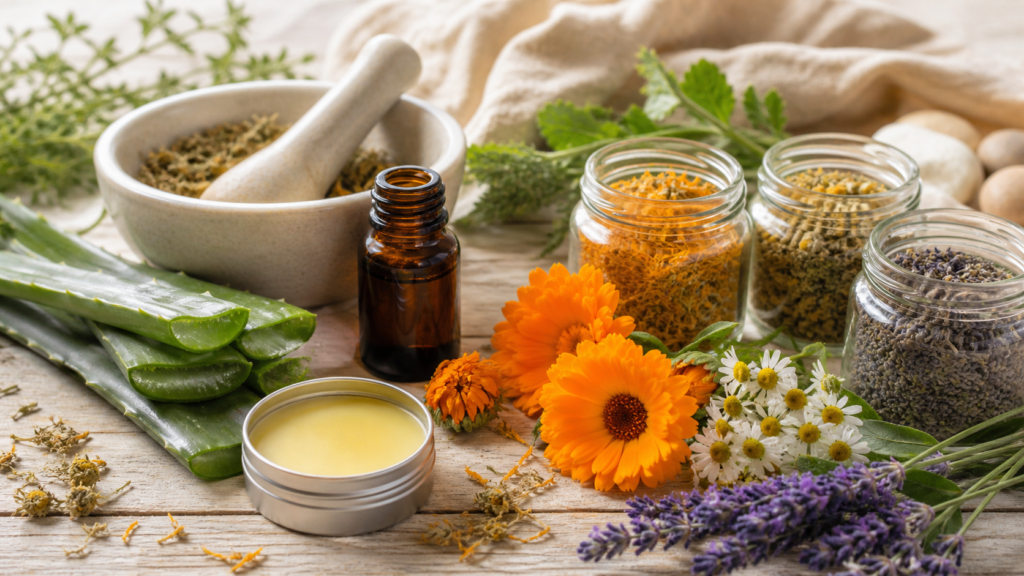
Calendula is the most important herb for topical skin healing. Its anti-inflammatory, antimicrobial, and wound-healing properties make it effective for virtually any skin condition — cuts, rashes, eczema, burns, dry skin, and more.
Best for: Wound healing, eczema, rashes, dry cracked skin, minor burns, diaper rash, scarring, skin inflammation
What research shows: Clinical studies show calendula accelerates wound healing, reduces surgical scar formation, and is as effective as pharmaceutical treatments for radiation-induced dermatitis in cancer patients.
How to use it topically: Make calendula infused oil — pack a jar with dried calendula petals and cover completely with olive or jojoba oil. Infuse in a warm sunny spot for 4-6 weeks then strain. Apply to skin conditions directly. Use as a base for calendula salve by melting beeswax into the infused oil.
How to use it internally: Brew calendula tea — steep 1-2 teaspoons of dried petals in hot water for 10 minutes. Drink 1-2 cups daily for internal anti-inflammatory support.
Where to get it: Dried calendula petals from Starwest Botanicals Dried calendula. Grow your own from seed with Survival Garden Seeds — calendula is one of the easiest flowers to grow and blooms prolifically all season.
2. Burdock Root — Internal Skin Cleanser
Burdock root is one of the most effective internal herbs for skin health. It supports liver detoxification, purifies the blood, and reduces the inflammatory burden that drives chronic skin conditions. Traditional herbalists have used burdock for acne, eczema, and psoriasis for centuries.
Best for: Acne from internal causes, eczema, psoriasis, dull complexion, skin conditions related to liver congestion, inflammatory skin conditions
How to use it: Brew burdock root tea — simmer 1-2 teaspoons of dried burdock root in water for 20 minutes. Drink 1-2 cups daily consistently — skin results from internal herbs take 4-8 weeks to appear. Or eat burdock root as a vegetable — called gobo in Japanese cuisine it has a mild earthy flavor and works well in stir-fries and soups.
Where to get it: Dried burdock root from Starwest Botanicals Dried Burdock root.
3. Nettle — Nutritive Skin Support
Nettle is one of the most nutritionally dense herbs available — rich in silica, zinc, iron, magnesium, and vitamins that are all critical for skin health. Silica specifically supports collagen formation and skin elasticity. Zinc is essential for wound healing and sebum regulation.
Best for: Dull lacking complexion, eczema, acne from nutritional factors, aging skin, skin that needs structural support
How to use it: Brew nettle leaf tea — steep 1-2 teaspoons of dried nettle in hot water for 10 minutes. Drink 2-3 cups daily as a nutritive skin tonic. Consistent daily use over months produces the most noticeable skin improvements.
Where to get it: Dried nettle leaf from Starwest Botanicals Dried nettle leaf. Grow your own stinging nettle from seed at Amazon — wear gloves when harvesting.
4. Turmeric — Anti-Inflammatory Skin Support
Turmeric’s curcumin is one of the most powerful anti-inflammatory compounds available and inflammation is the common driver behind most chronic skin conditions. Both internal and topical turmeric use produce significant skin benefits.
Best for: Inflammatory skin conditions, acne, rosacea, eczema, hyperpigmentation, wound healing, anti-aging support
How to use it internally: Golden milk daily — 1 teaspoon turmeric powder in warm milk with black pepper. Drink consistently for 8-12 weeks for skin results.
How to use it topically: Turmeric face mask — mix 1 teaspoon turmeric powder with raw honey and a few drops of jojoba oil into a paste. Apply to clean face for 15 minutes then rinse. Warning — turmeric stains. Use old towels and rinse thoroughly.
Where to get it: Organic turmeric root powder from Starwest Botanicals turmeric root powder.
5. Lavender — Wound Healing and Acne
Lavender essential oil is antibacterial, anti-inflammatory, and promotes new cell growth — making it one of the most effective topical herbs for acne, minor wounds, and skin healing.
Best for: Acne, minor cuts and burns, scarring, skin inflammation, dry irritated skin, insect bites
How to use it: Lavender is one of the few essential oils safe to apply undiluted to small areas — dab 1-2 drops directly onto individual blemishes. For larger areas dilute in carrier oil — 5 drops per teaspoon of jojoba or rosehip oil. Apply to clean skin morning and evening.
Where to get it: Pure lavender essential oil from Cliganic Lavender Oil. Dried lavender buds for tea and topical preparations from Starwest Botanicals Dried lavender buds. Grow your own lavender from seed with Seeds Now.
6. Rosehip — Vitamin C and Skin Renewal
Rosehips — the fruit of the rose plant — are one of the richest plant sources of vitamin C available. Vitamin C is essential for collagen synthesis, wound healing, and protection against UV-induced skin damage. Rosehip seed oil is one of the most effective natural skin serums for aging, scarring, and hyperpigmentation.
Best for: Anti-aging, hyperpigmentation, scarring, collagen support, dull complexion, skin brightening
How to use it internally: Brew rosehip tea — steep 1-2 teaspoons of dried rosehips in hot water for 10-15 minutes. Drink 1-2 cups daily for internal vitamin C support.
How to use it topically: Rosehip seed oil applied to clean skin morning and evening — 2-3 drops warmed between fingers then pressed gently into face and neck. One of the most effective natural facial oils for aging and scarring.
Where to get it: Dried rosehips from Starwest Botanicals Dried Rosehips. Rosehip seed oil from Cliganic Rosehip.
7. Aloe Vera — Instant Skin Soothing
Fresh aloe vera gel is one of the most effective topical skin remedies available. Its polysaccharides form a protective film on skin that reduces inflammation, speeds healing, and provides deep hydration.
Best for: Sunburn, minor burns, skin irritation, eczema flares, acne, dry inflamed skin, wound healing
How to use it: Grow an aloe vera plant — one of the most useful plants to have at home. Break a leaf and apply the fresh gel directly to affected skin. Leave on for 20-30 minutes then rinse or leave overnight for intensive healing.
Where to get it: Aloe vera plants from most garden centers or grow from a cutting.
8. Green Tea — Antioxidant Skin Protection
Green tea’s EGCG catechins are among the most powerful antioxidants for skin protection. They reduce UV-induced skin damage, reduce inflammation, and have been shown to improve acne when applied topically.
Best for: UV protection support, acne, anti-aging, skin brightening, inflammatory skin conditions, rosacea
How to use it internally: Drink 3-4 cups of green tea daily for systemic antioxidant protection.
How to use it topically: Brew strong green tea, let cool completely, then apply to face with a cotton pad as a toning mist. Or freeze green tea in ice cube trays and apply ice cubes to inflamed acne for immediate anti-inflammatory relief.
Where to get it: High quality green tea from Starwest Botanicals Green Tea Bags.
Building Your Herbal Skin Care Routine
Internal daily routine:
- Morning: Nettle and rosehip tea for nutrients and vitamin C
- With food: Turmeric golden milk for anti-inflammation
- Throughout day: Green tea for antioxidant protection
- Evening: Burdock root tea for liver and blood cleansing
Topical routine:
- Morning: Rosehip seed oil after cleansing
- Spot treatment: Lavender essential oil on blemishes
- Weekly: Turmeric and honey face mask
- As needed: Calendula salve for irritated or damaged skin
- Sunburn or acute irritation: Fresh aloe vera gel
The Gut-Skin Connection
No topical routine fully addresses skin health without addressing gut health. The gut-skin axis is one of the most important and underappreciated connections in the body.
Leaky gut allows inflammatory compounds and bacteria to enter the bloodstream — triggering systemic inflammation that shows up on the skin. Gut dysbiosis — imbalanced microbiome — produces inflammatory compounds that directly cause acne and eczema.
Supporting gut health with herbs like ginger, slippery elm, and dandelion root alongside your skin-focused herbs produces dramatically better results than topical or internal skin herbs alone. Check out our post on best herbs for digestion and bloating for a complete gut health herbal protocol.
If you want to go deeper on herbal skincare and understand how to build complete protocols for skin conditions, the Herbal Academy covers this in their intermediate and advanced courses — we put together an honest review here.
Related Posts You’ll Love
- Best Herbs for Detox and Cleansing — support skin through whole body cleansing
- Best Herbs for Women’s Hormonal Balance — hormonal balance is critical for clear skin
- Best Herbs for Digestion and Bloating — gut health is the foundation of skin health
- How to Make a Healing Herbal Salve — make your own calendula skin healing salve
- 10 Herbs Every Natural Wellness Cabinet Needs — build your complete natural wellness toolkit
- How to Make an Herbal Steam at Home — the skin glow steam recipe opens pores and delivers these same herbs directly to your skin
Get Your Free Natural Home Remedies Quick Reference Card
12 common ailments, the herb that helps, and exactly how to use it — free instant download.
Disclaimer: This post contains affiliate links. Root Freedom may earn a commission when you purchase through our links at no extra cost to you. This content is for informational purposes only and is not intended as medical advice. Consult a dermatologist for persistent or severe skin conditions.