Written by Chad & Millie of Root Freedom
There’s something deeply satisfying about blending your own herbal teas. Instead of reaching for a mass-produced tea bag with mystery ingredients you create something purposeful — a blend designed for exactly what your body needs right now.
Making herbal tea blends at home is simpler than most people think. You don’t need special equipment or extensive knowledge. You just need quality dried herbs, a basic understanding of flavor and function, and a willingness to experiment.
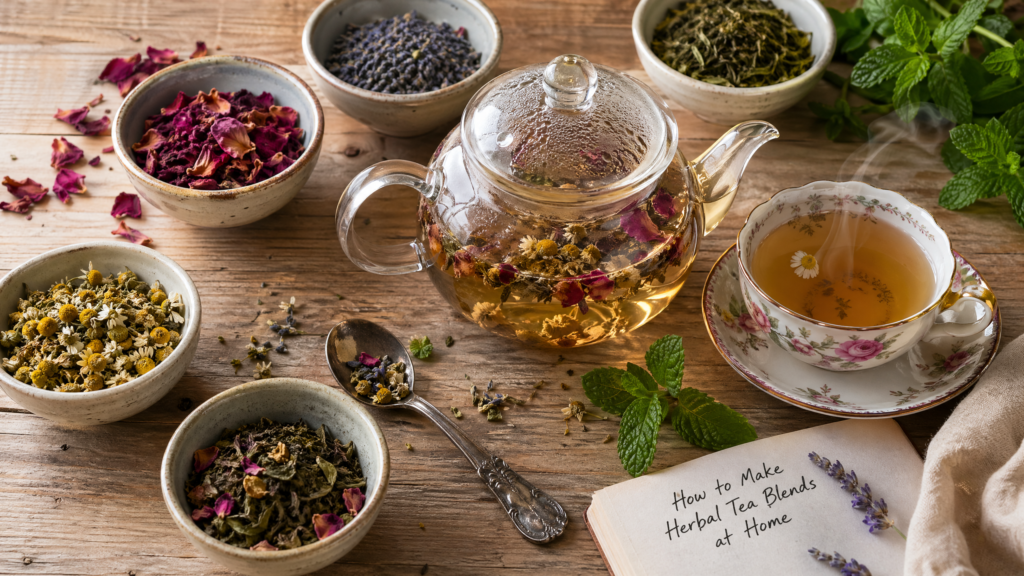
Here’s how to make herbal tea blends at home with everything you need to know to start blending your own herbal teas at home.
Why Blend Your Own Herbal Teas
Potency — commercial tea bags contain small amounts of herb material and often include fillers. Loose dried herbs brewed properly deliver significantly more medicinal compounds per cup.
Customization — you choose exactly which herbs go in your blend based on your specific health needs and flavor preferences.
Cost — bulk dried herbs from quality suppliers cost a fraction of premium herbal tea brands. A pound of dried chamomile makes hundreds of cups of tea.
Freshness — you control storage conditions ensuring your herbs maintain potency far longer than pre-packaged teas sitting on store shelves.
The Basic Formula for Herbal Tea Blends
Every great herbal tea blend follows a simple three-part structure:
Base herb (50-60% of blend) — the main herb that defines the blend’s primary purpose and contributes most of the flavor. Should be pleasant tasting and gentle enough to drink in quantity. Examples: chamomile, peppermint, lemon balm, rooibos.
Supporting herb (30-40% of blend) — enhances and complements the base herb’s effects. Can be stronger tasting or more medicinally potent since it’s used in smaller proportion. Examples: lavender, passionflower, nettle, rosemary.
Accent herb (10-20% of blend) — adds complexity, flavor nuance, or a specific medicinal property. Often strongly flavored or aromatic. Examples: ginger, cinnamon, rose petals, peppermint, fennel seeds.
6 Herbal Tea Blend Recipes
Blend 1 — The Calming Evening Blend
Perfect for winding down before bed and easing anxiety.
- 3 parts dried chamomile flowers
- 2 parts dried lemon balm leaves
- 1 part dried lavender buds
- ½ part dried passionflower
Steep: 1-2 tablespoons per cup in hot water for 10-15 minutes. Drink 30-60 minutes before bed.
What it does: Chamomile and lemon balm work on GABA pathways for nervous system calming. Lavender reduces cortisol and heart rate. Passionflower enhances GABA activity for deeper relaxation.
Where to get the herbs: Dried chamomile, lemon balm, lavender, and passionflower from Starwest Botanicals.
Blend 2 — The Immune Defense Blend
Your daily immune maintenance tea especially through cold and flu season.
- 3 parts dried elderberries
- 2 parts dried echinacea root
- 1 part dried ginger root
- 1 part dried rose hips
- ½ part cinnamon chips
Steep: Simmer 2 tablespoons per cup in water for 20 minutes — roots and berries need longer extraction than leaves and flowers. Strain and drink with honey.
What it does: Elderberry and echinacea activate immune response. Ginger reduces inflammation. Rose hips provide vitamin C. Cinnamon adds warming antimicrobial properties.
Where to get the herbs: Dried elderberries, echinacea root, ginger root, rose hips, and cinnamon from Starwest Botanicals.
Blend 3 — The Digestive Support Blend
For after meals to prevent bloating, gas, and digestive discomfort.
- 3 parts dried peppermint leaves
- 2 parts dried fennel seeds
- 1 part dried ginger root
- 1 part dried chamomile flowers
Steep: 1-2 tablespoons per cup in hot water for 10 minutes. Drink warm after meals.
What it does: Peppermint relaxes intestinal muscles reducing spasms and gas. Fennel reduces bloating and helps trapped gas pass. Ginger stimulates digestive enzymes and bile. Chamomile soothes gut inflammation.
Where to get the herbs: Dried peppermint, fennel seeds, ginger root, and chamomile from Starwest Botanicals.
Blend 4 — The Energy and Clarity Blend
A caffeine-free morning blend for mental alertness and sustained energy.
- 3 parts dried peppermint leaves
- 2 parts dried rosemary
- 1 part dried lemon balm
- ½ part dried ginger root
Steep: 1-2 tablespoons per cup in hot water for 10 minutes. Drink in the morning or when energy and focus dip.
What it does: Peppermint increases alertness and mental performance. Rosemary improves memory and circulation to the brain. Lemon balm provides calm focused clarity. Ginger adds warming energy and circulation support.
Where to get the herbs: Dried peppermint, rosemary, lemon balm, and ginger root from Starwest Botanicals. Grow your own peppermint, rosemary, and lemon balm from seed with Seeds Now.
Blend 5 — The Women’s Wellness Blend
Daily support for hormonal balance, mood, and cycle health.
- 3 parts dried red raspberry leaf
- 2 parts dried lemon balm
- 1 part dried chamomile flowers
- 1 part dried rose petals
- ½ part dried lavender buds
Steep: 1-2 tablespoons per cup in hot water for 10-15 minutes. Drink 2-3 cups daily throughout the month.
What it does: Red raspberry leaf tones the uterus and supports cycle regularity. Lemon balm lifts mood and reduces anxiety. Chamomile eases cramping and digestive symptoms. Rose petals support emotional wellbeing. Lavender reduces cortisol.
Where to get the herbs: Dried red raspberry leaf, lemon balm, chamomile, rose petals, and lavender from Starwest Botanicals.
Blend 6 — The Immune and Detox Morning Blend
A cleansing daily tea that supports liver function, kidney health, and immune maintenance.
- 3 parts dried nettle leaf
- 2 parts dried dandelion root
- 1 part dried ginger root
- 1 part dried turmeric root powder
- ½ part cinnamon
Steep: Simmer 2 tablespoons per cup in water for 15-20 minutes. Add a pinch of black pepper to increase turmeric absorption. Drink in the morning before breakfast.
What it does: Nettle provides minerals and kidney support. Dandelion root stimulates liver bile production. Ginger reduces inflammation. Turmeric supports liver detox pathways. Cinnamon stabilizes blood sugar for a clean energy start.
Where to get the herbs: Dried nettle, dandelion root, ginger root, turmeric, and cinnamon from Starwest Botanicals.
How to Store Your Tea Blends
Mix your blends in small batches — enough for 2-4 weeks of daily use. Store in airtight glass jars away from light and heat. Label with the blend name and date mixed.
Check out our complete guide on how to dry and store herbs from your garden for detailed storage guidance that applies equally to your tea blend ingredients.
Equipment You Need
Loose leaf tea infuser — a stainless steel ball infuser or basket infuser works perfectly. Holds loose herb material while allowing water to flow through freely.
Small kitchen scale — more accurate than measuring by volume for consistent blends. Inexpensive and worth having.
Glass jars — for storing finished blends and individual herbs. Mason jars work perfectly.
Small funnel set — makes filling jars with tea blends much easier and less messy.
All available on Amazon.
Tips for Better Herbal Tea Blends
Use filtered water — chlorinated tap water can interfere with delicate herbal flavors and compounds.
Don’t boil delicate herbs — flowers and leaves like chamomile and lavender should be steeped in water just off the boil — around 195°F. Roots, bark, and seeds can handle a full simmer.
Cover while steeping — covering your cup or teapot keeps volatile oils from escaping in steam. These oils contain many of the medicinal compounds you’re brewing for.
Start simple — begin with 2-3 herb blends before working up to more complex combinations. Simpler blends are easier to troubleshoot if something doesn’t taste right.
Keep notes — write down your ratios and tasting notes. When you create something you love you’ll want to reproduce it exactly.
Growing Your Own Tea Garden
The most satisfying herbal tea experience comes from growing your own ingredients. Most tea herbs are easy to grow and incredibly productive — a small herb garden can supply most of your tea needs through the growing season.
Start with chamomile, lemon balm, peppermint, and lavender — the foundation of most calming and wellness blends. Check out our complete guide on how to start a medicinal herb garden from scratch for everything you need to begin.
Get your herb seeds from Seeds Now — non-GMO, organic varieties chosen for both culinary and medicinal use.
Related Posts You’ll Love
- How to Start a Medicinal Herb Garden From Scratch — grow your own tea blend ingredients
- How to Dry and Store Herbs From Your Garden — preserve your harvest for year-round tea blending
- Best Herbs for Anxiety — A Complete Beginner Guide — the herbs behind your calming blend
- Natural Sleep Routine Using Herbs Step by Step — build the perfect bedtime tea ritual
- 10 Herbs Every Natural Wellness Cabinet Needs — the essential herbs every home needs
- Herbal Academy Review — Is It Worth It? — learn herbalism properly so you can blend with confidence
Get the Free Herbal Wellness Checklist
Click here to download your free Root Freedom Herbal Wellness Checklist →
Disclaimer: This post contains affiliate links. Root Freedom may earn a commission when you purchase through our links at no extra cost to you. This content is for informational purposes only and is not intended as medical advice.