Written by Chad & Millie of Root Freedom
If you’ve spent any time in Texas rangeland, you already know mesquite — the thorny, tenacious tree that seems to grow everywhere from fence lines to pastures. What a lot of people don’t realize is that this tree, often treated as a nuisance to clear, carries real mesquite benefits and a genuinely deep food tradition stretching back centuries, long before it was ever considered a problem plant.
Quick Answer
Mesquite (Prosopis glandulosa) is a native Texas tree, so widespread it now covers an estimated fifty to sixty million acres of Texas rangeland. Its sweet, leathery seed pods ripen from June through September and were a dietary staple for Native peoples across the Southwest, ground into a nutritious flour or fermented into a mild traditional beverage. Mesquite benefits include real nutritional value — the pods and flour are high in fiber and protein, naturally gluten-free, and low in fat — along with mesquite honey, prized for its light color and antioxidant content. One real caution worth knowing upfront: a portion of fallen pods can carry a dangerous fungus, so only pods still on the tree should ever be harvested.
What You’ll Learn
- What mesquite is and why it’s become so widespread across Texas
- The real traditional food history behind mesquite pods and flour
- What modern research says about mesquite’s nutritional properties
- How to safely identify and harvest mesquite pods
- South Texas specific foraging notes, including a real safety caution
- When to be cautious with wild mesquite
Understanding Mesquite
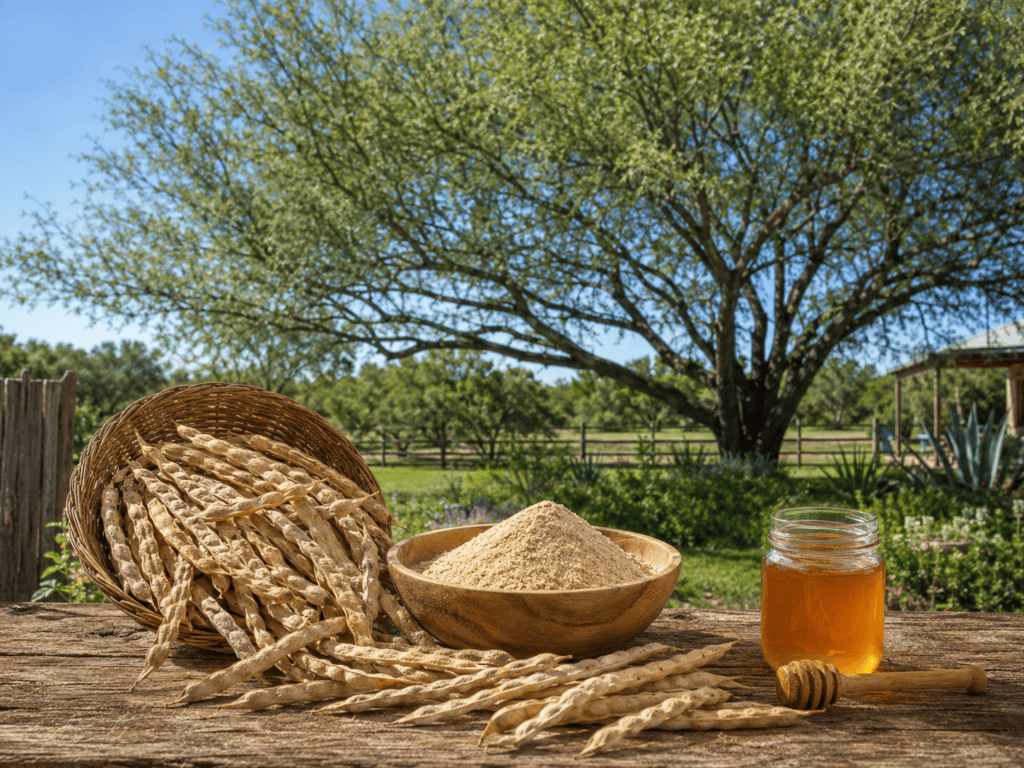
Mesquite is arguably the most widespread native legume in Texas, ranging from a large shrub to a proper tree, identifiable by its thorny branches and finely divided, feathery compound leaves. Its creamy white flowers turn yellow with maturity and give way to long, leathery seed pods, typically 6 to 10 inches, that ripen through summer into a sweet, caramel-flavored fruit.
Mesquite originally grew mostly along streams and in open groves, but its range expanded dramatically across Texas due to the end of regular prairie fires, overgrazing, cattle drives, and drought — meaning the mesquite blanketing so much of the state today is a relatively recent development in ecological terms, not simply how the land has always looked. The tree does far more than produce food — it furnishes shade for livestock, provides habitat and food for everything from quail and deer to jackrabbits and coyotes, and its wood is prized as excellent, flavorful firewood, which is likely the use you’re already most familiar with if you’ve ever grilled or smoked with mesquite chips.
For Native peoples across the Southwest, the mesquite bean pod wasn’t a minor food source — it was a genuine dietary staple, and considered a luxury by some groups. Pods were ground into meal for bread, or mixed with water into a sweet, nutritious drink called atole, which could even be fermented into a mild traditional beer.
Important Note Before We Begin
This post covers a wild native tree with a long tradition of food use, not a clinically studied remedy. There’s a real, specific safety concern worth taking seriously: up to 20% of mesquite pods can be infected with a dangerous aflatoxin-producing fungus, particularly once they’ve fallen to the ground. Only pods still on the tree, showing no sign of mold or insect boring holes, should ever be considered for harvest. Always positively identify any wild plant before consuming it, and consult a healthcare professional before using any plant medicinally. If you want to build a deeper foundation in safe wild food and herbal identification, Herbal Academy’s courses are a solid place to start.
The Best Traditional Uses of Mesquite
1. Mesquite Flour — The Real Mesquite Benefits of a Traditional Staple Food
This is the single most significant traditional use of mesquite, and it’s genuinely well-supported by modern nutritional research, not just folk tradition.
Best for: A nutrient-dense, naturally gluten-free flour alternative
What research shows: Mesquite pod flour carries a genuinely appealing nutritional profile — high in dietary fiber and protein, low in fat, with beneficial fatty acids and antioxidant phenolic compounds. Research on breadmaking specifically found that adding mesquite flour up to about 10% of a wheat flour blend increased loaf volume and improved crumb texture, while also being naturally gluten-free and lower glycemic than wheat flour, making it genuinely useful for blood sugar management, not just a novelty ingredient.
How to use it: Ripe, sound pods are dried and ground — traditionally pounded, today often processed in a grain mill, food processor, or high-powered blender — then sifted repeatedly through a fine-mesh sieve to separate the fine flour from the tough seed and husk fragments, which get discarded. The seeds are hard enough to crack a tooth if they make it into the final product, so this sifting step isn’t optional. The resulting flour is used in breads, pancakes, muffins, and baked goods, typically blended with other flours rather than used entirely on its own.
Where to get it: Foraged and processed at home from your own identified trees, or pre-made mesquite flour on Amazon if you’d rather skip the processing step.
2. Mesquite Honey — A Prized Traditional Sweetener
A byproduct of the mesquite bloom that’s earned real culinary respect on its own.
Best for: A natural sweetener with real antioxidant content
What research shows: Honey made by bees foraging on mesquite flower nectar is considered a genuine delicacy, with a light color, smooth texture, and notably high antioxidant levels compared to some other honey varieties. Unlike the pods, this isn’t something you process yourself — it’s entirely the bees’ work, turning mesquite blossom nectar into honey the same way any monofloral honey is made.
How to use it: Use it anywhere you’d use standard honey — tea, drizzled over desserts, or worked into recipes wanting a distinct, robust sweetness.
Where to get it: This one isn’t a DIY foraging project — you’ll want a local Texas beekeeper who works mesquite country during bloom season (typically spring into early summer), or mesquite honey on Amazon if you don’t have a local source.
3. Traditional Beverage and Fermented Uses
Beyond flour and honey, mesquite pods had a real place in traditional drink-making too.
Best for: Historical and traditional beverage preparation
What research shows: Ground mesquite pods mixed with water created atole, a sweet traditional drink, which could be fermented further into a mild traditional beer — a genuine, documented part of Southwestern Indigenous foodways, not a modern invention.
How to use it: This is a historical practice worth knowing as part of mesquite’s fuller story rather than a modern how-to most foragers will attempt. Traditionally, the same sifted, processed pod flour or pulp used for baking was mixed with water into atole, which could be left to ferment further into a mild traditional beverage.
Where to get it: The same sifted mesquite flour used for baking — no separate harvesting or processing required beyond what’s already described above.
South Texas Foraging Notes
| Consideration | Detail |
|---|---|
| Identification | Thorny branches, finely divided compound leaves, long leathery seed pods |
| Harvest window | June through September, when pods reach full maturity |
| Critical safety note | Only harvest pods still on the tree — fallen pods can carry dangerous aflatoxin fungus |
| Look for | Pods free of mold, discoloration, or small holes from boring insects |
| Habitat | Extremely widespread across Texas rangeland, fence lines, and pastures |
When to See a Doctor
Seek medical attention for any allergic reaction or concerning digestive symptoms after trying mesquite pods, flour, or honey. Never eat pods that show any sign of mold, discoloration, or insect damage, given the real risk of aflatoxin contamination in compromised pods — this isn’t a minor caution, aflatoxin exposure is a genuine health concern, not just an upset stomach risk. Young children, pregnant or nursing individuals, and anyone managing a chronic health condition should check with a doctor before trying wild foods generally.
Key Takeaways
- Mesquite is one of the most widespread native trees in Texas, and its spread across the state is a relatively recent ecological development, not how the land has always looked
- The real mesquite benefits center on its pods — a traditional Native American staple food, ground into a nutritious, naturally gluten-free flour
- Mesquite flour is low glycemic and genuinely useful for blood sugar management, backed by real nutritional research, not just tradition
- Mesquite honey is a prized, antioxidant-rich traditional sweetener
- The single most important safety rule: only harvest pods still on the tree, never fallen ones, due to real aflatoxin fungus risk
- This tree does far more than produce food — it’s also valued for shade, wildlife habitat, and prized firewood
At a Glance
| Trait | Detail |
|---|---|
| Scientific name | Prosopis glandulosa |
| Native range | Texas and the broader American Southwest |
| Harvest season | June through September |
| Edible parts | Ripe, sound pods (flour, atole); flower nectar (honey) |
| Traditional uses | Flour, bread, fermented beverage, honey |
| Caution | Never harvest fallen pods — aflatoxin fungus risk |
Frequently Asked Questions
What are the main mesquite benefits?
The main benefits are nutritional and traditional — mesquite flour is high in fiber and protein, naturally gluten-free, and low glycemic, while mesquite honey carries real antioxidant content. Both come from a genuinely deep Native American food tradition.
Is mesquite flour safe to eat?
Yes, when made from sound, tree-picked pods free of mold or insect damage. Avoid any pods that have fallen to the ground, since a portion of fallen pods can carry a dangerous aflatoxin-producing fungus.
How do you make mesquite flour at home?
Dried, sound pods are ground into a fine powder, traditionally by pounding and today often with a flour mill or high-powered blender. It’s typically blended with other flours rather than used entirely on its own in baking.
When do mesquite pods ripen?
Generally June through September, depending on local conditions.
Is mesquite honey different from regular honey?
Mesquite honey is prized specifically for its light color, smooth texture, and notably high antioxidant content, distinguishing it from many other honey varieties.
Related Posts You’ll Love
- Texas Persimmon Benefits — Native Fruit of South Texas — another native Texas food tradition
- Mustang Grape Benefits — Texas’s Own Wild Native Grape — more native Texas foraging and food history
- Wild Mulberry Benefits — Native Red Mulberry Guide — another creek-country native fruit
- Cenizo Benefits — The South Texas Rain Predictor — a fellow native Texas plant with real local legend behind it
- How to Make Corn Silk Tea — Benefits and Easy Recipe — more DIY prep from things growing right at home
Not sure which herbs are right for your specific situation? Take our free Natural Wellness Assessment and get a personalized herbal remedy report delivered straight to your inbox.
Get Your Free Natural Home Remedies Quick Reference Card
12 common ailments, the herb that helps, and exactly how to use it — free instant download.
This post contains affiliate links. Root Freedom may earn a commission when you purchase through our links at no extra cost to you. This content is for informational purposes only and is not intended as medical advice. Always consult a healthcare professional before beginning any new herbal regimen.