
Written by Chad & Millie of Root Freedom
We grow oregano on our South Texas farm and after every harvest the question comes up — what do you do with all of it beyond cooking? The answer we keep coming back to is oregano infused oil. It’s one of the simplest and most useful herbal preparations you can make at home, and if you grow your own oregano like we do, the cost is essentially zero. So, we dove in and researched how to make oregano oil at home and here is what we have.
Quick Answer — How Do You Make Oregano Oil at Home?
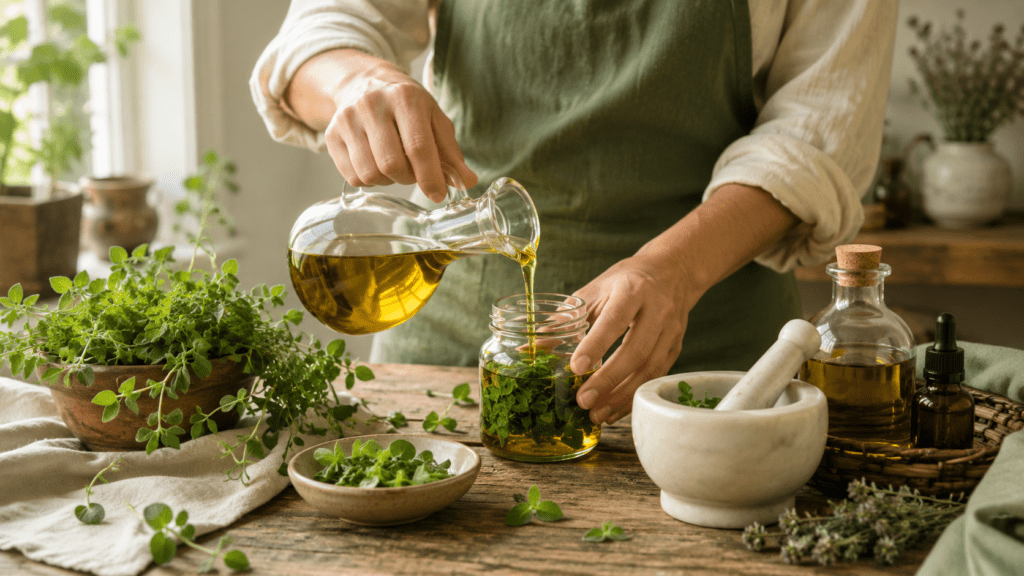
Wash and completely dry fresh oregano, lightly bruise the leaves to release the oils, pack loosely into a clean dry glass jar, and cover completely with olive oil. Seal and place in a warm sunny windowsill for 4-6 weeks shaking daily. Strain through cheesecloth into a dark glass bottle and store in a cool dark place. The result is an oregano infused oil — excellent for cooking, mild topical use, and everyday herbal applications. This is not the same as commercially steam distilled oil of oregano supplement.
What You’ll Learn
- How to make oregano infused oil at home step by step using fresh or dried oregano
- The critical difference between homemade oregano infused oil and commercial oil of oregano supplement — never confuse these two
- Which olive oil to use and why it matters
- How to tell when your infused oil is ready
- Safe uses for homemade oregano oil — culinary, topical, and household
- How to store it properly for maximum shelf life
- How to use your own garden oregano for the most authentic and potent preparation
Understanding the Critical Difference — Infused Oil vs Essential Oil
Before we get into the how-to, this distinction is non-negotiable and must be understood before you use either product.
Homemade oregano infused oil — what this guide teaches you to make — is created by soaking oregano in a carrier oil like olive oil. The result is a mildly medicinal culinary and topical oil with gentle antimicrobial and anti-inflammatory properties. It is food safe, appropriate for cooking, skin application, and general household use.
Commercial oil of oregano supplement — available in capsules and liquid drops — is steam distilled to concentrate the active compounds carvacrol and thymol to 60-80%+ concentration. It is extremely potent, taken in drops not tablespoons, and has dramatically different potency and applications than homemade infused oil.
These two products are not interchangeable. Never use homemade infused oil in the same doses or applications as commercial oil of oregano supplement. Never use commercial oil of oregano in cooking the way you would use infused oil.
If you want to learn more about the therapeutic uses of commercial oil of oregano — the concentrated supplement — read our full guide: Oil of Oregano Benefits — Nature’s Most Powerful Antimicrobial Herb
1. Growing and Harvesting Your Own Oregano
Best for: Maximum potency, zero cost, authentic homegrown herbal preparation
What research shows: Oregano’s active compounds — carvacrol, thymol, and rosmarinic acid — are highest just before the plant flowers. Harvesting at this stage produces the most medicinally potent plant material for infusion. Morning harvest after dew has dried but before the heat of the day preserves the most volatile compounds.
How to harvest: Cut stems just above a leaf node — never more than one third of the plant at one time. This encourages bushier regrowth and multiple harvests throughout the season. We harvest our South Texas oregano throughout the growing season and it comes back stronger each time.
Where to get seeds if you don’t grow your own: Organic oregano seeds from Seeds Now. Dried oregano for infusion from Starwest Botanicals.
2. What You’ll Need
Ingredients:
- Fresh or dried oregano — fresh from your garden is ideal, dried from a quality source works equally well
- Carrier oil — extra virgin olive oil is traditional and the best choice for most uses. For a lighter flavor or topical-only use, try jojoba or fractionated coconut oil
Equipment:
- Clean dry glass mason jar with tight fitting lid
- Cheesecloth or fine mesh strainer
- Dark glass bottle for storage — amber or cobalt blue
- Labels with date and contents
Where to get carrier oil: Organic extra virgin olive oil on Amazon. Jojoba oil from Cliganic for topical preparations.
3. Step by Step Instructions
Step 1 — Dry your oregano completely
This is the most critical step. Any moisture in the jar causes mold and ruins the batch. If using fresh oregano wash it gently, shake off excess water, then spread in a single layer on a clean towel or drying rack. Allow to dry completely — 24-48 hours minimum in a warm spot with good air circulation. You can also use a dehydrator at 95-105°F for 2-4 hours. The oregano should feel completely dry and slightly crispy before you proceed.
If using already dried oregano skip this step entirely.
Step 2 — Bruise the leaves
Lightly crush or bruise the dried oregano leaves between your palms or with a mortar and pestle. This breaks the cell walls and releases the essential oils and active compounds into the carrier oil. Don’t grind to powder — just enough to bruise and release the fragrance.
Step 3 — Pack the jar
Fill your clean dry glass jar loosely with bruised oregano — about halfway to two thirds full. Don’t pack tightly or compress the herb material.
Step 4 — Cover with oil
Pour your olive oil slowly over the oregano until all plant material is completely submerged and the oil sits at least 1-2 inches above the herbs. Oregano will absorb some oil as it sits — check after 24 hours and top up if any herb material is exposed above the oil line. Exposed plant material above the oil can mold.
Step 5 — Seal and infuse
Seal the jar tightly. Place in a warm sunny windowsill — south facing is ideal. The gentle warmth from the sun accelerates the infusion process. Shake or stir the jar once daily for 4-6 weeks.
Step 6 — Check for readiness
After 4-6 weeks your oil should be a rich golden to green-gold color with a strong distinctive oregano fragrance. Taste a small amount — it should have a clear herby oregano flavor with mild warmth. If the color is still pale or the fragrance is weak leave it for another 1-2 weeks.
Step 7 — Strain and bottle
Line a fine mesh strainer with cheesecloth and place over a clean bowl. Pour the infused oil through slowly. Gather the cheesecloth and squeeze firmly to extract every last drop of oil from the herb material. Compost the spent herbs.
Step 8 — Store properly
Pour your finished oregano infused oil into dark glass bottles — amber or cobalt blue glass protects the oil from light degradation. Label with the herb name, oil used, and date made. Store in a cool dark place away from heat and direct light.
Shelf life: Properly made oregano infused oil lasts 6-12 months. Use clean dry utensils every time you use it — introducing water or food particles shortens shelf life significantly.
How to Use Your Homemade Oregano Infused Oil
Culinary uses: Drizzle over pizza, pasta, roasted vegetables, bread dipping, salad dressings, and marinades. The flavor is more complex and herby than plain olive oil — it’s a kitchen staple once you make your first batch.
Topical uses: Apply to minor skin irritations, dry skin patches, and mild fungal skin conditions. Massage into sore muscles and joints for mild anti-inflammatory relief. Use as a scalp oil treatment — oregano’s antimicrobial properties support scalp health and reduce dandruff.
Household uses: Add to homemade cleaning sprays for mild antimicrobial effect. Use as a wood conditioning oil with antimicrobial properties.
What it is NOT appropriate for: Do not use homemade infused oil as a replacement for commercial oil of oregano supplement for serious antimicrobial or antifungal protocols. The concentration is not comparable.
Sun Infusion vs Heat Infusion — Which Is Better
Sun infusion — what we recommend: 4-6 weeks on a sunny windowsill. Gentle consistent warmth extracts the fat-soluble compounds slowly and completely without risk of overheating and degrading delicate aromatic compounds. Traditional method, produces the most complete extraction.
Heat infusion — faster alternative: Place the jar in a slow cooker or double boiler on the lowest setting — around 100-110°F — for 4-8 hours. Faster but requires careful temperature monitoring. Too hot and you cook the herb rather than infuse it, destroying active compounds and creating a cooking oil rather than a medicinal preparation.
For most home herbalists the sun infusion method is easier, more forgiving, and produces better results. The 4-6 week wait is worth it.
Troubleshooting Common Problems
Mold in the jar — caused by moisture. Discard the batch and start again. Ensure oregano is completely dry before infusing and jar is completely dry before use.
Oil smells rancid — olive oil has gone off, usually from heat exposure or too long a shelf life. Use fresh oil and store finished product away from heat.
Weak color and fragrance — herb material may have been too old or dried too long before use. Use fresher herb material or increase the ratio of herb to oil.
Herb floating above oil — top up with more oil immediately. Exposed plant material above the oil line will mold.
Using Your Dehydrator for Oregano
We use our dehydrator for our South Texas oregano harvest before infusing. Set at 95-105°F for 2-4 hours — the lower temperature preserves the aromatic compounds that make the infusion potent. The oregano is ready when it crumbles easily between your fingers with no remaining flexibility or moisture.
Dehydrating is particularly useful in humid climates where air drying can be slow and inconsistent. If you grow herbs in the South or anywhere with high humidity a dehydrator is one of the best investments you can make for home herbal preparations.
Key Takeaways
- Complete drying before infusing is the single most important step — any moisture causes mold and ruins the batch
- Sun infusion over 4-6 weeks produces the most complete and medicinally rich extraction — patience is the key ingredient
- Homemade oregano infused oil is a gentle mildly medicinal culinary and topical preparation — it is not a replacement for commercial steam distilled oil of oregano supplement
- Fresh garden oregano harvested just before flowering produces the most potent infused oil — morning harvest preserves the most volatile aromatic compounds
- Dark glass storage away from heat and light is essential — light and heat are the enemies of herbal infused oils
- Properly made and stored oregano infused oil lasts 6-12 months — label with date made so you can track freshness
- The dehydrator is your best tool for preparing fresh oregano for infusion in humid climates like South Texas
At a Glance — How to Make Oregano Oil at Home
| Step | Action | Time |
|---|---|---|
| 1 | Wash and dry oregano completely | 24-48 hours |
| 2 | Bruise leaves to release oils | 5 minutes |
| 3 | Pack loosely into clean dry jar | 5 minutes |
| 4 | Cover completely with olive oil | 5 minutes |
| 5 | Seal and infuse in sunny windowsill | 4-6 weeks |
| 6 | Strain through cheesecloth | 10 minutes |
| 7 | Bottle in dark glass and label | 5 minutes |
| Total active time | 30 minutes | |
| Total infusion time | 4-6 weeks |
Frequently Asked Questions
Can I use dried oregano from the grocery store to make infused oil? Yes — dried culinary oregano from the grocery store works for making infused oil. Quality varies widely though — look for organic options with strong fragrance. For the most medicinally potent preparation use high quality dried oregano from a reputable herb supplier like Starwest Botanicals or grow your own.
How do I know if my oregano oil has gone bad? Smell it — rancid oil has a distinctly unpleasant sour or paint-like smell very different from fresh herby oregano fragrance. If it smells off discard it. Also check for any cloudiness or sediment that wasn’t there before — this can indicate spoilage. When in doubt throw it out.
Can I use other oils besides olive oil? Yes — jojoba oil is excellent for topical preparations as it’s technically a liquid wax and has a much longer shelf life than olive oil. Fractionated coconut oil is another good option for topical use. For culinary use stick with olive oil — it’s the traditional choice and has its own health benefits alongside the oregano infusion.
Is homemade oregano oil safe for children? The culinary use of oregano infused oil in cooking is generally safe for children of all ages — it’s essentially herb-flavored olive oil. For topical use on children dilute further with additional carrier oil and do a patch test first. Never use commercial oil of oregano supplement on young children.
Can I speed up the infusion process? Yes — the heat infusion method using a slow cooker on the lowest setting at 100-110°F for 4-8 hours significantly speeds up the process. However the slow sun infusion method over 4-6 weeks produces a more complete extraction and is more forgiving for beginners. We prefer the traditional method.
How much oregano do I need for one batch? For a standard 16oz mason jar you’ll need roughly 1-1.5 cups of loosely packed dried oregano or 2-3 cups of fresh oregano before drying. This produces approximately 12-14oz of finished infused oil after straining — enough to last several months of regular culinary and topical use.
Related Posts You’ll Love
- Oil of Oregano Benefits — Nature’s Most Powerful Antimicrobial Herb — the concentrated supplement version and its therapeutic uses
- How to Make Echinacea Tincture at Home — another powerful home herbal preparation
- How to Make a Healing Herbal Salve at Home — use your oregano infused oil as a base
- How to Dry and Store Herbs From Your Garden — master herb drying before your next batch
- Herbal Academy Review — Is It Worth It? — learn herbal oil making and more with structured education
- Natural Longevity Supplements and Herbs — Evidence Based Guide to Healthy Aging — herbs and supplements that target the biological mechanisms of aging
Get Your Free Natural Home Remedies Quick Reference Card
12 common ailments, the herb that helps, and exactly how to use it — free instant download.
Disclaimer: This post contains affiliate links. Root Freedom may earn a commission when you purchase through our links at no extra cost to you. This content is for informational purposes only and is not intended as medical advice. Always consult a healthcare professional before beginning any new herbal regimen.