Written by Chad & Millie of Root Freedom
Herbal infused oil is the foundation of homemade natural skin care and herbal medicine making. Once you know how to make it the possibilities are endless — salves, balms, massage oils, hair treatments, and topical remedies of every kind all start here.
We’ll show you how to make herbal infused oil at home. It’s simpler than most people think and the results are significantly more potent and pure than commercial alternatives.
What Is Herbal Infused Oil?
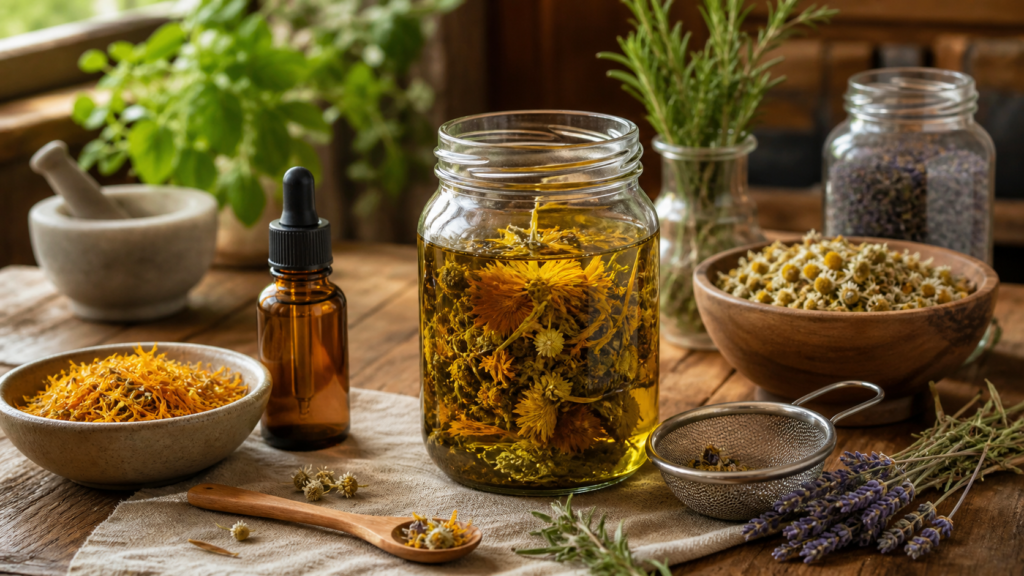
Herbal infused oil is made by soaking dried plant material in a carrier oil — the oil draws out the fat-soluble medicinal compounds from the herb creating a concentrated therapeutic oil.
It’s different from essential oil — essential oils are steam-distilled concentrated plant extracts requiring specialized equipment. Herbal infused oils are made simply at home and are safe to apply directly to skin without dilution.
Choosing Your Carrier Oil
Different carrier oils have different properties and are suited to different uses:
Olive oil — rich, moisturizing, long shelf life. Best for medicinal salves and body preparations. Strong smell can overpower delicate herb aromas.
Jojoba oil — technically a liquid wax, not an oil. Closest to skin’s natural sebum. Excellent for facial preparations and acne-prone skin. Very long shelf life.
Sweet almond oil — light, easily absorbed, mild smell. Excellent all-purpose carrier for skin care and massage oils.
Coconut oil — solid at room temperature, melting on contact with skin. Antimicrobial properties. Best for hair treatments, lip balms, and body preparations.
Sunflower oil — light, affordable, neutral smell. Good all-purpose carrier for larger batches.
Where to get carrier oils: Quality carrier oils at Starwest Botanicals or Amazon!
Method 1 — Cold Infusion (Best Quality)
The slow cold infusion preserves the most volatile compounds and produces the highest quality oil. It requires no heat — just time.
How to make it:
Make sure your jar and herbs are completely dry — any water causes mold. Fill a clean dry glass jar ¾ full with dried herb material. Don’t pack tightly — oil needs to circulate through the herb.
Cover completely with your chosen carrier oil. Stir with a clean dry chopstick to release air bubbles. The oil should sit at least 1 inch above the herb.
Seal tightly. Place in a warm sunny window — a south-facing windowsill is ideal. Shake or stir daily.
Infuse for 4-6 weeks. Strain through cheesecloth — squeeze firmly to extract every drop of oil from the herb material.
Store finished oil in a dark glass bottle away from heat and light. Label with herb, oil, and date.
Shelf life: 6-12 months depending on the carrier oil used.
Method 2 — Warm Infusion (Faster)
The warm infusion method produces good quality oil in a few hours rather than weeks. Ideal when you need oil quickly or for harder plant materials like roots and bark that benefit from heat extraction.
How to make it:
Place dried herbs and carrier oil in a double boiler — a heat-safe bowl set over a saucepan of simmering water. Never place herbs directly over flame.
Maintain temperature at 100-120°F — warm but never simmering. Use a kitchen thermometer for accuracy. The oil should be warm to the touch but not hot.
Infuse for 2-3 hours stirring occasionally. Remove from heat. Strain through cheesecloth while still warm — warm oil strains more easily.
Method 3 — Slow Cooker Infusion
The slow cooker method is a convenient middle ground — faster than cold infusion, gentler than stovetop.
Set your slow cooker to the lowest setting — warm. Place herbs and oil inside. Infuse on warm for 8-24 hours with the lid slightly ajar to allow moisture to escape. Stir occasionally. Strain when complete.
Best Herbs for Infused Oils
| Herb | Best carrier oil | Best for |
|---|---|---|
| Calendula | Olive or sweet almond | Wound healing, skin soothing |
| Lavender | Jojoba | Acne, burns, skin calming |
| Chamomile | Sweet almond | Sensitive skin, inflammation |
| Rosemary | Olive | Hair growth, scalp health |
| Arnica | Olive | Bruises, muscle pain |
| St. John’s Wort | Olive | Nerve pain, bruising |
| Rose petals | Jojoba | Anti-aging, dry skin |
| Plantain | Olive | Insect stings, wounds |
Where to get all these herbs: Starwest Botanicals carries the complete range.
Grow your own calendula, lavender, chamomile, and rosemary from seed with Seeds_Now for the freshest most potent infused oils.
5 Herbal Infused Oil Recipes
Oil 1 — Calendula Healing Oil
Herb: Dried calendula petals Carrier: Olive oil Infusion: 6 weeks cold infusion Use: Apply directly to wounds, rashes, eczema, dry skin. Use as base for healing salve.
Oil 2 — Rosemary Hair Growth Oil
Herb: Fresh dried rosemary Carrier: Olive oil or jojoba Infusion: 4 weeks cold infusion Use: Massage into scalp 30 minutes before washing. Stimulates circulation and hair follicles. Research shows rosemary oil as effective as minoxidil for hair growth.
Oil 3 — Lavender Facial Oil
Herb: Dried lavender buds Carrier: Jojoba oil Infusion: 4 weeks cold infusion Use: Apply 2-3 drops to clean face morning and evening. Excellent for acne-prone and combination skin.
Oil 4 — Arnica Pain Relief Oil
Herb: Dried arnica flowers Carrier: Olive oil Infusion: 4-6 weeks cold infusion Use: Massage into bruises, sore muscles, and joints. Do not apply to broken skin.
Oil 5 — Chamomile Sensitive Skin Oil
Herb: Dried chamomile flowers Carrier: Sweet almond oil Infusion: 4 weeks cold infusion Use: Apply to sensitive, inflamed, or reactive skin. Excellent for eczema and rosacea.
Using Your Infused Oils
Directly on skin: Most herbal infused oils can be applied directly without further dilution — they’re already at a therapeutic concentration in a safe carrier oil.
As a base for salves: Add beeswax to create a semi-solid salve. See our complete herbal salve guide.
As massage oil: Use directly or blend multiple infused oils for a custom massage blend.
In bath: Add 2-4 tablespoons of infused oil to a warm bath for full body skin treatment.
As hair treatment: Massage into scalp and hair, leave for 30 minutes to overnight, wash out.
Troubleshooting
Oil smells off or rancid: The carrier oil went rancid — use fresh oil and store finished product away from heat and light.
Mold growing in jar: Moisture got into the jar or herbs weren’t fully dry. Always use completely dry herbs and equipment.
Oil is very dark colored: Normal — calendula produces a rich golden oil, St. John’s Wort produces a deep red oil. Color indicates successful extraction of plant compounds.
Herb material floating: Normal — stir daily during infusion to keep herbs submerged.
Related Posts You’ll Love
- How to Make a Healing Herbal Salve — the next step after making infused oil
- Best Herbs for Skin Health and Healing — the herbs behind your infused oils
- How to Start a Medicinal Herb Garden From Scratch — grow your own infused oil herbs
- How to Dry and Store Herbs From Your Garden — properly dried herbs are essential for quality infused oils
- Herbal First Aid Kit — your infused oils belong in every herbal first aid kit
Get the Free Herbal Wellness Checklist
Click here to download your free Root Freedom Herbal Wellness Checklist →
Disclaimer: This post contains affiliate links. Root Freedom may earn a commission when you purchase through our links at no extra cost to you. This content is for informational purposes only and is not intended as medical advice.