Written by Chad & Millie of Root Freedom
Most first aid kits are full of synthetic chemicals and single-use plastics. Nothing wrong with having bandages and antiseptic on hand — but what if your first aid kit also included nature’s most powerful healing tools?
A herbal first aid kit doesn’t replace conventional first aid. It enhances it. These are the herbs and natural remedies that handle the everyday bumps, cuts, burns, headaches, and stomach upsets that don’t require a trip to the doctor but do require something more than doing nothing.
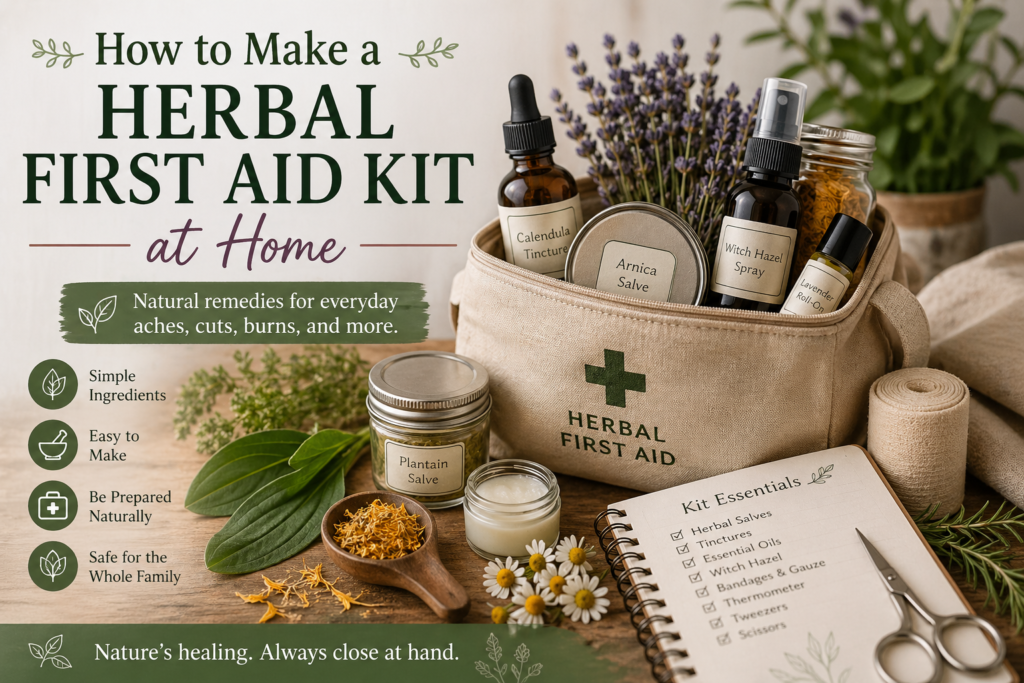
Here’s How to Make a Herbal First Aid Kit at Home, and what exactly to put in yours.
Quick Answer
A complete herbal first aid kit contains lavender essential oil for burns and bites, tea tree oil as a natural antiseptic, calendula salve for wound healing, arnica gel for bruises, echinacea tincture for immune emergencies, ginger for nausea, peppermint oil for headaches, raw honey as a wound dressing, elderberry syrup for illness, and chamomile for calming and digestive upset. These ten items handle the vast majority of everyday first aid situations naturally.
What You’ll Learn
- The 10 essential items for a complete herbal first aid kit and exactly what each one does
- How to use each herb or remedy correctly for maximum effectiveness
- How to store your herbal first aid kit for maximum shelf life
- A complete shopping list with trusted sources for every item
- How to grow your own kit herbs for a self-sufficient natural medicine cabinet
The 10 Essential Items for Your Herbal First Aid Kit
1. Lavender Essential Oil — The Swiss Army Knife of Herbs
If you could only have one essential oil in your first aid kit lavender would be it. It’s antibacterial, anti-inflammatory, analgesic, and calming — covering more first aid situations than any other single herb.
Use it for: Minor burns, cuts and scrapes, insect bites, headaches, anxiety and panic, skin irritation, sunburn relief.
How to use: Apply 1-2 drops directly to minor burns or bites. Dilute in carrier oil for larger areas. Inhale directly for headaches and anxiety.
Where to get it: Pure lavender essential oil from Cliganic.
2. Tea Tree Oil — Natural Antiseptic
Tea tree oil is one of nature’s most powerful antimicrobial agents. It kills bacteria, viruses, and fungi on contact making it a direct replacement for synthetic antiseptics like Neosporin for minor wounds.
Use it for: Cuts and scrapes, infected splinters, athlete’s foot, nail fungus, acne, insect bites.
How to use: Always dilute — 2-3 drops in a teaspoon of carrier oil. Never apply undiluted to skin. Apply to affected area 2-3 times daily.
Where to get it: Tea tree essential oil on Cliganic.
3. Calendula — The Healing Herb
Calendula is the most powerful skin-healing herb available. Its anti-inflammatory and antimicrobial properties make it ideal for any skin injury or irritation. It speeds wound healing, reduces scarring, and soothes inflamed skin faster than most conventional topical treatments.
Use it for: Cuts, scrapes, rashes, eczema, dry cracked skin, minor burns, diaper rash, chapped lips.
How to use: Apply calendula salve or infused oil directly to affected area. Reapply 2-3 times daily.
Where to get it: Dried calendula petals from Starwest Botanicals Dried calendula. Grow your own from seed from Amazon.
4. Arnica — For Bruises and Muscle Pain
Arnica is the go-to herbal remedy for bruises, muscle soreness, and joint pain. It reduces inflammation and speeds the reabsorption of bruised blood under the skin — making bruises heal significantly faster.
Use it for: Bruises, muscle soreness after exercise, sprains, joint pain, swelling from minor injuries.
How to use: Apply arnica gel or cream to affected area immediately after injury. Do not apply to broken skin.
Where to get it: Arnica gel on Amazon.
5. Echinacea Tincture — Immune Emergency Response
When illness strikes suddenly echinacea tincture is your fastest acting immune support tool. Check out our full guide on how to make echinacea tincture at home.
Use it for: First sign of cold or flu, immune support during illness, after exposure to sick contacts.
How to use: 30-40 drops in water every 3-4 hours at first sign of illness.
Where to get it: Dried echinacea from Starwest Botanicals dried echinacea root.
6. Ginger — For Nausea and Digestive Upset
Fresh or dried ginger is one of the most effective natural remedies for nausea — whether from motion sickness, stomach bugs, or morning sickness. Keep dried ginger root or ginger tea bags in your kit for immediate use.
Use it for: Nausea, motion sickness, stomach upset, indigestion, vomiting, morning sickness.
How to use: Steep 1 teaspoon dried ginger in hot water for 10 minutes. Sip slowly. Or chew a small piece of crystallized ginger for immediate nausea relief.
Where to get it: Dried ginger root from Starwest Botanicals Ginger root Options.
7. Peppermint Essential Oil — For Headaches and Fever
Peppermint oil applied topically cools the skin through evaporation and increases blood flow — making it remarkably effective for tension headaches and mild fever reduction.
Use it for: Tension headaches, fever support, muscle aches, nausea, mental fatigue, sinus congestion.
How to use: Dilute 2-3 drops in carrier oil and apply to temples for headaches. Apply to back of neck and wrists for fever support.
Where to get it: Peppermint essential oil from Cliganic.
8. Raw Honey — Natural Wound Dressing
Raw honey has been used as a wound dressing for thousands of years — and modern research confirms it works. Its hydrogen peroxide content, low pH, and osmotic properties create an environment where bacteria cannot survive. Manuka honey is the most potent variety for wound care.
Use it for: Minor cuts and wounds, burns, infected wounds, sore throats, coughs.
How to use: Apply a thin layer directly to clean wounds and cover with a bandage. Change dressing daily. For sore throats take 1 tablespoon straight or dissolved in warm water.
Where to get it: Raw manuka honey on Amazon or your local health food store.
9. Elderberry Syrup — Fast Immune Support
Keep a jar of homemade elderberry syrup in your refrigerator at all times. Check out our complete elderberry syrup recipe — it’s easier than you think.
Use it for: Cold and flu prevention and treatment, immune support during illness, general antioxidant support.
How to use: 1 tablespoon every 3-4 hours when sick. 1 tablespoon daily for prevention.
Where to get it: Dried elderberries from Starwest Botanicals dried Elderberries.
10. Chamomile Tea — The Calming Remedy
No herbal first aid kit is complete without chamomile. It’s the gentlest and most versatile herb — calming anxiety, settling upset stomachs, reducing inflammation, and promoting sleep when illness has you restless.
Use it for: Anxiety and stress, digestive upset, insomnia during illness, eye irritation as a compress, skin inflammation.
How to use: Steep 2 teaspoons dried chamomile in hot water for 10 minutes. Drink up to 3 cups daily. Use cooled tea bags as a compress for eye irritation or skin inflammation.
Where to get it: Dried chamomile from Starwest Botanicals Dried Chamomile flowers. Grow your own with Seeds Now.
How to Store Your Herbal First Aid Kit
Container: A wooden box, wicker basket, or large glass jar works perfectly. Keep everything together in one dedicated spot.
Storage conditions: Cool, dark, and dry. Avoid storing near heat sources like stoves or in direct sunlight.
Labeling: Label everything clearly with the herb name and date purchased or made. Check expiration dates annually.
Essential oils: Store in their original dark glass bottles. Keep away from children.
If you want to go deeper on building a complete herbal home remedy practice beyond the first aid kit, the Herbal Academy offers excellent courses covering herbal preparations, materia medica, and home remedy protocols from traditional and clinical perspectives.
Your Herbal First Aid Kit Shopping List
| Item | Where to get |
|---|---|
| Lavender essential oil | Organic Lavender Essential Oil |
| Tea tree essential oil | Organic Tea Tree Essential Oil |
| Peppermint essential oil | Organic Peppermint Essential oil |
| Dried calendula petals | Starwest Botanicals Dried calendula |
| Dried echinacea | Starwest Botanicals dried echinacea root |
| Dried elderberries | Starwest Botanicals dried Elderberries |
| Dried chamomile | Starwest Botanicals Dried Chamomile flowers |
| Dried ginger root | Starwest Botanicals Ginger root Options |
| Arnica gel | Amazon |
| Raw manuka honey | Amazon |
| Herb seeds for growing | Seeds Now. |
Key Takeaways
- Lavender essential oil is the single most versatile first aid herb — antibacterial, anti-inflammatory, analgesic, and calming in one bottle
- Always dilute tea tree oil — it causes contact dermatitis at full strength but is highly effective when properly diluted
- Calendula is the premier herb for skin healing — faster wound repair and reduced scarring compared to most conventional topicals
- Never apply arnica to broken skin — it is for bruises, muscle soreness, and closed injuries only
- Raw honey creates a bacteria-hostile environment through hydrogen peroxide, osmotic pressure, and low pH — genuinely effective wound dressing
- Elderberry syrup in the refrigerator ready to go is one of the highest ROI investments in your natural wellness cabinet
- Most of these herbs can be grown at home — making your herbal first aid kit essentially free after the first season
Frequently Asked Questions
Can a herbal first aid kit replace a conventional first aid kit?
No — a herbal first aid kit enhances conventional first aid rather than replacing it. Keep standard bandages, gauze, medical tape, and antiseptic alongside your herbal remedies. The herbs handle the healing and recovery side while conventional supplies handle wound management.
How long do herbal first aid kit items last?
Essential oils last 2-5 years stored in dark glass away from heat. Dried herbs retain potency for 1-2 years in airtight glass containers. Homemade tinctures last 3-5 years. Homemade elderberry syrup lasts 2-3 months refrigerated. Check and rotate your kit annually.
Is lavender oil safe to apply directly to skin without diluting?
Lavender is one of the few essential oils considered safe for neat application in small amounts on most adults for minor burns and bites. However diluting in a carrier oil is always safer, particularly for children, sensitive skin, or larger application areas.
Can children use these remedies?
Most remedies are appropriate for children with age-appropriate adjustments. Chamomile, ginger, raw honey (children over 1 year), and diluted lavender are widely used for children. Always dilute essential oils more heavily for children — 1 drop per tablespoon of carrier oil. Consult your pediatrician before using herbal remedies on infants or young children.
What is the most important item to have in a herbal first aid kit?
Lavender essential oil — it covers more first aid situations than any other single item. Burns, cuts, bites, headaches, anxiety, skin irritation, and sleep support are all addressed by lavender alone. If you could only choose one item this would be it.
How do I make my own calendula salve for the kit?
Infuse dried calendula flowers in olive oil for 4-6 weeks then strain. Melt beeswax into the infused oil at a 1:4 ratio, pour into tins, and allow to set. This produces a shelf-stable calendula salve that lasts 1-2 years. See our How to Make a Healing Herbal Salve post for the complete recipe.
Related Posts You’ll Love
- How to Make a Healing Herbal Salve at Home — make the calendula salve that belongs in every herbal first aid kit
- How to Make Echinacea Tincture at Home — make your own immune emergency tincture from scratch
- How to Make Elderberry Syrup at Home — the immune staple every herbal first aid kit needs
- 10 Herbs Every Natural Wellness Cabinet Needs — expand beyond the first aid kit to a full home apothecary
- Herbal Academy Review — Is It Worth It? — learn how to use all these herbs with confidence through proper herbal education
Not sure which natural remedies are right for your specific wellness situation? Take our free Natural Wellness Assessment and get a personalized herbal remedy report delivered straight to your inbox.
Get Your Free Natural Home Remedies Quick Reference Card
12 common ailments, the herb that helps, and exactly how to use it — free instant download.
This post contains affiliate links. Root Freedom may earn a commission when you purchase through our links at no extra cost to you. This content is for informational purposes only and is not intended as medical advice. Always consult a healthcare professional before beginning any new herbal regimen.