
Written by Chad & Millie of Root Freedom
A poultice is one of the oldest and most direct herbal remedies in existence — and one of the most underused in modern natural wellness. While tinctures and teas work systemically through the bloodstream, a poultice delivers herbal medicine directly to exactly where it’s needed — a painful joint, an infected wound, a swollen insect bite, an inflamed patch of skin.
The concept is simple: herbs are applied directly to the body, usually wrapped in cloth to hold them in place, and left to work for 20 minutes to several hours. The result is often faster and more targeted relief than anything taken internally.
This guide covers everything you need to know about how to make herbal poultice at home — step by step including 5 specific recipes for common conditions.
What is a Herbal Poultice and How Does It Work
A poultice is a moist mass of plant material — fresh, dried and rehydrated, or powdered — applied directly to the skin and held in place with a bandage or cloth. The moisture and warmth from the poultice open the pores and allow the active compounds in the herbs to penetrate the skin and underlying tissue.
Different herbs work through different mechanisms when applied topically:
Anti-inflammatory herbs like turmeric, comfrey, and plantain reduce swelling and pain in underlying tissue through direct absorption of their active compounds.
Drawing herbs like activated charcoal, clay, and plantain pull toxins, splinters, and infection to the surface of the skin — accelerating the body’s natural healing process.
Antimicrobial herbs like calendula, lavender, and echinacea inhibit bacterial and fungal growth directly at the site of application.
Vulnerary herbs — herbs that heal wounds — like comfrey and calendula stimulate cell regeneration and tissue repair at the application site.
Basic Poultice Methods
There are several ways to prepare a poultice depending on the herbs you’re using and what you have available.
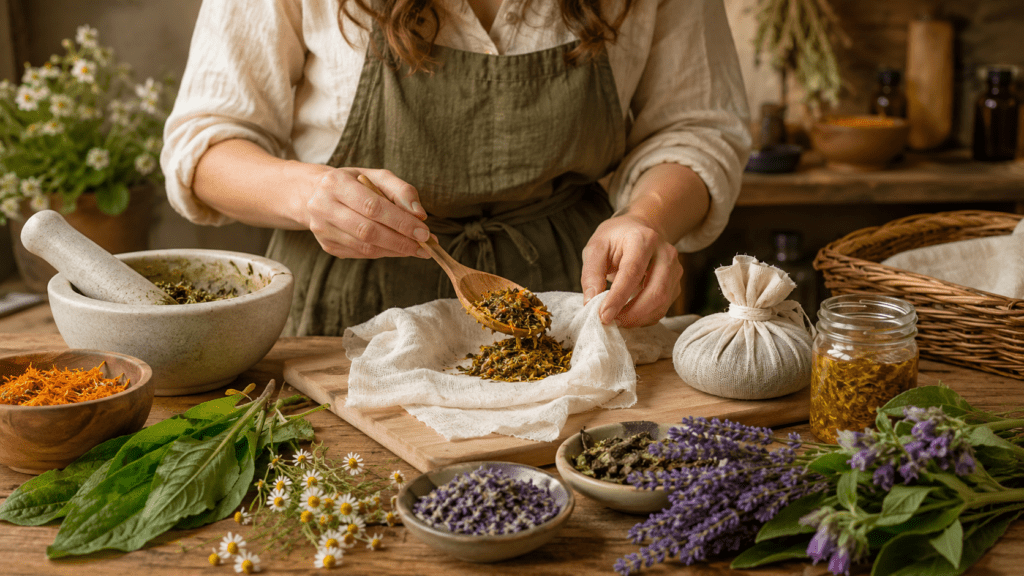
Fresh herb poultice (simplest): Take fresh herb leaves and either chew them briefly to break down the cell walls or bruise them with a mortar and pestle. Apply the mashed plant material directly to the skin. Cover with a clean cloth or bandage. This method works beautifully with plantain, comfrey, or chickweed — herbs that are often growing in your backyard.
Dried herb poultice: Add just enough hot water to dried herb powder or coarsely ground dried herbs to create a thick paste. Allow to cool until warm but not hot. Apply the paste to the affected area. Cover with a clean damp cloth and wrap with a bandage to hold in place.
Cooked poultice: Simmer dried herbs in a small amount of water for 10 minutes until soft. Allow to cool to a comfortable temperature. Strain out excess liquid. Apply the softened herbs directly to the skin and cover with cloth.
Clay or powder base poultice: Mix finely powdered herb with enough liquid — water, aloe vera gel, or herbal tea — to form a thick spreadable paste. Apply generously to the affected area. As the paste dries it draws moisture and toxins from the skin.
5 Herbal Poultice Recipes
Recipe 1 — Comfrey Poultice for Joint Pain and Bruising
Comfrey is the premier herb for musculoskeletal pain — sprains, bruises, arthritis flares, and sore muscles. Its active compound allantoin accelerates cell regeneration and reduces inflammation deeply in underlying tissue.
You will need:
- 2 tablespoons dried comfrey leaf or root (or a handful of fresh leaves)
- Enough hot water to make a paste
- A clean cloth or gauze
Instructions: Add hot water to dried comfrey a tablespoon at a time, mixing until you have a thick paste. Allow to cool until warm. Spread generously over the painful area. Cover with a damp cloth. Wrap with a bandage to secure. Leave in place for 1 to 4 hours or overnight.
Where to get it: Dried comfrey leaf from Starwest Botanicals Dried comfrey leaf.
See also: Natural Remedies for Joint Pain and Inflammation
Important note: Use comfrey topically only — do not take it internally. Avoid applying to broken skin or open wounds. Do not use for more than 10 days consecutively.
Recipe 2 — Plantain and Activated Charcoal Drawing Poultice
This is the ultimate poultice for insect stings, splinters, infected wounds, and anything that needs to be drawn to the surface. Plantain (the weed not the banana) is one of the most powerful drawing herbs in nature, and activated charcoal amplifies the pulling action dramatically.
You will need:
- 1 tablespoon dried plantain leaf (or fresh plantain leaves from your yard)
- 1 teaspoon activated charcoal powder
- Enough water to make a paste
- A clean cloth
Instructions: If using fresh plantain leaves bruise them thoroughly with a mortar and pestle or chew them briefly. If using dried powder mix with activated charcoal and add water to make a thick paste. Apply directly to the sting, bite, or infected area. Cover with a cloth and secure with a bandage. Leave for 20 to 60 minutes — the paste will pull the venom, toxin, or infection toward the surface.
Where to get it: Dried plantain leaf from Starwest Botanicals Dried plantain leaf and activated charcoal on Amazon.
See also: How to Make a Herbal First Aid Kit at Home
Recipe 3 — Calendula and Lavender Poultice for Skin Healing
For slow-healing wounds, rashes, eczema flares, and inflamed skin this gentle but powerful combination promotes rapid healing without irritation.
You will need:
- 2 tablespoons dried calendula flowers
- 5 drops lavender essential oil
- Enough aloe vera gel to make a paste
- A clean cloth
Instructions: Grind dried calendula flowers to a coarse powder using a mortar and pestle or blender. Mix with enough aloe vera gel to create a spreadable paste. Add lavender essential oil and mix well. Apply to the affected skin area. Cover with a clean damp cloth and leave for 30 to 60 minutes. Rinse off gently with cool water.
Where to get it: Dried calendula flowers and lavender essential oil from Cliganic.
See also: Natural Remedies for Eczema and Skin Conditions and Best Herbs for Skin Health and Healing
Recipe 4 — Turmeric and Ginger Anti-Inflammatory Poultice
For arthritis, muscle soreness, and deep inflammatory pain this warming poultice brings circulation to the area and delivers potent anti-inflammatory compounds directly to the tissue.
You will need:
- 1 tablespoon turmeric powder
- 1 tablespoon fresh grated ginger (or 1 teaspoon ginger powder)
- 1 tablespoon coconut oil
- A clean cloth
Instructions: Mix turmeric, ginger, and coconut oil together into a thick paste — add a small amount of warm water if needed for consistency. Apply generously to the painful area. Cover with a warm damp cloth. Wrap with a bandage to secure and retain heat. Leave for 30 to 60 minutes.
Warning: Turmeric stains skin and fabric bright yellow. Use old cloths you don’t mind staining. The skin staining fades within a day or two.
Where to get it: Turmeric powder and ginger powder from Starwest Botanicals.
See also: Natural Remedies for Joint Pain and Inflammation and Natural Remedies for Nerve Pain
Recipe 5 — Mustard Poultice for Chest Congestion
The mustard poultice is a classic folk remedy for chest congestion, bronchitis, and respiratory illness that has been used for hundreds of years. The warmth and compounds from mustard increase circulation to the chest and help loosen mucus.
You will need:
- 1 tablespoon dry mustard powder
- 4 tablespoons flour (to dilute — pure mustard can burn skin)
- Enough warm water to make a paste
- A thin cloth to act as a barrier between the paste and skin
Instructions: Mix dry mustard and flour together. Add warm water gradually until you have a thick spreadable paste. Place the paste onto a thin cloth — do not apply mustard paste directly to skin as it can cause irritation. Fold the cloth over the paste to create a packet. Apply to the chest and cover with a warm towel. Leave for 15 to 20 minutes maximum — check the skin every 5 minutes and remove immediately if you notice redness or irritation.
Where to get it: Get mustard powder from you local produce store or get Starwest Botanicals Yellow Mustard Powder.
See also: Natural Remedies for Cold and Flu Season and Best Herbs for Immune Support
How Long to Leave a Poultice On
| Condition | Duration |
|---|---|
| Insect sting or bite | 20-60 minutes |
| Acute injury or bruise | 1-4 hours |
| Chronic joint pain | 2-8 hours or overnight |
| Skin healing | 30-60 minutes |
| Chest congestion | 15-20 minutes maximum |
Always remove the poultice if you notice increased redness, burning, or irritation.
Frequently Asked Questions
What is the best herb for a poultice? It depends on the condition. Comfrey is the most powerful for musculoskeletal pain and bruising. Plantain is best for drawing out stings and infection. Calendula is best for skin healing and wounds. Turmeric and ginger are most effective for deep inflammatory pain.
Can I leave a poultice on overnight? Yes for most poultices — comfrey for joint pain is commonly left on overnight with excellent results. Avoid leaving mustard poultices on for more than 20 minutes as they can cause skin irritation. Always check the skin before leaving any poultice on for extended periods.
Can I use a poultice on children? Many poultices are safe for children but use gentler herbs and shorter application times. Calendula and plantain are particularly safe and gentle. Avoid mustard poultices on children’s sensitive skin. Always consult a healthcare provider for serious conditions.
How do I know if a poultice is working? For pain and inflammation you should feel warmth and some reduction in pain during application. For drawing poultices you may notice the skin looking cleaner or a splinter working its way closer to the surface. For skin healing improvement is typically visible after several applications over a few days.
Are poultices better than tinctures or teas for pain? For localized pain — a specific joint, muscle, or area of skin — poultices often work faster and more directly than internal remedies. They’re best used alongside internal herbs for a comprehensive approach rather than instead of them.
Related Posts You’ll Love
- Natural Remedies for Joint Pain and Inflammation — internal herbal support to pair with your poultice
- How to Make a Healing Herbal Salve at Home — another topical herbal remedy for skin and pain
- How to Make Herbal Infused Oil at Home — the foundation for many topical herbal preparations
- Natural Remedies for Nerve Pain — pair topical poultices with internal nerve pain support
- How to Make a Herbal First Aid Kit at Home — add poultice supplies to your complete natural first aid kit
- Best Herbs for Skin Health and Healing — go deeper into herbal skin support
- Natural Remedies for Eczema and Skin Conditions — targeted skin condition support
Get Your Free Natural Home Remedies Quick Reference Card
12 common ailments, the herb that helps, and exactly how to use it — free instant download.
Disclaimer: This post contains affiliate links. Root Freedom may earn a commission when you purchase through our links at no extra cost to you. This content is for informational purposes only and is not intended as medical advice. Always consult a healthcare professional before using herbal remedies, particularly for serious conditions or on children.