
Written by Chad & Millie of Root Freedom
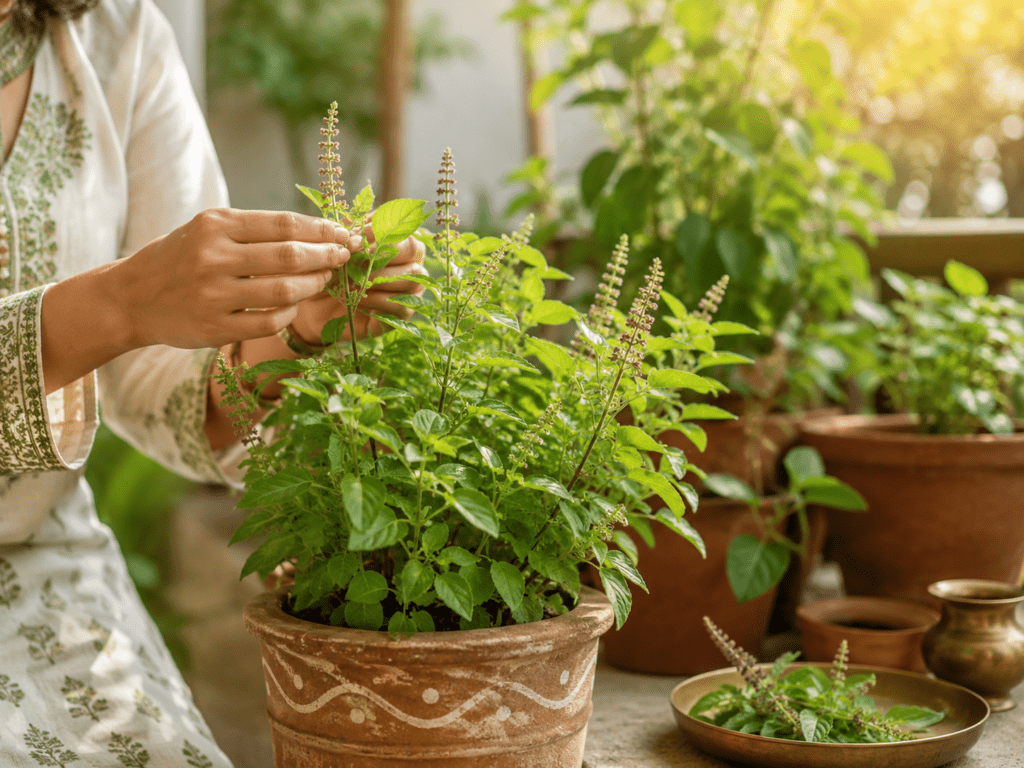
If you’re only going to add one new herb to your garden this season, make it tulsi. Also called holy basil, this sacred Ayurvedic herb is one of the most broadly useful plants you can grow — an adaptogen that helps your body handle stress, an antimicrobial that supports immune health, and one of the most aromatic and beautiful herbs in any garden. We grow it here in Castroville and it thrives in Texas heat like it was made for it.
Whether you’re growing tulsi for daily stress-relief tea, for immune support, or simply because you want your garden to smell incredible, we’ll show you how to grow tulsi at home with a complete guide to holy basil that covers everything you need to grow it successfully from seed to harvest and beyond.
What Is Tulsi and Why Grow It
Tulsi — Ocimum tenuiflorum — is a sacred medicinal herb from India with thousands of years of use in Ayurvedic medicine. It’s classified as an adaptogen, meaning it helps your body adapt to physical and emotional stress and restore balance over time. It also has documented antimicrobial, anti-inflammatory, antioxidant, and immune-supporting properties that make it one of the most versatile herbs in a home apothecary.
It’s related to culinary basil but tastes very different — clove-like, slightly peppery, warm and aromatic. The tea is one of our favorites for evening stress relief and it blends beautifully with other herbs.
There are three main varieties you’re likely to encounter. Rama tulsi has green leaves, a mild clove-like flavor, and is the easiest to grow — the best starting point for most gardeners. Krishna tulsi has beautiful purple-tinged leaves and a stronger, spicier flavor. Vana tulsi is the wild type with more vigorous growth and a slightly different flavor profile. All three have similar medicinal properties.
Get your seeds here: Tulsi Seeds — open-pollinated, non-GMO.
What Tulsi Needs to Thrive
Tulsi is a warm-season tropical herb that loves heat, full sun, and well-draining soil. In Texas it thrives — long hot summers are exactly the conditions it wants. USDA zones 10-11 can grow it as a short-lived perennial. Everywhere else treat it as an annual.
Sunlight: Full sun, minimum 6 hours daily. More sun equals more growth and stronger medicinal compounds. In extreme heat afternoon shade prevents leaf scorch.
Soil: Well-draining, moderately fertile soil. Tulsi doesn’t like heavy clay or waterlogged roots. Amend clay soil with compost and coarse sand before planting. pH between 6.0 and 7.5.
Water: Consistent moisture but never soggy. Water deeply 2-3 times per week in summer heat. Mulch around the base to retain moisture and regulate soil temperature.
Temperature: Tulsi is not frost tolerant at all. Don’t transplant outdoors until nighttime temperatures stay consistently above 50°F.
Starting Tulsi from Seed
Tulsi is easy to start from seed and very rewarding to grow from the beginning. Start indoors 6-8 weeks before your last frost date, or direct sow outdoors once soil temperature reaches 70°F consistently.
Seed starting steps: Fill seed trays or small pots with seed starting mix. Tulsi seeds need light to germinate — press them gently onto the soil surface but don’t cover them deeply. A very light dusting of vermiculite is fine. Mist the surface with a spray bottle to moisten without disturbing seeds. Cover with a humidity dome or plastic wrap to retain moisture. Place in a warm location at 70-75°F — a heat mat significantly improves germination rates.
Germination typically takes 7-14 days. Once seedlings emerge remove the cover and move to your brightest window or under grow lights. Thin to the strongest seedling per cell once they have their first true leaves.
Transplanting Outdoors
Transplant outdoors after all frost risk has passed and nighttime temperatures are consistently above 50°F. Harden off seedlings first — set them outside in a sheltered spot for increasing amounts of time over 7-10 days before planting in their permanent location.
Plant tulsi 12-18 inches apart. It grows into a full bushy plant 2-3 feet tall at maturity in good conditions. Dig a hole slightly larger than the root ball, set the plant at the same depth it was growing, and water in well.
Ongoing Care
Watering: Deep and consistent. Tulsi wilts dramatically when thirsty but usually recovers quickly with watering. In Texas summer heat check soil moisture daily during the hottest weeks.
Fertilizing: Tulsi doesn’t need heavy feeding. A balanced organic fertilizer or compost side dressing once a month is sufficient. Too much nitrogen produces lush leafy growth but reduces the concentration of medicinal compounds.
Pinching — the most important task: Pinch off flower buds as soon as they appear. Once tulsi flowers and sets seed it shifts all its energy away from leaf production and the leaves lose potency. Pinching keeps the plant bushy and productive for months longer than unpinched plants. When you do let it flower at the very end of the season the blooms are beautiful, edible, and beloved by pollinators.
Pests: Tulsi is largely pest-resistant due to its aromatic oils. Watch for aphids on new growth — knock them off with a strong stream of water or spray with diluted neem oil. Japanese beetles can be a problem in some regions — hand-pick them off.
When and How to Harvest
Begin harvesting once plants are established and growing vigorously — usually 6-8 weeks after transplanting. Always harvest in the morning after dew has dried for the highest essential oil content.
Cut stems back by one-third to one-half using clean scissors or pruning shears. Cut just above a leaf node — the plant branches from that point and becomes bushier with every harvest. Never take more than half the plant at one time. Regular harvesting actually encourages more growth — the more you harvest the more the plant produces.
Drying and Storing Tulsi
Air drying: Bundle small handfuls of stems with a rubber band. Hang upside down in a warm, dry, well-ventilated area out of direct sunlight for 1-2 weeks until leaves crumble easily when touched.
Dehydrator: Spread leaves in a single layer on dehydrator trays. Dry at 95-105°F for 2-4 hours. Lower temperature preserves more volatile medicinal compounds than higher heat.
Once fully dry strip leaves from stems. Store in airtight glass jars away from heat, light, and moisture. Properly stored dried tulsi keeps its potency for 12-18 months.
See also: How to Dry and Store Herbs From Your Garden
How to Use Your Homegrown Tulsi
Tulsi tea: Steep 1-2 teaspoons of dried tulsi in just-boiled water for 10 minutes. Strain and drink. The flavor is warming, slightly spicy, and complex. Naturally caffeine-free. Drink 2-3 cups daily for adaptogenic stress support.
Fresh tulsi in cooking: Use fresh leaves exactly as you would culinary basil — in salads, on pizza, in pasta, in stir-fries. The flavor is more complex and aromatic than sweet basil.
Tulsi tincture: Pack a jar with fresh tulsi leaves and cover completely with 80-proof vodka. Seal and store in a cool dark place for 4-6 weeks, shaking daily. Strain and bottle. Take 30-40 drops in water up to three times daily.
See also: How to Make Herbal Tea Blends at Home and How to Make Echinacea Tincture at Home
At a Glance — Growing Tulsi
| Factor | Details |
|---|---|
| Sun | Full sun, 6+ hours daily |
| Water | Deep, 2-3x per week in summer |
| Soil | Well-draining, pH 6.0-7.5 |
| Spacing | 12-18 inches apart |
| Germination | 7-14 days at 70-75°F |
| Harvest | 6-8 weeks after transplant |
| Key task | Pinch flower buds consistently |
| Storage | Airtight glass jar, 12-18 months |
Frequently Asked Questions
Does tulsi come back every year? In frost-free climates zones 10-11 tulsi is perennial. Everywhere else including most of Texas treat it as an annual and start fresh each spring from seed or transplants.
Can I grow tulsi in a container? Yes, very successfully. Use a container at least 12 inches deep and wide with good drainage. Move containers indoors before first frost for an extended harvest season.
How much tulsi do I need for regular tea use? Three to five plants provide a family with an abundant supply of fresh tulsi for tea and cooking throughout summer with plenty to dry for winter use.
Why is my tulsi turning yellow? Yellowing leaves usually indicate overwatering, poor drainage, or nitrogen deficiency. Check soil moisture first — if it stays consistently wet improve drainage. If drainage is fine a light organic fertilizer application usually resolves yellowing.
When should I let my tulsi flower? Let it flower at the very end of the season when you’re ready to collect seeds for next year or when temperatures start dropping consistently. Until then pinch every bud to maximize leaf production and medicinal potency.
Related Posts You’ll Love
- Best Adaptogenic Herbs for Stress Resilience — tulsi is one of the top adaptogens, go deeper here
- How to Start a Medicinal Herb Garden From Scratch — build the garden tulsi belongs in
- How to Dry and Store Herbs From Your Garden — preserve your tulsi harvest properly
- How to Make Herbal Tea Blends at Home — blend your homegrown tulsi with other herbs for powerful teas
- Natural Remedies for Burnout and Stress — see exactly how to use the tulsi you grow for real stress relief
Get Your Free Natural Home Remedies Quick Reference Card
12 common ailments, the herb that helps, and exactly how to use it — free instant download.
Disclaimer: This post contains affiliate links. Root Freedom may earn a commission when you purchase through our links at no extra cost to you. This content is for informational purposes only and is not intended as medical advice. Always consult a healthcare professional before using herbal remedies medicinally.