Written by Chad & Millie of Root Freedom
Eczema and chronic skin conditions are among the most frustrating health issues to deal with. The itch-scratch cycle, the flares that seem to come from nowhere, the medications that work temporarily then stop working — it’s exhausting.
What conventional dermatology often misses is that eczema and most chronic skin conditions are systemic inflammatory conditions that show up on the skin. The skin is not the source of the problem — it’s where the problem becomes visible.
These natural remedies for eczema and skin conditions address both the visible symptoms and the underlying causes — gut dysbiosis, immune dysregulation, nutritional deficiencies, and chronic inflammation that drive eczema and skin conditions from the inside out.
Understanding Eczema and Chronic Skin Conditions
Eczema atopic dermatitis — the most common chronic skin condition. Characterized by dry intensely itchy inflamed skin. Driven by immune system overactivation, impaired skin barrier function, and gut microbiome disruption.
Contact dermatitis — inflammatory reaction to specific triggers. Requires identifying and avoiding the trigger alongside healing the skin.
Psoriasis — autoimmune condition causing rapid skin cell turnover. Thick scaly plaques on skin surface. Driven by immune system dysfunction and systemic inflammation.
Rosacea — chronic inflammatory skin condition causing redness, visible blood vessels, and sometimes acne-like breakouts. Gut-skin axis connection is particularly strong in rosacea.
Seborrheic dermatitis — fungal-driven skin condition causing scaly patches and dandruff. Responds well to antifungal herbs.
Topical Remedies — Immediate Relief
1. Calendula — The Skin Healing Standard
Calendula is the most important topical herb for eczema and inflammatory skin conditions. Its anti-inflammatory, antimicrobial, and wound-healing properties reduce redness, soothe itching, prevent infection in scratched skin, and actively promote skin barrier repair.
How to use it: Apply calendula infused oil or salve directly to affected areas 3-4 times daily. For acute flares apply after every wash. For maintenance apply morning and evening consistently.
Make your own calendula infused oil — check our herbal infused oil guide for complete instructions. Or make a calendula salve — check our healing herbal salve guide.
Where to get it: Dried calendula petals from Starwest Botanicals Dried calendula buds. Grow your own from seed on Amazon.
2. Chickweed — Itch Relief
Chickweed is one of the most effective topical herbs for relieving itch — the most distressing symptom of eczema. Its cooling, anti-inflammatory properties reduce the itch-scratch cycle that worsens skin damage and inflammation.
How to use it: Apply fresh chickweed poultice directly to itchy skin — blend fresh chickweed with a small amount of water, apply to affected area, cover with a clean cloth for 20-30 minutes. Or infuse dried chickweed in coconut oil and apply as needed.
Where to get it: Dried chickweed from Starwest Botanicals Dried chickweed.
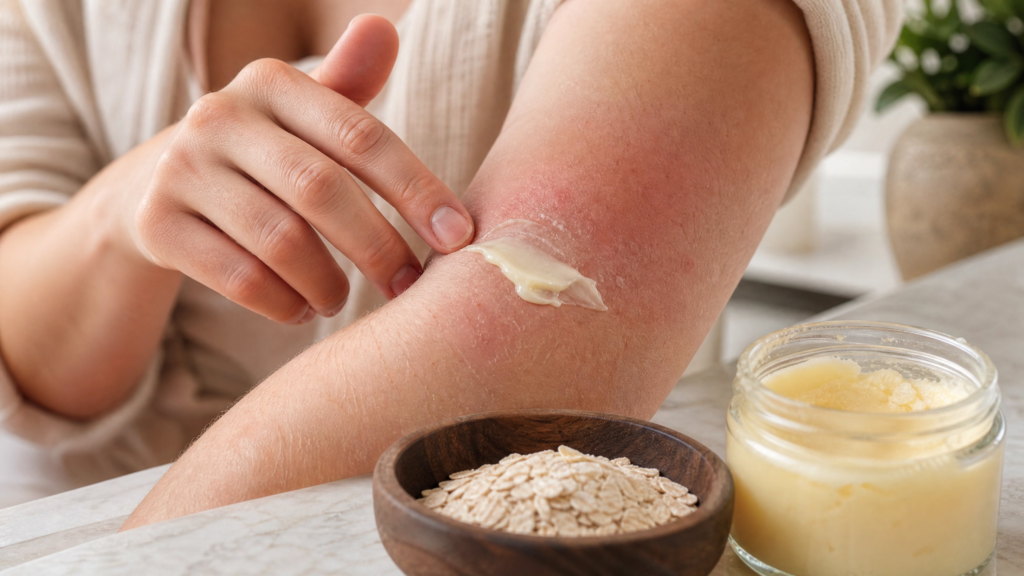
3. Colloidal Oatmeal — Barrier Repair
Colloidal oatmeal is one of the most well-researched topical treatments for eczema. It restores the skin barrier, reduces inflammation, soothes itch, and maintains skin hydration. The FDA recognizes it as a skin protectant.
How to use it: Oatmeal bath — grind rolled oats to a fine powder in a blender and add to warm bathwater. Soak for 15-20 minutes. Pat dry gently — don’t rub. Apply calendula oil or salve immediately while skin is still slightly damp to lock in moisture.
4. Aloe Vera — Cooling and Anti-Inflammatory
Fresh aloe vera gel immediately soothes inflamed eczema skin, reduces redness, and provides cooling relief during acute flares.
How to use it: Apply fresh gel from an aloe vera leaf directly to affected skin. Leave on for 20-30 minutes then rinse or leave overnight. Grow an aloe vera plant at home for a continuous supply — it’s one of the most useful plants to have for skin conditions.
Internal Remedies — Addressing Root Causes
5. Nettle Leaf — Anti-Histamine and Nutritive
Nettle is a natural antihistamine that reduces the histamine-driven inflammatory response behind eczema flares. It’s also rich in minerals — zinc, silica, iron — critical for skin barrier integrity.
Best for: Histamine-driven eczema, allergy-related skin conditions, nutritive skin support, general inflammatory skin conditions
How to use it: Brew nettle leaf tea — steep 1-2 teaspoons of dried nettle in hot water for 10 minutes. Drink 3-4 cups daily during flares, 2 cups daily for maintenance. Consistent daily use provides the most significant anti-histamine and nutritive benefits.
Where to get it: Dried nettle leaf from Starwest Botanicals Dried Nettle leaf. Grow your own from seed on Amazon.
6. Turmeric — Systemic Anti-Inflammatory
Eczema is fundamentally an inflammatory condition. Turmeric’s curcumin reduces the inflammatory cytokines — particularly IL-4, IL-13, and TNF-alpha — that drive eczema inflammation at the cellular level.
What research shows: A clinical trial found oral curcumin supplementation significantly reduced eczema severity scores compared to placebo. Multiple studies confirm curcumin’s effectiveness for inflammatory skin conditions.
How to use it: Golden milk twice daily. Add turmeric liberally to all cooking. Consistent daily internal use produces cumulative anti-inflammatory skin benefits.
Where to get it: Organic turmeric root powder from Starwest Botanicals turmeric root powder.
7. Burdock Root — Internal Skin Cleanser
Burdock root purifies the blood and lymph of the inflammatory compounds that drive skin conditions. Traditional herbalists have used it for eczema, psoriasis, and acne for centuries — and modern understanding of the gut-skin-lymph axis validates this approach.
Best for: Chronic inflammatory skin conditions, eczema with digestive involvement, psoriasis, acne from internal causes, skin conditions with lymphatic congestion
How to use it: Brew burdock root tea — simmer 1-2 teaspoons of dried root in water for 20 minutes. Drink 1-2 cups daily consistently. Skin results from internal herbs take 4-8 weeks to become visible — consistency matters more than quantity.
Where to get it: Dried burdock root from Starwest Botanicals Dried Burdock root.
8. Licorice Root — Topical and Internal Cortisol Mimic
Licorice root contains glycyrrhizic acid which has a cortisol-mimicking effect on skin — reducing inflammation similarly to topical cortisone without the thinning and dependency effects of steroid creams. It can be used both internally as tea and topically as a poultice or infused oil.
Best for: Eczema as cortisone cream alternative, psoriasis, skin inflammation, reducing dependence on steroid creams
How to use it: Brew licorice root tea — simmer ½ teaspoon of dried root in water for 10 minutes. Drink once daily. For topical use brew strong licorice root tea, let cool, and apply to affected skin with a cloth compress.
Where to get it: Dried licorice root from Starwest Botanicals Dried licorice root.
The Gut-Skin Protocol for Eczema
Research increasingly confirms that eczema is a gut condition as much as a skin condition. Leaky gut allows inflammatory compounds to enter the bloodstream triggering the immune overactivation that causes eczema flares.
Gut healing herbs to add to your eczema protocol:
- Slippery elm — gut lining repair
- Chamomile — gut inflammation reduction
- Dandelion root — liver and bile support for toxin clearance
Check our gut health post for the complete protocol.
Eczema Trigger Identification
Alongside herbal support identifying and avoiding your personal eczema triggers is critical:
Common dietary triggers: Dairy, gluten, eggs, soy, tree nuts, and nightshades trigger eczema in sensitive individuals. An elimination diet for 4-6 weeks can identify food triggers definitively.
Environmental triggers: Dust mites, pet dander, mold, pollen, synthetic fragrances, and harsh detergents. Switch to fragrance-free laundry detergent and personal care products.
Stress triggers: Cortisol elevation directly worsens eczema. Stress management is not optional — it’s therapeutic. Your adaptogen protocol directly supports eczema management.
Temperature and humidity: Hot showers, sweating, and dry air all worsen eczema. Lukewarm showers, a home humidifier, and immediate moisturizing after washing dramatically reduce flares.
Your Eczema Protocol
Daily internal routine:
- Morning: Nettle leaf tea — antihistamine support
- With meals: Turmeric in food — systemic anti-inflammation
- Daily: Burdock root tea — blood purification
- Evening: Slippery elm in water — gut lining support
Daily topical routine:
- After every wash: Apply calendula oil or salve while skin still damp
- Acute itch: Chickweed poultice or aloe vera gel
- Weekly: Oatmeal bath followed by immediate calendula application
During flares — add:
- Licorice root tea daily — cortisol-mimicking anti-inflammatory
- Increase nettle to 4 cups daily
- Cool compress with chamomile tea on affected areas
Related Posts You’ll Love
- Best Herbs for Skin Health and Healing — comprehensive skin health herb guide
- Best Herbs for Gut Health and Microbiome Support — heal the gut-skin connection
- How to Make a Healing Herbal Salve — make your own calendula eczema salve
- Best Herbs for Immune Support — eczema is an immune condition
- Best Herbs for Detox and Cleansing — reducing toxic load improves eczema
Get the Free Herbal Wellness Checklist
Click here to download your free Root Freedom Herbal Wellness Checklist →
Disclaimer: This post contains affiliate links. Root Freedom may earn a commission when you purchase through our links at no extra cost to you. This content is for informational purposes only and is not intended as medical advice. Consult a dermatologist for severe or widespread eczema.