
Written by Chad & Millie of Root Freedom
Your gut is your second brain. It houses 70-80% of your immune system, produces 90% of your serotonin, and communicates directly with your brain through the vagus nerve. When your gut is healthy everything works better — digestion, immunity, mood, energy, skin, and hormones.
When it’s not the effects ripple through every system in your body in ways most people never connect back to gut health.
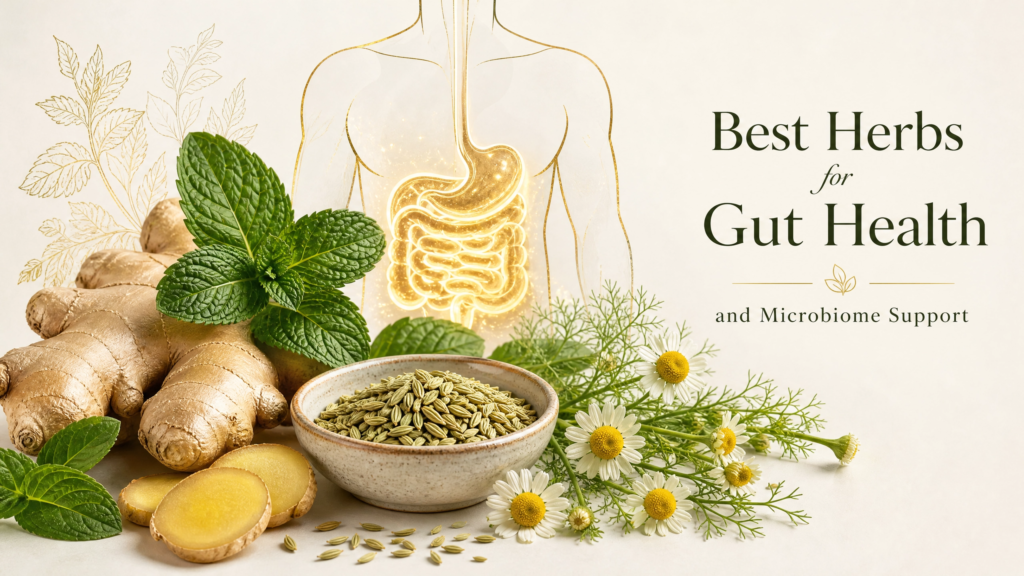
These are the best herbs for gut health and microbiome support, heal your intestinal lining, reduce gut inflammation, and restore the balance that drives whole body health.
Understanding Your Gut Microbiome
Your gut contains approximately 100 trillion microorganisms — bacteria, fungi, and viruses — that collectively outnumber your human cells 10 to 1. This ecosystem is called your microbiome and it’s as unique as your fingerprint.
A healthy microbiome is characterized by diversity — many different species of beneficial bacteria thriving in balance. Modern life attacks this diversity aggressively — antibiotics, processed food, chronic stress, alcohol, and environmental toxins all reduce microbial diversity and allow harmful species to proliferate.
The herbs below support microbiome health through multiple pathways — feeding beneficial bacteria, reducing harmful bacterial growth, healing the gut lining, and reducing the inflammation that drives gut dysfunction.
1. Slippery Elm — Gut Lining Repair
Slippery elm is one of the most important herbs for gut healing. Its mucilage — a gel-like substance — coats and soothes the entire digestive tract creating a protective barrier that allows healing to occur while reducing inflammation and discomfort.
Best for: Leaky gut, IBS, Crohn’s disease, ulcerative colitis, acid reflux, gastritis, general gut lining repair
What research shows: Research shows slippery elm has prebiotic effects — feeding beneficial gut bacteria — alongside its direct anti-inflammatory and mucosal protective properties.
How to use it: Mix 1-2 tablespoons of slippery elm bark powder in warm water and drink before meals. It forms a thick gel quickly — stir vigorously and drink immediately. Add to smoothies or oatmeal for easier daily use.
Where to get it: Slippery elm bark powder from Starwest Botanicals Slippery elm bark powder.
2. Licorice Root — Anti-Inflammatory Gut Support
Licorice root stimulates mucus production in the stomach and intestinal lining — providing a protective buffer against stomach acid and digestive irritants. Deglycyrrhizinated licorice DGL is the safest long-term form for most people.
Best for: Leaky gut, acid reflux, gastric ulcers, H. pylori support, intestinal inflammation, gut lining protection
How to use it: Brew licorice root tea — simmer ½ teaspoon of dried licorice root in water for 10 minutes. Drink 1-2 cups daily before meals. Or use DGL chewable tablets before meals for targeted gastric protection.
Important: Avoid whole licorice root long-term with high blood pressure. DGL form is safe for most people.
Where to get it: Dried licorice root from Starwest Botanicals Dried licorice root.
3. Ginger — Anti-Inflammatory Microbiome Support
Ginger has powerful prebiotic properties — it feeds and stimulates the growth of beneficial Lactobacillus and Bifidobacterium species while simultaneously inhibiting harmful bacterial species. Its anti-inflammatory effects reduce the intestinal inflammation that disrupts microbial balance.
Best for: Microbiome diversity support, gut inflammation, nausea, gastroparesis, leaky gut inflammation, general digestive health
How to use it: Add fresh ginger liberally to daily cooking — it’s one of the most microbiome-friendly foods available. Brew fresh ginger tea daily. Add ginger powder to smoothies and warm drinks. Consistency over time produces the most significant microbiome benefits.
Where to get it: Fresh ginger from any grocery store. Dried ginger root powder from Starwest Botanicals Ginger root Powder. Grow your own from rhizomes.
4. Chamomile — Gut Calming and Anti-Inflammatory
Chamomile reduces the intestinal inflammation and smooth muscle spasms that drive IBS, cramping, and digestive discomfort. It also has mild antimicrobial properties that selectively inhibit harmful gut bacteria without disrupting beneficial species.
Best for: IBS, intestinal inflammation, cramping, gut-brain axis stress, stress-related digestive issues, general gut maintenance
How to use it: Brew chamomile tea after meals — steep 2 teaspoons of dried chamomile flowers for 10-15 minutes. Drink 2-3 cups daily consistently. Chamomile is gentle enough for daily long-term use and produces cumulative gut healing benefits with consistent use.
Where to get it: Dried chamomile flowers from Starwest Botanicals Dried Chamomile flowers. Grow your own from seed with Seeds_Now.
5. Dandelion Root — Prebiotic Powerhouse
Dandelion root is one of the richest natural sources of inulin — a prebiotic fiber that feeds beneficial gut bacteria particularly Bifidobacterium species. It also stimulates bile production supporting fat digestion and the liver’s role in gut health.
Best for: Microbiome diversity, prebiotic support, liver-gut axis health, constipation, gut inflammation, bloating from poor digestion
What research shows: Research shows inulin from dandelion root significantly increases Bifidobacterium populations in the gut and improves bowel regularity.
How to use it: Brew dandelion root tea — simmer 1-2 teaspoons of dried root in water for 15 minutes. Drink 1-2 cups daily before meals. Roasted dandelion root has a rich coffee-like flavor that makes it a genuinely enjoyable daily ritual.
Where to get it: Dried dandelion root from Starwest Botanicals dandelion root.
6. Marshmallow Root — Gut Lining Soother
Marshmallow root contains mucilage similar to slippery elm — coating and soothing the gut lining, reducing inflammation, and creating a healing environment for damaged intestinal tissue. It works particularly well for the upper digestive tract — esophagus and stomach.
Best for: Acid reflux, esophageal inflammation, gastritis, leaky gut, upper GI tract healing, intestinal permeability
How to use it: Cold infusion method produces the most mucilage — place 2 tablespoons of dried marshmallow root in cold water and let infuse overnight in the refrigerator. Drink throughout the next day. Cold water extraction preserves more mucilaginous compounds than hot water brewing.
Where to get it: Dried marshmallow root from Starwest Botanicals Dried marshmallow root.
7. Oregano — Antimicrobial Gut Balancer
Oregano oil is one of the most powerful natural antimicrobials available — active against harmful bacteria, fungi including Candida, and parasites that disrupt gut microbiome balance. Used strategically it reduces harmful overgrowths while supporting beneficial species.
Best for: SIBO small intestinal bacterial overgrowth, Candida overgrowth, gut dysbiosis, parasitic gut infections, H. pylori support
How to use it: Brew strong oregano leaf tea — steep 2 teaspoons of dried oregano in hot water for 10 minutes. Drink 2-3 cups daily during a gut balancing protocol. Add fresh oregano liberally to cooking for ongoing antimicrobial gut support.
Important: Use oregano as a short-term gut balancing tool rather than a daily long-term herb — its broad antimicrobial action can affect beneficial bacteria with extended use.
Where to get it: Dried oregano from Starwest Botanicals Dried oregano Leaf. Grow your own from seed with Seeds_Now.
8. Fennel — Gas and Microbiome Support
Fennel seeds have prebiotic properties and directly reduce the gas and bloating caused by microbiome imbalance — making them both a symptomatic remedy and a microbiome support tool simultaneously.
Best for: Gas from dysbiosis, bloating, IBS, microbiome transition symptoms, digestive discomfort during gut healing protocols
How to use it: Chew ½ teaspoon of fennel seeds after meals. Or brew fennel seed tea — crush 1 teaspoon of seeds and steep in hot water for 10 minutes. Particularly useful during the initial stages of gut healing when dietary changes and herbs are shifting the microbiome and causing temporary gas.
Where to get it: Dried fennel seeds from Starwest Botanicals Dried fennel seeds. Grow fennel from seed with Seeds_Now.
Building Your Gut Health Protocol
Daily gut maintenance:
| Time | Herb | Purpose |
|---|---|---|
| Morning — empty stomach | Marshmallow root cold infusion | Upper GI lining protection |
| Before breakfast | Slippery elm in water | Gut lining coating |
| With meals | Fresh ginger in food | Prebiotic and anti-inflammatory |
| After meals | Fennel or chamomile tea | Gas prevention and gut calming |
| Before bed | Dandelion root tea | Prebiotic feeding of beneficial bacteria |
For active gut healing — add:
- Licorice root tea before meals for 4-6 weeks
- Oregano tea for 2 weeks maximum if dysbiosis is suspected
- Increase slippery elm to 3 times daily
The Gut-Everything Connection
Healing your gut produces benefits that extend far beyond digestion:
Mood and mental health — 90% of serotonin is produced in the gut. Microbiome healing frequently improves depression and anxiety significantly.
Immune function — 70-80% of immune tissue surrounds the gut. Gut healing directly strengthens immune response.
Skin health — the gut-skin axis means skin conditions like acne, eczema, and rosacea often improve dramatically when gut health is addressed.
Hormonal balance — the gut microbiome plays a critical role in estrogen metabolism. Dysbiosis contributes directly to estrogen dominance and hormonal imbalance.
Energy — nutrient absorption happens in the gut. A damaged gut lining means poor absorption of the nutrients that drive energy production regardless of how well you eat.
Related Posts You’ll Love
- Best Herbs for Digestion and Bloating — address acute digestive symptoms alongside microbiome healing
- Natural Colon Cleanse — Herbs That Actually Work — prepare your colon for microbiome restoration
- Best Herbs for Skin Health and Healing — the gut-skin connection runs deep
- Best Herbs for Women’s Hormonal Balance — gut health is central to hormonal balance
- Best Herbs for Immune Support — gut healing directly strengthens immunity
Get the Free Herbal Wellness Checklist
Click here to download your free Root Freedom Herbal Wellness Checklist →
Disclaimer: This post contains affiliate links. Root Freedom may earn a commission when you purchase through our links at no extra cost to you. This content is for informational purposes only and is not intended as medical advice. Consult a healthcare professional for diagnosed gut conditions.