
Written by Chad & Millie of Root Freedom
Insomnia is one of the most frustrating health conditions to deal with. You’re exhausted but you can’t sleep. You fall asleep but wake at 3am with a racing mind. You sleep but wake feeling like you didn’t rest at all.
Conventional sleep medications work but come with dependency risks, next-day grogginess, and a long list of side effects that make long-term use concerning. Natural remedies for insomnia work differently — they address the underlying causes of sleeplessness rather than chemically forcing unconsciousness.
Here are the natural remedies for insomnia – what actually works based on both traditional herbal wisdom and modern clinical research.
Quick Answer
The most effective natural remedies for insomnia depend on your specific sleep pattern. Valerian root and passionflower work best for difficulty falling asleep and racing mind insomnia. Ashwagandha specifically addresses middle-of-the-night waking caused by cortisol dysregulation. Chamomile and lemon balm provide gentle daily sleep support. Lavender aromatherapy improves sleep quality from the first night. Used consistently in a complete evening protocol these herbs produce genuinely restorative sleep without dependency.
What You’ll Learn
- Which type of insomnia you have and which herbs address each pattern specifically
- The seven most effective herbs for insomnia with clinical research support
- The Root Freedom sleep blend recipe combining four complementary sleep herbs
- A complete natural insomnia protocol from 2 hours before bed through the night
- Realistic timelines for when each herb starts working
Understanding Why You Can’t Sleep
Before choosing your remedy it helps to identify which type of insomnia you’re dealing with:
Can’t fall asleep — usually driven by anxiety, racing thoughts, cortisol elevation, or overstimulation. Your nervous system is stuck in fight-or-flight when it should be in rest-and-digest.
Fall asleep but wake frequently — often driven by blood sugar instability, sleep apnea, pain, or hormonal fluctuations. The body wakes when blood sugar drops or cortisol spikes in the early morning hours.
Wake too early — commonly associated with depression, anxiety, or early morning cortisol surges. Often seen in perimenopause and menopause.
Unrefreshing sleep — feel tired despite sleeping. Often driven by poor sleep architecture, stress hormones disrupting deep sleep stages, or nutritional deficiencies.
The herbs below address each of these patterns specifically.
1. Valerian Root — The Most Researched Sleep Herb
Valerian root is the most extensively studied natural sleep remedy available. It works by increasing GABA availability in the brain — the same neurotransmitter targeted by benzodiazepine sleep medications but without the dependency risk or morning grogginess.
Best for: Difficulty falling asleep, anxiety-driven insomnia, restless sleep, frequent waking, insomnia with nervous tension
What research shows: A meta-analysis of 16 studies found valerian significantly improved subjective sleep quality without producing side effects. Multiple randomized controlled trials confirm its effectiveness for both sleep onset and sleep quality.
How to use it: Brew valerian root tea — simmer 1-2 teaspoons of dried valerian root in water for 15 minutes. Drink 30-60 minutes before bed. The smell is notoriously strong — capsules are easier for most people but tea works faster. Start with a lower dose and increase gradually.
Important: Valerian takes 2-4 weeks of consistent nightly use to reach full effectiveness. Don’t judge results after one or two nights.
Where to get it: Dried valerian root from Starwest Botanicals Dried Valerian root.
2. Passionflower — For Racing Mind Insomnia
Passionflower is one of the most effective herbs for the specific type of insomnia where your mind simply won’t stop — replaying conversations, planning tomorrow, worrying about things you can’t control at 2am.
Best for: Racing thoughts at bedtime, anxiety-driven insomnia, waking in the night with an active mind, nervous system hyperactivity at bedtime
What research shows: A randomized controlled trial found passionflower tea significantly improved sleep quality scores compared to placebo. A separate study found passionflower as effective as the prescription anti-anxiety medication oxazepam for generalized anxiety — a condition that frequently drives insomnia.
How to use it: Brew passionflower tea — steep 1-2 teaspoons of dried passionflower in hot water for 10 minutes. Drink 30-60 minutes before bed. Combine with valerian root for a powerfully synergistic sleep blend — the two herbs work on complementary GABA pathways.
Where to get it: Dried passionflower from Starwest Botanicals Dried Passion Flower.
3. Ashwagandha — For Cortisol-Driven Insomnia
If you wake between 2-4am consistently your cortisol rhythm is likely dysregulated. Cortisol should be lowest at night and highest in the morning — chronic stress reverses this pattern causing middle-of-the-night waking when cortisol inappropriately surges.
Ashwagandha directly regulates the HPA axis that controls cortisol — making it the most effective herb for this specific insomnia pattern.
Best for: Waking between 2-4am, stress-driven insomnia, insomnia with anxiety and fatigue, adrenal fatigue affecting sleep, cortisol dysregulation
What research shows: A 2019 clinical trial found ashwagandha root extract significantly improved sleep quality, sleep onset latency, and morning alertness in both insomnia patients and healthy subjects compared to placebo.
How to use it: Stir 1 teaspoon of ashwagandha root powder into warm milk with honey — the traditional Ayurvedic preparation called moon milk. Drink 1 hour before bed. The warm milk provides tryptophan, the ashwagandha regulates cortisol, and the honey stabilizes blood sugar overnight. A deeply nourishing combination.
Where to get it: Ashwagandha root powder from Starwest Botanicals Ashwagandha root powder.
4. Lemon Balm — For Anxious Insomnia
Lemon balm addresses the anxiety component of insomnia directly — reducing the nervous system hyperactivation that keeps you awake and helping your mind downshift from the day’s demands into genuine rest.
Best for: Anxiety-driven insomnia, difficulty unwinding after a stressful day, nervous tension at bedtime, insomnia with digestive upset, mild insomnia
How to use it: Brew lemon balm tea — steep 1-2 teaspoons of fresh or dried lemon balm in hot water for 10 minutes. Drink 1-2 cups in the evening starting 2 hours before bed. Combine with chamomile for enhanced calming effects. The light citrusy flavor makes it a genuinely pleasant evening ritual.
Where to get it: Dried lemon balm from Starwest Botanicals Dried Lemon Balm. Grow your own from seed with Seeds Now — it’s nearly indestructible and comes back abundantly every year.
5. Chamomile — The Gentle Sleep Ally
Chamomile is the most accessible and widely used sleep herb — and it’s effective. Its apigenin compound binds to the same brain receptors as benzodiazepine medications producing gentle relaxation and drowsiness without dependency.
Best for: Mild insomnia, difficulty relaxing before bed, insomnia with digestive discomfort, children’s sleep support, gentle daily sleep maintenance
What research shows: A 2017 randomized controlled trial found chamomile extract significantly improved sleep quality and reduced insomnia symptoms in elderly adults. A separate study found chamomile improved sleep quality in postnatal women.
How to use it: Steep 2 teaspoons of dried chamomile flowers in hot water for 10-15 minutes — covering while steeping keeps the volatile oils from escaping in steam. Drink 1-2 cups in the evening. Chamomile works best as a consistent daily ritual rather than an occasional remedy.
Where to get it: Dried chamomile flowers from Starwest Botanicals Dried Chamomile flowers. Grow your own from seed with Seeds Now.
6. Lavender — Aromatherapy Sleep Support
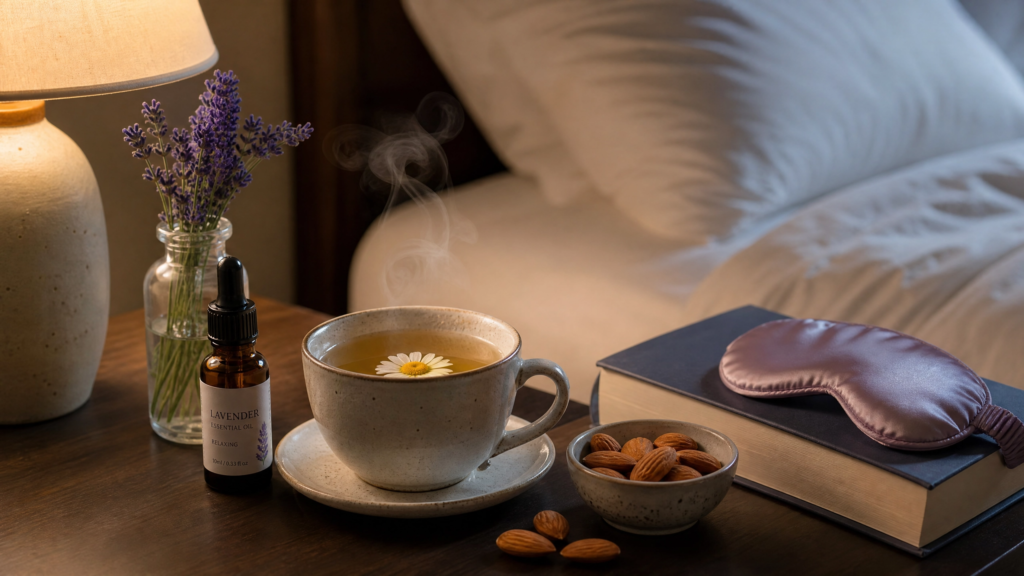
Lavender’s sleep benefits are well documented and unique — it works through inhalation, activating the parasympathetic nervous system through the olfactory system in a way that no other administration route can replicate. Simply having lavender diffusing in your bedroom produces measurable improvements in sleep quality.
Best for: Sleep quality improvement, reducing nighttime waking, stress-related sleep disruption, complementary sleep support alongside other herbs
What research shows: Multiple studies show lavender aromatherapy significantly improves sleep quality, reduces nighttime waking, and increases time spent in deep sleep. A study of college students found lavender inhalation improved sleep quality and reduced daytime fatigue significantly.
How to use it: Diffuse 5-7 drops of lavender essential oil in your bedroom for 30-60 minutes before bed and while sleeping. Or place 2-3 drops on your pillow. Apply diluted lavender oil to your wrists and temples as part of your pre-bed routine.
Where to get it: Pure lavender essential oil at Cliganic. Dried lavender buds for sachets and tea from Starwest Botanicals Dried lavender buds.
7. Magnesium-Rich Herbs — The Missing Mineral for Sleep
Magnesium deficiency is one of the most common and overlooked causes of insomnia. Magnesium is required for GABA production — without adequate magnesium your brain simply cannot produce enough of the neurotransmitter that promotes sleep. Studies suggest up to 75% of Americans don’t consume adequate magnesium.
Best magnesium-rich herbs for sleep:
- Nettle leaf — one of the richest herbal sources of magnesium
- Chamomile — gentle magnesium source
- Passionflower — contains magnesium alongside its GABA-supporting compounds
How to use them: Brew a nettle and chamomile blend daily — steep 1 teaspoon of each in hot water for 10 minutes. Drink 2-3 cups throughout the day for consistent magnesium replenishment. Topical magnesium — magnesium lotion or oil applied to your legs before bed — is absorbed transdermally and works quickly for restless legs and muscle tension that disrupts sleep.
Where to get them: Dried nettle leaf and chamomile from Starwest Botanicals.
The Root Freedom Sleep Blend Recipe
This is our most effective herbal sleep blend — combining four herbs that work on complementary sleep pathways:
- 3 parts dried chamomile flowers
- 2 parts dried lemon balm leaves
- 1 part dried passionflower
- 1 part dried valerian root
Mix dried herbs together and store in an airtight glass jar. Steep 1-2 tablespoons in hot water for 15 minutes. Drink 30-60 minutes before bed every night consistently.
Get all four herbs from Starwest Botanicals.
If you want to go deeper on sleep herbs and building a complete natural sleep protocol, the Herbal Academy offers excellent courses covering nervine and sedative herbs from traditional and clinical perspectives.
Your Complete Natural Insomnia Protocol
2 hours before bed:
- Dim lights and screens
- Start lavender diffuser
- Begin winding down activities
1 hour before bed:
- Brew and drink sleep blend tea
- Ashwagandha moon milk if cortisol-driven waking is your pattern
30 minutes before bed:
- Apply lavender oil topically to wrists and temples
- Magnesium lotion on legs if restless legs are an issue
At bedtime:
- Keep lavender diffusing
- Cool room temperature 65-68°F
- Complete darkness
If you wake in the night:
- Apply lavender oil to wrists
- Take 10 slow deep breaths
- Passionflower tincture — 30 drops in water — for racing mind waking
What to Expect
Week 1: Chamomile and lemon balm work relatively quickly — most people notice improved relaxation within the first few nights. Lavender aromatherapy works from night one.
Weeks 2-3: Passionflower reaches meaningful effectiveness with consistent use. Sleep onset improves noticeably.
Weeks 3-4: Valerian root reaches full effectiveness. Sleep quality improves significantly for most people.
Month 2+: Ashwagandha has normalized cortisol patterns. Middle-of-the-night waking reduces or resolves.
Consistency is everything with herbal sleep support. These herbs build better sleep gradually — they’re not sleeping pills. The payoff is genuinely restorative sleep without dependency.
Key Takeaways
- Match your herb to your insomnia type — valerian and passionflower for falling asleep, ashwagandha for middle-of-the-night waking, lavender for overall sleep quality
- Valerian root takes 2-4 weeks of consistent nightly use to reach full effectiveness — don’t judge results after one night
- Ashwagandha is the most effective herb for the 2-4am waking pattern caused by cortisol dysregulation
- Lavender aromatherapy works from night one — diffuse in the bedroom 30-60 minutes before and during sleep
- Magnesium deficiency is one of the most common overlooked causes of insomnia — nettle and chamomile provide whole-food magnesium
- The Root Freedom sleep blend combines four complementary herbs that work on different GABA pathways simultaneously
- Consistency is everything — herbal sleep support builds gradually and works best as a nightly ritual not an occasional remedy
Frequently Asked Questions
Which herb works fastest for insomnia?
Lavender aromatherapy works from the first night — diffusing lavender in the bedroom produces measurable improvements in sleep quality immediately. Chamomile and lemon balm also work relatively quickly within the first few nights. Valerian root and ashwagandha require 2-4 weeks of consistent use for full effectiveness.
Can I combine multiple sleep herbs?
Yes — the Root Freedom sleep blend in this post combines four complementary herbs that work on different pathways simultaneously. Valerian and passionflower are particularly synergistic. Avoid combining herbal sleep herbs with pharmaceutical sleep medications without consulting your healthcare provider.
Is valerian root safe to take every night?
Valerian root is generally considered safe for nightly use and is non-habit-forming unlike pharmaceutical sleep medications. Most research studies used valerian for 4-6 weeks of continuous nightly use with no dependency or withdrawal effects. Take occasional breaks every few months as good practice with any herb.
What causes middle-of-the-night waking at 3am?
Waking between 2-4am is most commonly caused by cortisol dysregulation — cortisol surges too early in the night instead of staying low until morning. Blood sugar instability is another common cause. Ashwagandha addresses cortisol dysregulation while eating a small protein-fat snack before bed helps stabilize blood sugar overnight.
Can children use these sleep herbs?
Chamomile tea is widely used for children’s sleep and is generally considered safe in appropriate amounts. Lemon balm is also commonly used for children. Valerian, passionflower, and ashwagandha are generally recommended for adults only — consult your pediatrician before giving any herbal sleep remedy to children.
When should I see a doctor for insomnia?
See a healthcare provider if insomnia has lasted more than a month, significantly impacts your daytime function, is accompanied by depression or anxiety, or if you suspect sleep apnea — characterized by snoring, gasping, or waking unrefreshed despite adequate sleep time. Natural remedies work well for lifestyle-driven insomnia but chronic insomnia often has underlying causes requiring professional evaluation.
Related Posts You’ll Love
- Natural Sleep Routine Using Herbs Step by Step — your complete herbal bedtime routine
- Best Herbs for Anxiety — A Complete Beginner Guide — anxiety and insomnia are deeply connected
- Natural Remedies for Stress and Burnout — stress is the primary driver of chronic insomnia
- Best Adaptogenic Herbs for Stress Resilience — adaptogens address the root cause of stress-driven insomnia
- Best Herbs for Women’s Hormonal Balance — hormonal insomnia is extremely common and highly treatable
Struggling with sleep and not sure which herbs are right for your specific insomnia pattern? Take our free Natural Wellness Assessment and get a personalized herbal remedy report delivered straight to your inbox.
Get Your Free Natural Home Remedies Quick Reference Card
12 common ailments, the herb that helps, and exactly how to use it — free instant download.
This post contains affiliate links. Root Freedom may earn a commission when you purchase through our links at no extra cost to you. This content is for informational purposes only and is not intended as medical advice. Always consult a healthcare professional before beginning any new herbal regimen.