
Written by Chad & Millie of Root Freedom
Bloating, gas, cramping, indigestion — digestive discomfort is one of the most common complaints people deal with daily. Most people reach for antacids or gas relief tablets without realizing that some of the most effective digestive remedies have been growing in gardens and fields for centuries. We explore what are the Best Herbs for Digestion and Bloating.
These herbs work with your digestive system rather than suppressing it. They stimulate digestive enzymes, relax intestinal muscles, reduce inflammation, and support the gut microbiome — addressing the root causes of digestive discomfort rather than just masking symptoms.
Quick Answer — What Are the Best Herbs for Digestion and Bloating?
Peppermint is the most research-backed herb for bloating and IBS — its menthol relaxes intestinal smooth muscle reducing spasms, gas, and cramping. Ginger accelerates gastric emptying reducing post-meal bloating. Fennel seeds chewed after meals prevent gas formation. For chronic digestive issues combine peppermint tea after meals, dandelion root tea before meals, and chamomile tea before bed as a complete daily digestive protocol.
What You’ll Learn
- The most effective herbs for bloating, gas, cramping, and indigestion
- How peppermint compares to pharmaceutical IBS treatments
- Why dandelion root before meals is one of the most underrated digestive tools
- How to match your digestive symptom to the right herb
- A simple three part daily digestive herbal routine
- Which herbs address gut lining repair vs symptom relief
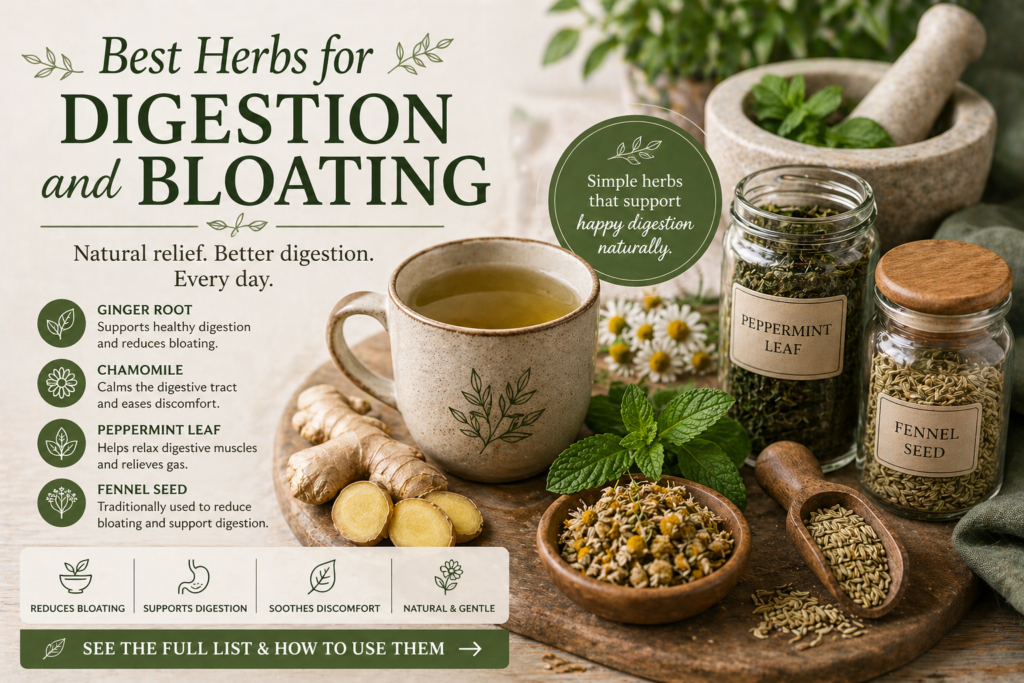
1. Peppermint — For IBS and Bloating
Peppermint is the most well-researched herb for digestive issues. Its primary active compound menthol relaxes the smooth muscles of the gastrointestinal tract — reducing spasms, cramping, and the uncomfortable pressure of trapped gas.
Best for: IBS symptoms, bloating, gas, cramping, nausea, indigestion
What research shows: Multiple clinical trials have found peppermint oil capsules significantly reduce IBS symptoms including abdominal pain, bloating, and bowel irregularity. One meta-analysis found peppermint oil was significantly more effective than placebo for global IBS symptom relief.
How to use it: Brew peppermint tea after meals — steep 1-2 teaspoons of dried peppermint leaves for 10 minutes. Drink while still warm. For IBS specifically enteric-coated peppermint oil capsules deliver the active compounds directly to the intestines where they’re most needed.
Where to get it: Dried peppermint from Starwest Botanicals Dried Peppermint Options. Grow your own with Seeds Now — plant in a container to prevent it taking over your garden.
2. Ginger — For Nausea and Slow Digestion
Ginger is one of the most versatile digestive herbs available. It stimulates the production of digestive enzymes and bile, speeds gastric emptying, reduces inflammation in the gut lining, and is one of the most effective natural remedies for nausea of any kind.
Best for: Nausea, slow digestion, bloating from slow gastric emptying, motion sickness, morning sickness, digestive inflammation
What research shows: Ginger has been shown in multiple studies to accelerate gastric emptying — meaning food moves through your stomach faster, reducing the bloating and fullness that comes from slow digestion. It’s also as effective as vitamin B6 for morning sickness.
How to use it: Slice fresh ginger and steep in hot water for 10 minutes. Drink before or after meals. Add to smoothies, stir-fries, or soups. Fresh ginger is more potent than dried but both work.
Where to get it: Fresh ginger from any grocery store. Dried ginger root powder from Starwest Botanicals Ginger root Powder.
3. Fennel — For Gas and Bloating
Fennel seeds are one of the oldest and most effective remedies for gas and bloating. They work by relaxing the intestinal muscles and helping trapped gas pass more easily. In many cultures fennel seeds are chewed after meals as a digestive aid — a practice that’s both delicious and genuinely effective.
Best for: Gas, bloating, intestinal spasms, colic in infants, indigestion after heavy meals
How to use it: Chew ½ teaspoon of fennel seeds after meals. Or brew fennel seed tea — crush 1 teaspoon of seeds and steep in hot water for 10 minutes. Drink after eating.
Where to get it: Dried fennel seeds from Starwest Botanicals Dried fennel seeds. Grow fennel in your garden with seeds from Seeds Now — it’s a beautiful tall herb that also attracts beneficial insects.
4. Chamomile — For Digestive Inflammation
Chamomile’s anti-inflammatory and antispasmodic properties make it one of the most effective herbs for digestive discomfort caused by inflammation or muscle tension. It soothes the gut lining, reduces cramping, and calms the nervous system — which is directly connected to digestive function through the gut-brain axis.
Best for: Cramping, digestive inflammation, stress-related digestive issues, gastritis, ulcers, bloating from nervous tension
How to use it: Brew chamomile tea after meals or whenever digestive discomfort strikes. Steep 2 teaspoons of dried chamomile flowers for 10 minutes. Drink up to 3 cups daily.
Where to get it: Dried chamomile from Starwest Botanicals Dried Chamomile. Grow your own with Seeds Now.
5. Dandelion Root — For Liver and Bile Support
Dandelion root is one of the most underrated digestive herbs. It stimulates bile production in the liver and bile release from the gallbladder — and bile is essential for fat digestion. Without adequate bile fat sits undigested in your gut, causing bloating, heaviness, and discomfort after fatty meals.
Best for: Bloating after fatty meals, sluggish digestion, liver support, constipation, water retention
How to use it: Brew dandelion root tea before meals to stimulate digestive secretions. Roasted dandelion root tea has a pleasant coffee-like flavor and makes an excellent morning ritual. Steep 1-2 teaspoons in hot water for 10-15 minutes.
Where to get it: Dried dandelion root from Starwest Botanicals dandelion root.
6. Licorice Root — For Acid Reflux and Ulcers
Licorice root contains glycyrrhizin — a compound that stimulates the production of mucus in the stomach lining, creating a protective barrier against stomach acid. Deglycyrrhizinated licorice (DGL) is a processed form with the blood pressure-raising compound removed, making it safe for long-term use.
Best for: Acid reflux, heartburn, gastritis, stomach ulcers, leaky gut
How to use it: DGL licorice chewable tablets taken before meals. Or brew licorice root tea — steep ½ teaspoon of dried root in hot water for 10 minutes. Use sparingly — licorice root is potent.
Important: Avoid whole licorice root long-term or in large amounts if you have high blood pressure. DGL form is safe for most people.
Where to get it: Dried licorice root from Starwest Botanicals Dried licorice root.
7. Slippery Elm — For Gut Lining Repair
Slippery elm bark contains mucilage — a gel-like substance that coats and soothes the entire digestive tract from mouth to colon. It’s one of the best herbs for repairing an irritated or inflamed gut lining and is particularly helpful for conditions like leaky gut, IBS, and Crohn’s disease.
Best for: Leaky gut, IBS, Crohn’s disease, ulcerative colitis, acid reflux, chronic digestive inflammation
How to use it: Mix 1 tablespoon of slippery elm powder in warm water and drink before meals. It has a mild, slightly sweet flavor. Or take as capsules — 400-500mg before meals.
Where to get it: Slippery elm bark powder from Starwest Botanicals Slippery elm bark powder.
Your Digestive Herb Quick Reference
| Symptom | Best herb |
|---|---|
| Bloating + gas | Fennel or peppermint |
| Nausea | Ginger |
| Cramping | Chamomile or peppermint |
| After fatty meals | Dandelion root |
| Acid reflux | Licorice root DGL |
| Gut inflammation | Slippery elm |
| Stress digestion | Chamomile |
Key Takeaways
- Peppermint is the most clinically validated herb for IBS and bloating — enteric coated capsules deliver active compounds directly to the intestines for maximum effect
- Chewing fennel seeds after meals is one of the oldest and most effective post-meal digestive traditions across multiple cultures — and it genuinely works
- Dandelion root before meals stimulates bile production which is essential for fat digestion — this one herb can eliminate post-meal bloating from fatty foods
- Chamomile addresses stress-related digestive issues through the gut-brain axis — the nervous system and digestive system are deeply connected
- Slippery elm is your best tool for gut lining repair — it coats and soothes the entire digestive tract and is appropriate for IBS, leaky gut, and chronic inflammation
- DGL licorice — not whole licorice root — is safe for long term daily use for acid reflux and creates a protective mucus barrier against stomach acid
A Simple Daily Digestive Herbal Routine
Before meals: Dandelion root tea to stimulate digestive enzymes
After meals: Peppermint or fennel seed tea to prevent bloating
Before bed: Chamomile tea to reduce overnight gut inflammation
This simple three-part routine addresses digestion at every stage of the day and costs less than $20 a month in herbs.
If you want to go deeper on understanding how herbs support the digestive system and gut health, the Herbal Academy covers digestive herbalism extensively in their intermediate course — we put together an honest review here if you want to see what’s inside.
Frequently Asked Questions
What is the fastest herb for bloating relief? Fennel seeds chewed immediately after meals provide the fastest relief for gas and bloating — within 15-30 minutes in most cases. Peppermint tea is close behind. For bloating already present a strong peppermint tea works faster than seeds.
Can I take all these herbs together? Most combinations are safe and synergistic. The daily routine suggested — dandelion before meals, peppermint or fennel after meals, chamomile before bed — is a well-balanced protocol. Avoid combining large amounts of licorice root with other herbs that affect blood pressure.
How long before digestive herbs show results? For acute bloating and gas — fennel and peppermint work within 15-30 minutes. For chronic conditions like IBS, leaky gut, or chronic inflammation — consistent daily use of slippery elm, chamomile, and peppermint over 4-8 weeks produces meaningful improvement.
Is peppermint safe for acid reflux? Peppermint tea can worsen acid reflux by relaxing the lower esophageal sphincter. If you have reflux use ginger or chamomile instead of peppermint for digestive support. Enteric coated peppermint oil capsules bypass the esophagus and are appropriate for IBS even with reflux.
What is the best herb for IBS? Enteric coated peppermint oil capsules have the strongest clinical evidence for IBS — multiple meta-analyses confirm significant symptom reduction. Slippery elm supports gut lining repair. Chamomile addresses the stress-driven component of IBS. A combination of all three addresses IBS from multiple directions.
Related Posts
- Best Herbs for Gut Health and Microbiome Support — go deeper on healing the gut microbiome alongside digestive symptom relief
- Natural Colon Cleanse Herbs That Actually Work — a natural next step after addressing bloating and digestion
- Best Herbs for Liver Health — liver and bile health directly impacts your digestion
- 10 Herbs Every Natural Wellness Cabinet Needs — several digestive herbs belong in every home apothecary
- Herbal Academy Review — Is It Worth It? — learn how to work with digestive herbs at a deeper level
- Natural Remedies for Acid Reflux and Heartburn — slippery elm and DGL licorice for esophageal healing
- Natural Remedies for Nausea and Upset Stomach — ginger and peppermint for nausea relief
- Natural Longevity Supplements and Herbs — gut health is foundational to healthy aging
Get Your Free Natural Home Remedies Quick Reference Card
12 common ailments, the herb that helps, and exactly how to use it — free instant download.
Disclaimer: This post contains affiliate links. Root Freedom may earn a commission when you purchase through our links at no extra cost to you. This content is for informational purposes only and is not intended as medical advice. Consult a healthcare professional for chronic digestive conditions.