
Written by Chad & Millie of Root Freedom
Most people slice open an avocado, scoop out the green flesh, and toss the pit straight into the trash. If you have been doing that, you have been throwing away what some researchers and traditional herbalists consider the most nutritious part of the entire fruit. Learning about avocado pit benefits might change the way you look at this kitchen staple forever.
Quick Answer
The avocado pit contains high levels of antioxidants, soluble fiber, and beneficial plant compounds that may support heart health, digestion, skin health, and inflammation response. It makes up roughly 18% of the whole fruit and contains more antioxidants than the flesh. Most people never use it — but that is starting to change.
What You’ll Learn
- What nutrients and compounds are found in the avocado pit
- The traditional and emerging wellness uses of avocado seed
- How the pit compares nutritionally to the avocado flesh
- Safe ways to prepare and use avocado pit at home
- Who should use caution with avocado pit
Understanding Avocado Pit Benefits
The avocado — known botanically as Persea americana — has been cultivated in Central and South America for thousands of years. While modern Western culture has embraced the flesh enthusiastically, traditional cultures in Mexico, Central America, and South America have long recognized the seed as a valuable medicinal resource.
The pit makes up approximately 18% of the whole avocado by weight and contains a concentrated source of nutrients and bioactive compounds. Among these are flavonoids, proanthocyanidins, and other antioxidants — many of which are found in higher concentrations in the seed than in the flesh or skin.
Research interest in the avocado pit has grown significantly in recent years as scientists explore its potential as a source of bioactive compounds with antioxidant, anti-inflammatory, and antimicrobial properties. While much of this research is still in early stages, the traditional use of avocado seed across Latin American herbal traditions provides a long historical foundation worth paying attention to.
Top Avocado Pit Benefits
1. High Antioxidant Content
Best for
Anyone looking to increase their antioxidant intake through whole food sources rather than supplements.
What research shows
The avocado pit is exceptionally rich in antioxidants — particularly flavonoids and proanthocyanidins — that may help protect cells from oxidative stress. Some analyses suggest the seed contains more antioxidant activity than the flesh, the skin, or many commonly consumed fruits and vegetables. These compounds may help support overall cellular health and reduce the impact of everyday oxidative stress on the body.
How to use it
Dried and powdered avocado pit can be added to smoothies, teas, or mixed into foods in small amounts to incorporate these antioxidants into your daily routine. Start with a small amount — no more than half a teaspoon — and see how your body responds.
Where to get it
The most sustainable source is your own kitchen — save the pits from avocados you are already eating. Herbal Academy has excellent educational resources on traditional uses of the avocado plant including the seed.
2. Rich Source of Soluble Fiber
Best for
Anyone looking to support digestive health, regularity, and healthy cholesterol levels through dietary fiber.
What research shows
The avocado pit is a concentrated source of soluble fiber — the type that forms a gel in the digestive tract, slows digestion, supports healthy blood sugar response, and may help maintain healthy cholesterol levels. Soluble fiber also feeds beneficial gut bacteria, supporting a healthy microbiome. Traditional herbal use of avocado seed in Latin American traditions included support for digestive complaints and stomach discomfort.
How to use it
Dried, powdered avocado pit can be incorporated into the diet in small amounts as a fiber supplement. A small amount added to a smoothie or stirred into oatmeal is a practical starting point. As with any increase in dietary fiber, start slowly and drink plenty of water.
Where to get it
Your own kitchen is the source — dried and powdered avocado pits from avocados you consume regularly. The Herbal Academy offers resources on incorporating non-traditional plant parts into a wellness routine.
3. Anti-Inflammatory Properties
Best for
Anyone dealing with low-grade chronic inflammation, joint discomfort, or inflammatory digestive issues who is looking for natural dietary support.
What research shows
Compounds found in the avocado pit — including flavonoids, polyphenols, and triterpenes — may help support the body’s natural inflammatory response. Traditional use of avocado seed in Central and South American herbal medicine included topical application for inflammation and internal use for inflammatory digestive conditions. Early laboratory research has explored these anti-inflammatory properties with promising preliminary findings, though more human clinical research is needed.
How to use it
Small amounts of dried avocado pit powder incorporated into the diet regularly may offer gentle anti-inflammatory support as part of an overall anti-inflammatory lifestyle that includes whole foods, movement, and stress management.
Where to get it
Prepare your own from kitchen avocados. Starwest Botanicals is a trusted source for quality bulk herbs and botanical ingredients if you want to explore complementary anti-inflammatory herbs to pair with avocado pit.
4. Skin Health Support
Best for
Anyone interested in natural approaches to skin health, including reducing the appearance of aging, supporting skin hydration, and addressing uneven tone.
What research shows
The high antioxidant content of avocado pit may support skin health both internally and topically. Collagen synthesis depends on adequate antioxidant protection against oxidative damage — and the flavonoids in avocado seed may help support this process. Traditional use included topical application of avocado seed preparations for skin conditions. Some natural skincare formulations now incorporate avocado seed extract for its antioxidant properties.
How to use it
Internally — small amounts of avocado pit powder in smoothies or teas may support skin health from the inside out as part of an antioxidant-rich diet. Topically — avocado pit can be dried, powdered, and incorporated into DIY face scrubs or masks. The powder provides gentle physical exfoliation alongside its antioxidant content.
Where to get it
Kitchen avocado pits are your best source for DIY skincare preparations. Amazon carries avocado seed powder if you prefer a pre-prepared option.
5. Heart Health Support
Best for
Anyone focused on maintaining healthy cholesterol levels and cardiovascular wellness through diet and lifestyle.
What research shows
The soluble fiber and antioxidant compounds in avocado pit may support cardiovascular health through multiple pathways. Soluble fiber may help maintain healthy LDL cholesterol levels. Antioxidants may help protect against oxidative stress on cardiovascular tissues. Some research has explored avocado seed extracts for their potential effects on blood lipid profiles. Traditional use in Latin American herbal medicine included avocado seed preparations for cardiovascular support.
How to use it
Regular small amounts of avocado pit powder incorporated into an overall heart-healthy diet may offer complementary support. This is best understood as one component of a heart-healthy lifestyle rather than a standalone remedy.
Where to get it
Your own kitchen avocados. Dr. Stanfield’s MicroVitamin is worth exploring for comprehensive micronutrient support that complements a heart-health focused natural wellness routine — visit rootfreedom.com for more.
6. Antimicrobial Properties
Best for
Anyone interested in natural approaches to supporting immune defense and microbial balance.
What research shows
Laboratory studies have explored antimicrobial properties in avocado seed extracts, with some findings suggesting activity against certain bacteria and fungi. Traditional Latin American herbal use included avocado seed for digestive complaints that may have had microbial components. While this research is preliminary and mostly conducted outside of living organisms, the traditional use record is worth noting.
How to use it
Small amounts of dried avocado pit powder in teas or foods may provide gentle support. This is an area where traditional use provides a long historical foundation even as modern research continues to develop.
Where to get it
Kitchen avocado pits. The Herbal Academy has resources on traditional Latin American herbal medicine that provide helpful context for understanding avocado seed use in its original cultural setting.
How to Prepare Avocado Pit at Home
Step by Step
Preparing avocado pit for use takes a little effort but is straightforward once you know the process.
Step 1 — Remove the pit cleanly
After halving your avocado, remove the pit carefully. A spoon works well — avoid using a knife to strike the pit as this can be dangerous.
Step 2 — Rinse and dry
Rinse the pit under cool water to remove any remaining flesh. Pat dry with a clean towel.
Step 3 — Dry the pit
Place the clean pit in your dehydrator at 115-125°F for 4-6 hours until fully dry and the outer skin peels away easily. Alternatively place in an oven at its lowest setting for 2-3 hours. The pit will crack slightly as it dries — this is normal.
Step 4 — Remove the outer skin
Once dry the papery outer skin of the pit peels away easily. Remove it before grinding.
Step 5 — Grind into powder
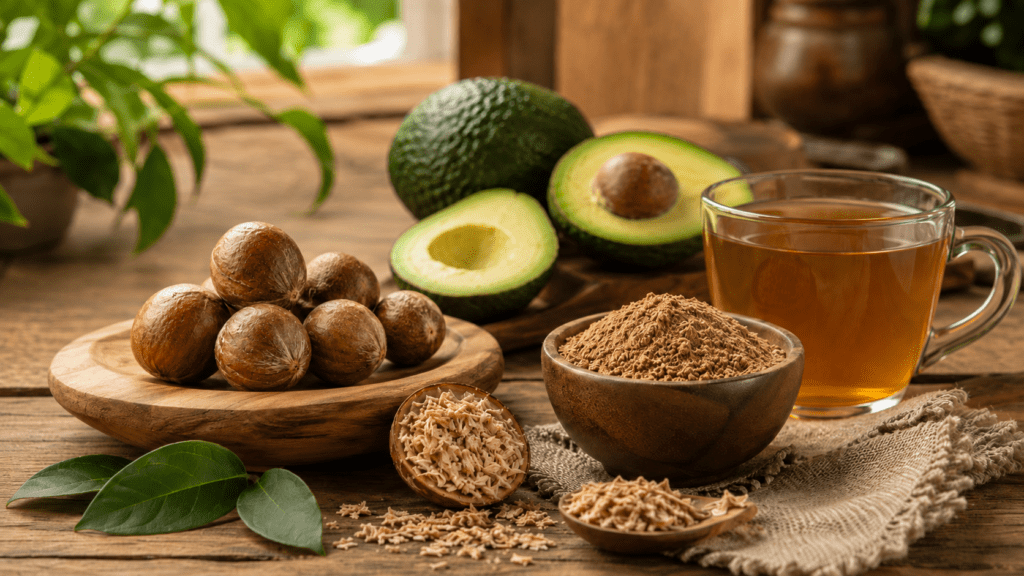
Break the dried pit into smaller pieces and grind in a high-powered blender or coffee grinder until a fine powder forms. The powder will be a warm reddish-brown color.
Step 6 — Store
Transfer to an airtight glass jar and store away from light and heat for up to 3 months.
Protocol for Using Avocado Pit
Start with no more than half a teaspoon of avocado pit powder per day added to a smoothie, tea, or food. After one week with no digestive sensitivity increase to one teaspoon daily if desired. Use consistently for 4-6 weeks to evaluate effects. Take periodic breaks from use.
Who Should Use Caution With Avocado Pit
- Pregnant or nursing women — insufficient safety data, consult your healthcare provider
- People with latex allergy — avocado and latex share cross-reactive compounds
- Anyone taking blood thinning medications — consult your healthcare provider
- People with known avocado sensitivity or allergy
- Children — avocado pit preparations are not established as safe for children
When to See a Doctor
Avocado pit is a food-based wellness addition, not a medical treatment. If you are managing a diagnosed health condition, taking medications, or experiencing concerning symptoms consult your healthcare provider before adding avocado pit to your routine.
Key Takeaways
- The avocado pit makes up 18% of the fruit and may contain more antioxidants than the flesh
- Rich in soluble fiber, flavonoids, and anti-inflammatory plant compounds
- Traditional use across Latin American herbal traditions spans centuries
- Prepare by drying and grinding into powder — start with half a teaspoon daily
- Supports potential benefits for digestion, heart health, skin, and inflammation
- Use caution if pregnant, have latex allergy, or take blood thinning medications
At a Glance
| Topic | Detail |
|---|---|
| Key compounds | Flavonoids, proanthocyanidins, soluble fiber, triterpenes |
| Antioxidant level | Higher than avocado flesh |
| Pit weight | ~18% of whole fruit |
| Starting dose | Half teaspoon powder daily |
| Preparation | Dry at 115-125°F, peel, grind |
| Storage | Airtight glass jar, up to 3 months |
| Traditional use | Latin American herbal medicine |
| Caution | Pregnancy, latex allergy, blood thinners |
Frequently Asked Questions
Is it safe to eat avocado pit?
Avocado pit has a long history of traditional use in Latin American herbal medicine and is generally considered safe for most healthy adults in small amounts. It has not been extensively studied in human clinical trials so it is best approached with reasonable caution — start with small amounts and consult your healthcare provider if you have any health conditions or take medications.
What does avocado pit powder taste like?
Avocado pit powder has a mildly bitter, slightly astringent flavor. It is not unpleasant in small amounts mixed into a smoothie or tea where other flavors balance it out. The bitterness reflects its tannin and polyphenol content.
How much avocado pit powder should I use?
Start with no more than half a teaspoon per day. This is a concentrated botanical preparation and more is not necessarily better. A small consistent amount over time is the traditional approach.
Can I use avocado pit on my skin?
Yes — dried avocado pit powder can be used as a gentle physical exfoliant in DIY face scrubs. Mix a small amount with a carrier like honey or coconut oil and use gently. Do a patch test first to check for sensitivity.
How long does avocado pit powder keep?
Properly dried and stored in an airtight glass jar away from light and heat, avocado pit powder typically stays fresh for up to 3 months. After that the beneficial compounds begin to degrade.
Can I freeze avocado pits to use later?
Yes — clean avocado pits can be frozen whole and processed in batches when convenient. Allow frozen pits to thaw completely and dry thoroughly before dehydrating and grinding.
Related Posts You’ll Love
- Corn Silk Benefits — another overlooked part of a common plant with real wellness benefits
- Best Herbs for Detox and Cleansing — natural herbs that support the body’s own cleansing pathways
- Natural Remedies for Arthritis — OA vs RA Explained — natural approaches to inflammation and joint pain
- Best Longevity Supplements and Herbs — science-backed herbs and nutrients for healthy aging
- Herbal Academy — Online Herbalism Courses — learn to identify and use herbs safely with professional guidance
Get Your Free Natural Home Remedies Quick Reference Card
12 common ailments, the herb that helps, and exactly how to use it — free instant download.
This post contains affiliate links. Root Freedom may earn a commission when you purchase through our links at no extra cost to you. This content is for informational purposes only and is not intended as medical advice. Always consult a healthcare professional before beginning any new herbal regimen.