

Written by Chad & Millie of Root Freedom
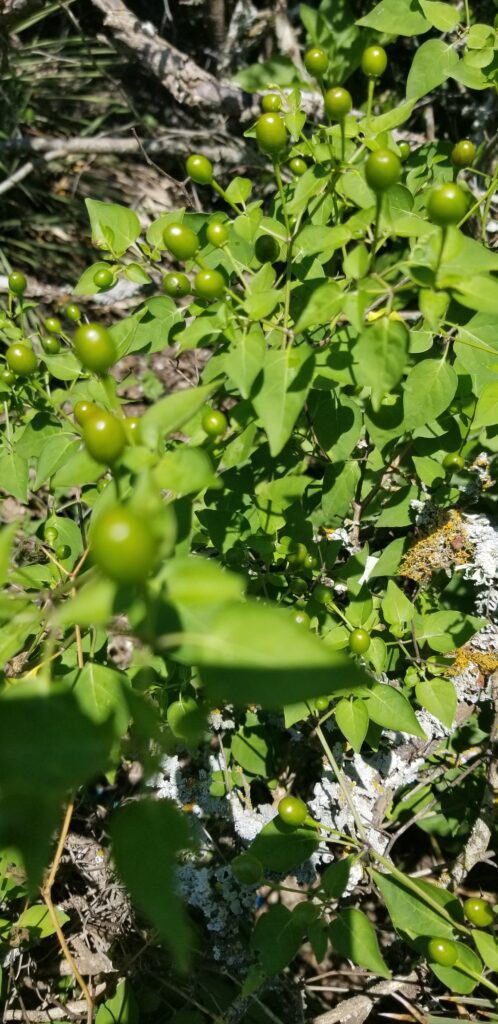
We have several wild Chilli Pequin bushes growing right here on our South Texas property, and until recently we mostly just admired them and used them as a flavor add to some of our food. That changed the day a sore elbow led to crushing a couple of fresh peppers and rubbing them directly on the joint. The relief was real, fast, and honestly a little surprising. That experience sent us down a research rabbit hole into the actual chilli pequin benefits, and what we found confirms what generations of people across South Texas and Mexico have known for a long time.
Quick Answer — What Are the Benefits of Chilli Pequin?
Chilli Pequin, also known as chiltepin or bird pepper, is a wild native pepper packed with capsaicin, the compound responsible for its heat and most of its medicinal value. Capsaicin provides topical pain relief by depleting substance P, supports circulation, has documented antimicrobial properties, and may support metabolism. Crushed fresh peppers can be applied directly to sore joints and muscles for fast topical relief, and dried peppers can be used in cooking or tinctures for ongoing use.
What You’ll Learn
- What Chilli Pequin is and why it’s hotter than cayenne or jalapeño
- The documented health benefits of capsaicin, its key active compound
- How to use fresh or dried Chilli Pequin safely for topical pain relief
- How to harvest, dry, and store wild-growing peppers
- Safety precautions before you try it yourself
Understanding Chilli Pequin — A Native Wild Pepper
Chilli Pequin (Capsicum annuum var. glabriusculum), also called chiltepin or bird pepper, grows wild across South Texas, Mexico, and parts of the broader Southwest. It’s considered one of the wild ancestors of cultivated chili peppers and has been used both as food and medicine in the region for generations. Here in South Texas, it’s often pronounced “chilli pateen,” a reflection of the regional Spanish-influenced dialect.
Despite its small size, Chilli Pequin packs significant heat, ranging from roughly 40,000 to 100,000 Scoville Heat Units, hotter than cayenne (30,000-50,000 SHU) and dramatically hotter than jalapeño (2,500-8,000 SHU). That heat comes from capsaicin, and capsaicin is where nearly all of the plant’s medicinal value lives.
1. Topical Pain Relief
Best for: Joint pain, muscle soreness, arthritis flare-ups, localized aches
What research shows: Capsaicin works by depleting substance P, the neurotransmitter responsible for transmitting pain signals to the brain. This is the same mechanism behind FDA-approved capsaicin creams used for arthritis and muscle pain. With repeated application, the initial burning sensation decreases significantly as substance P depletion continues, while pain relief improves.
How to use it: Crush 1-2 fresh peppers and apply directly to the affected area, or infuse crushed peppers in a carrier oil for a milder, longer-lasting topical preparation. Always wash hands thoroughly immediately after handling, and avoid contact with eyes, mouth, and broken skin.
Where to get it: If you don’t have wild plants nearby, capsaicin cream is available on Amazon. For growing your own peppers, hot pepper seeds on Amazon.
2. Circulation Support
Best for: General circulatory support, cold hands and feet, cardiovascular health
What research shows: Capsaicin has documented effects on improving blood flow and has been studied for its mild blood pressure-lowering and anti-platelet properties. Some research suggests regular capsaicin consumption supports healthy circulation over time, consistent with its long traditional use as a warming food across many cultures.
How to use it: Incorporate dried Chilli Pequin into cooking regularly, starting with small amounts given its intense heat. A little goes a long way.
3. Antimicrobial Properties
Best for: General immune support, food preservation, minor topical antimicrobial use
What research shows: Capsaicin and related compounds in hot peppers have documented antibacterial and antifungal activity in laboratory studies. This may partly explain the traditional use of hot peppers in food preservation across hot climates long before refrigeration was available.
How to use it: Adding dried Chilli Pequin to cooking provides a mild ongoing antimicrobial benefit alongside flavor. Not a substitute for proper food safety practices, but a traditional complementary one.
4. Metabolism and Appetite Support
Best for: General metabolic support as part of a healthy diet
What research shows: Capsaicin has been shown in research to modestly increase metabolic rate and reduce appetite, an effect attributed to its activation of the same TRPV1 receptors responsible for its heat and pain-relief properties. The effect is real but modest, not a substitute for diet and exercise.
How to use it: Regular small culinary use as part of an overall healthy diet, rather than relying on it as a primary metabolic tool.
Harvesting Wild Chilli Pequin
If you’re lucky enough to have wild bushes nearby, harvest is simple. The peppers ripen from green to red, with red peppers containing the highest concentration of capsaicin and the most medicinal potency, though green peppers still contain meaningful amounts and can be used as we discovered firsthand. Pick by hand, they detach easily once ripe.
To dry and preserve: Spread peppers in a single layer on a dehydrator tray and dry at 95-115°F for several hours until completely dry and brittle, or air dry in a warm spot with good airflow for several days. Store dried peppers whole or ground in an airtight glass jar away from light and heat, where they’ll keep for a year or more.
Safety and Precautions
Always wash your hands thoroughly with soap immediately after handling fresh or dried Chilli Pequin, capsaicin transferred to eyes, nose, or mouth causes intense burning. Avoid applying to broken or irritated skin. Do a small patch test before broader topical use, since sensitivity varies between individuals. Avoid use near the face. If you experience excessive burning beyond what feels therapeutic, wash the area with oil or whole milk rather than water, since capsaicin is fat-soluble, not water-soluble.
Key Takeaways
- Chilli Pequin, known locally as chiltepin or “chilli pateen,” is a wild native pepper significantly hotter than cayenne or jalapeño, with capsaicin as its key medicinal compound
- Capsaicin’s pain relief works by depleting substance P, the same mechanism behind FDA-approved commercial capsaicin creams
- Topical application can cause initial burning that decreases significantly with repeated use, expect this and don’t be discouraged
- Red, fully ripe peppers contain the highest capsaicin concentration, but green peppers still provide meaningful benefit
- Always wash hands thoroughly after handling, and use oil or milk, not water, to relieve excessive burning
- This is a genuinely free, wild-growing medicinal resource for anyone in South Texas with access to it
At a Glance — Chilli Pequin Benefits
| Benefit | Mechanism | How to Use |
|---|---|---|
| Pain relief | Depletes substance P | Crushed fresh, applied topically |
| Circulation support | Vasodilation, anti-platelet | Regular culinary use |
| Antimicrobial | Capsaicin antibacterial activity | Culinary use, traditional preservation |
| Metabolism support | TRPV1 receptor activation | Regular small culinary use |
Frequently Asked Questions
Is Chilli Pequin safe to use topically? Yes, for most people, when used with proper precautions. Expect an initial burning sensation that decreases significantly with repeated use as the pain-transmitting compound substance P depletes. Always wash hands thoroughly afterward and avoid eyes, mouth, and broken skin.
How hot is Chilli Pequin compared to other peppers? Chilli Pequin ranges from roughly 40,000 to 100,000 Scoville Heat Units, hotter than cayenne (30,000-50,000 SHU) and significantly hotter than jalapeño (2,500-8,000 SHU), placing it closer to habanero territory on the lower end.
Can I use green Chilli Pequin peppers, or do they need to be red? Both work. Red, fully ripe peppers contain the highest capsaicin concentration and the most medicinal potency, but green peppers still contain meaningful capsaicin and can provide real, noticeable relief, as we found firsthand.
What’s the difference between Chilli Pequin and chiltepin? They’re the same plant. Chiltepin is the more widely used name in broader herbal and botanical references, while Chilli Pequin, sometimes pronounced “chilli pateen,” is the common regional name used across South Texas and the border region.
Does water help if the burning gets too intense? No, capsaicin is fat-soluble, not water-soluble, so water won’t help and can actually spread it. Use whole milk, yogurt, or a neutral oil to relieve excessive burning instead.
Related Posts You’ll Love
- Natural Remedies for Arthritis — Osteoarthritis vs Rheumatoid Arthritis — capsaicin’s role in topical joint pain relief
- Natural Remedies for Joint Pain and Inflammation — broader herbal options for joint pain
- Oil of Oregano Benefits — another powerful natural antimicrobial
- Natural Longevity Supplements and Herbs — herbs and supplements supporting healthy aging
- Natural Remedies for Arthritis — OA vs RA Explained — learn the difference between osteoarthritis and rheumatoid arthritis and the natural herbs and remedies that help both
- Herbal Academy Review — Is It Worth It? — learn to identify and use native medicinal plants properly
Get Your Free Natural Home Remedies Quick Reference Card
12 common ailments, the herb that helps, and exactly how to use it — free instant download.
Disclaimer: This post contains affiliate links. Root Freedom may earn a commission when you purchase through our links at no extra cost to you. This content is for informational purposes only and is not intended as medical advice. Always consult a healthcare professional before using capsaicin-containing remedies, particularly if you have skin sensitivities or existing health conditions.