
Written by Chad & Millie of Root Freedom
Every summer when sweet corn comes in from the garden, most people pull off the silky threads inside the husk and toss them straight in the compost. We used to do the same thing — until we learned that corn silk benefits go far beyond what most people realize, and that pale golden silk you’re throwing away is actually one of the most underused herbs in traditional medicine.
Quick Answer — What Are the Benefits of Corn Silk?
Corn silk is a traditional diuretic herb used for urinary tract support, kidney health, and reducing inflammation in the urinary system. It’s prepared as a tea using fresh or properly dried silk harvested while still pale yellow to light green — not the dark brown silk left on fully mature corn. Steep 1-2 teaspoons dried corn silk in hot water for 10-15 minutes and drink 2-3 cups daily for urinary and kidney support.
What You’ll Learn
- The traditional and research-supported benefits of corn silk
- Why harvest timing matters — pale silk versus dark dried silk
- How to properly dry and store corn silk for year-round use
- How to make corn silk tea step by step
- Who should be cautious with corn silk and why
Understanding Corn Silk — What It Actually Is
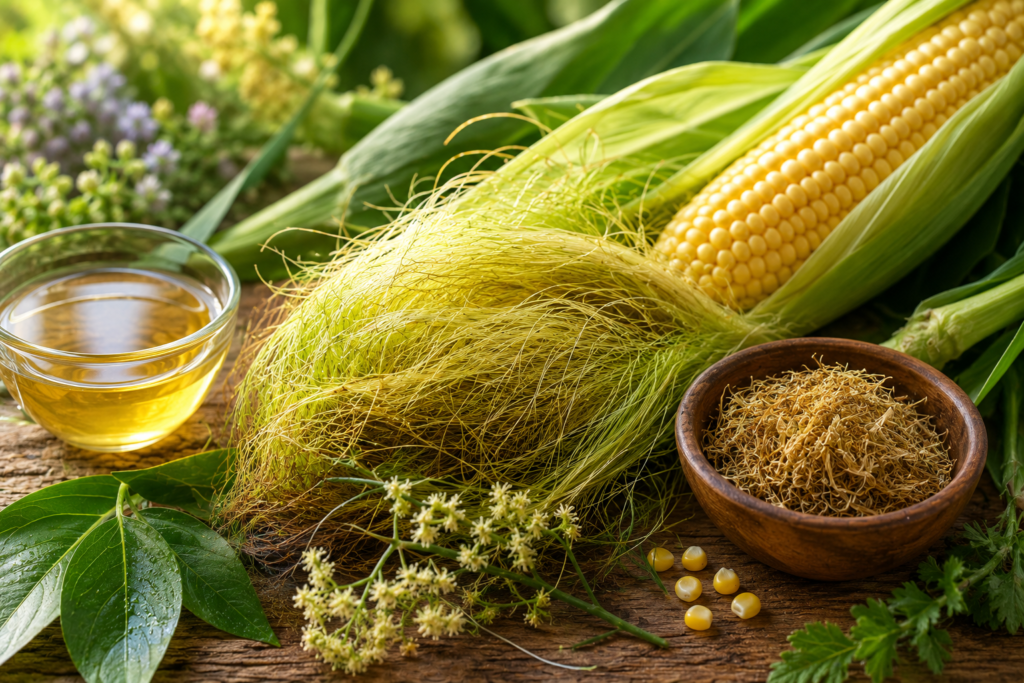
Corn silk is the fine, thread-like stigma of the corn plant — the part that catches pollen before the kernels develop. It’s been used in traditional Chinese medicine, Native American herbalism, and European folk medicine for centuries, primarily as a urinary and kidney tonic. Modern research has begun validating several of these traditional uses, particularly around its diuretic and anti-inflammatory properties.
The compounds responsible for corn silk’s effects include flavonoids, tannins, and potassium salts, which together support gentle diuretic action without depleting the body the way some harsher diuretics can.
1. Urinary Tract and Bladder Support
Best for: Mild UTI support, bladder irritation, frequent urination discomfort
What research shows: Corn silk’s mild diuretic action increases urine flow, which can help flush bacteria from the urinary tract. Traditional use across multiple cultures specifically targets bladder and urinary discomfort, and its anti-inflammatory flavonoids may help soothe irritated urinary tissue alongside the increased flow.
How to use it: Corn silk tea, 2-3 cups daily at the first sign of urinary discomfort. Combine with adequate water intake to maximize the flushing effect. Not a replacement for medical treatment of an active UTI, but a useful supportive addition.
Where to get it: Dried corn silk on Amazon, or harvest and dry your own fresh from the garden.
2. Kidney Health and Gentle Detoxification
Best for: Kidney support, mild water retention, general detoxification support
What research shows: Corn silk’s diuretic properties support kidney function by encouraging the elimination of excess fluid and waste products through increased urine output. Some traditional systems use it specifically to support kidney stone prevention by promoting flow that may help prevent mineral buildup, though it should not be relied upon to treat existing kidney stones.
How to use it: Drink as a daily tea, 1-2 cups, as part of a general kidney-supportive routine rather than only during acute issues. Pairs well with adequate hydration and a diet lower in sodium.
Where to get it: Dried corn silk on Amazon.
3. Mild Blood Pressure and Inflammation Support
Best for: General inflammation reduction, mild blood pressure support alongside other lifestyle factors
What research shows: The diuretic effect that supports kidney and urinary function can also contribute to mild blood pressure support by reducing fluid volume. Corn silk’s flavonoid content has documented antioxidant and anti-inflammatory activity in laboratory studies, supporting its traditional use as a gentle anti-inflammatory tonic.
How to use it: Daily tea as part of a broader wellness routine, not as a standalone blood pressure treatment. Always work with your healthcare provider on blood pressure management.
Harvesting Corn Silk — Timing Matters
The single biggest mistake people make with corn silk is using it at the wrong stage. Pale yellow to light green silk, collected right around the time the tassels emerge and before it fully matures on the plant, contains the highest concentration of beneficial compounds. Once corn silk turns dark brown and dries naturally on the husk, much of its medicinal value has already degraded.
If you’re growing your own corn — sweet corn is actually preferred over field corn for medicinal use since it’s typically harvested at a more tender, less fibrous stage — collect the silk as soon as you de-husk the ears, while it’s still that pale golden color.
How to Dry and Store Corn Silk
Dehydrator method (recommended, especially in humid climates): Spread fresh corn silk in a thin single layer on dehydrator trays. Set to the lowest temperature setting, around 95-115°F. Dry for 2-4 hours, checking periodically. It’s ready when completely dry, crispy, and crumbles easily — no remaining moisture or flexibility.
Air drying: Spread in a single thin layer on a clean towel or screen in a warm, dry spot with good airflow, out of direct sunlight. Turn or stir once or twice daily. Takes 3-5 days. Less reliable in humid climates like South Texas, where a dehydrator gives much more consistent results.
Storage: Once fully dry, store in an airtight glass jar away from light and heat. Properly dried and stored corn silk keeps for up to 12 months. Label with the date so you can track freshness.
How to Make Corn Silk Tea
Steep 1-2 teaspoons of dried corn silk (or about 1 tablespoon fresh) in one cup of just-boiled water, covered, for 10-15 minutes. Strain and drink. The flavor is mild and slightly sweet, making it an easy tea for people new to herbal remedies. Drink up to 3 cups daily for urinary and kidney support.
Safety and Precautions
Corn silk is generally well tolerated, but a few precautions are worth noting. Those with corn allergies should avoid it entirely. Because of its diuretic effect, use caution if you’re on diuretic medications or have kidney disease, and always check with your healthcare provider first. Pregnant or breastfeeding individuals should consult a healthcare provider before regular use. Corn silk should not replace medical treatment for an active UTI, kidney infection, or kidney stones — it’s a supportive herb, not a treatment for acute conditions.
Key Takeaways
- Harvest corn silk while it’s pale yellow to light green — dark brown dried silk left on the husk has lost most of its medicinal value
- Sweet corn silk is preferred over field corn for medicinal preparations due to its more tender stage at harvest
- A dehydrator at low temperature (95-115°F) is the most reliable drying method, especially in humid climates
- Corn silk tea is a gentle, traditional diuretic best used for urinary, kidney, and mild inflammation support — not as acute UTI treatment
- Properly dried and stored corn silk keeps up to 12 months in an airtight glass jar away from light and heat
- This is one of the easiest “waste not” herbal preparations — turning something most people compost into a useful home remedy
At a Glance — Corn Silk Benefits
| Benefit | How to Use | Daily Amount |
|---|---|---|
| Urinary tract support | Tea | 2-3 cups |
| Kidney health | Tea | 1-2 cups |
| Mild inflammation support | Tea | 1-2 cups |
| Storage life (dried) | Airtight jar, dark/cool | Up to 12 months |
Frequently Asked Questions
Can I use the corn silk from store-bought corn? Yes, as long as it’s still pale and fresh when you remove the husk. The medicinal quality depends on the color and freshness of the silk at the time of harvest, not whether it came from your garden or the grocery store. Just collect it the day you buy the corn rather than letting it sit.
Is corn silk safe to drink every day? Yes, for most people corn silk tea is safe for regular daily use given its gentle, traditional history of use. Those on diuretic medications, with kidney disease, or who are pregnant or breastfeeding should check with a healthcare provider first.
Does corn silk actually help with UTIs? Corn silk’s diuretic action may help flush the urinary tract and its flavonoids have anti-inflammatory properties that traditional use associates with urinary comfort, but it is not a treatment for an active bacterial UTI. See a doctor for suspected UTI symptoms and use corn silk as supportive care alongside proper treatment, not a replacement for it.
Can I use fresh corn silk instead of drying it? Yes, fresh corn silk can be used immediately in tea, typically using about double the amount you would use dried, since fresh material contains more water weight relative to its active compounds. Drying simply allows you to store it for year-round use beyond the corn season.
What does corn silk taste like? Corn silk tea has a very mild, slightly sweet, almost grassy flavor. It’s one of the gentlest tasting herbal teas, making it an easy entry point for people who find stronger herbal teas unpalatable.
Related Posts You’ll Love
- Natural Remedies for UTI — corn silk as supportive care alongside other urinary herbs
- Best Herbs for Kidney Health — build a complete kidney-supportive herbal routine
- Best Herbs for Detox and Cleansing — gentle detox herbs that pair well with corn silk
- Natural Remedies for High Blood Pressure — additional herbs that support healthy blood pressure
- Herbal Academy Review — Is It Worth It? — learn to identify and use overlooked garden herbs properly
Get Your Free Natural Home Remedies Quick Reference Card
12 common ailments, the herb that helps, and exactly how to use it — free instant download.
Disclaimer: This post contains affiliate links. Root Freedom may earn a commission when you purchase through our links at no extra cost to you. This content is for informational purposes only and is not intended as medical advice. Always consult a healthcare professional before using corn silk, particularly if you take diuretic medications or have kidney disease.