Written by Chad & Millie of Root Freedom
Polycystic ovary syndrome affects an estimated 1 in 10 women of reproductive age making it one of the most common hormonal disorders worldwide. Yet it remains one of the most misunderstood and undertreated conditions in conventional medicine.
PCOS is not just an ovarian condition. It’s a complex metabolic and hormonal disorder driven by insulin resistance, androgen excess, chronic inflammation, and HPA axis dysregulation. Conventional treatment typically involves birth control pills and metformin — medications that manage symptoms without addressing root causes.
These natural remedies for PCOS work differently. They target the underlying hormonal and metabolic drivers that cause PCOS symptoms — naturally and sustainably.
Understanding PCOS Root Causes
PCOS presents differently in different women but most cases involve some combination of these underlying imbalances:
Insulin resistance — the most common root cause. Up to 70% of women with PCOS have insulin resistance. Elevated insulin stimulates the ovaries to produce excess androgens — the male hormones that drive most PCOS symptoms.
Androgen excess — excess testosterone and DHT cause acne, hair loss, facial hair growth, and disrupt ovulation.
Chronic inflammation — drives insulin resistance and androgen production creating a self-reinforcing cycle.
HPA axis dysregulation — chronic stress elevates cortisol which worsens insulin resistance and androgen production.
Gut dysbiosis — emerging research shows significant microbiome differences in women with PCOS that drive inflammation and hormonal imbalance.
1. Inositol — The Most Researched PCOS Remedy
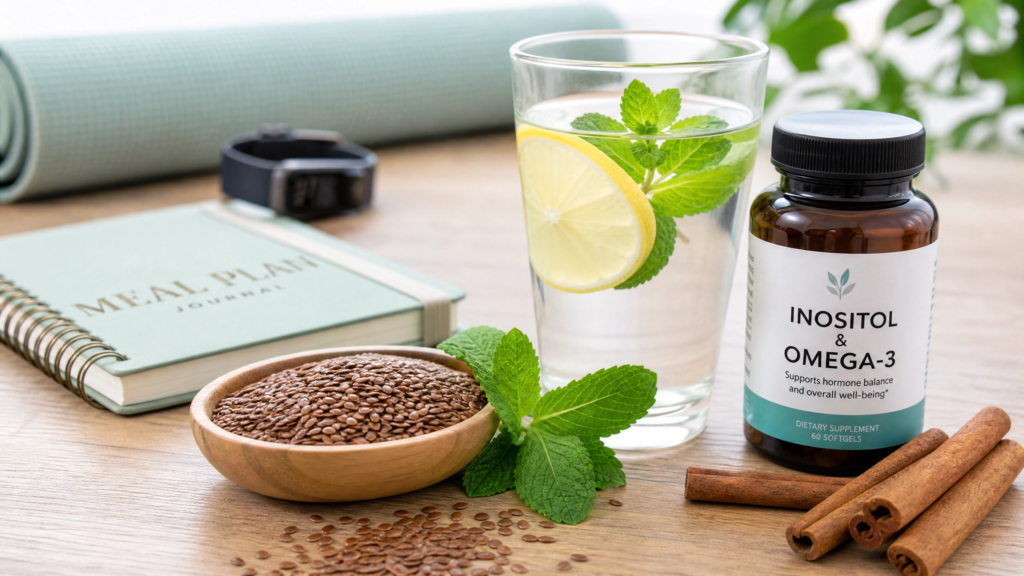
Inositol — particularly the combination of myo-inositol and D-chiro-inositol — is the most clinically validated natural remedy for PCOS. It improves insulin sensitivity, restores ovulation, reduces androgens, and improves egg quality in women with PCOS.
Best for: Insulin resistance PCOS, irregular cycles, anovulation, fertility support, androgen-driven symptoms
What research shows: A 2019 meta-analysis found myo-inositol significantly improved menstrual regularity, reduced testosterone, improved insulin sensitivity, and restored ovulation in women with PCOS. Multiple studies show it as effective as metformin with fewer side effects.
How to use it: While inositol is found in some foods — particularly citrus fruits and legumes — therapeutic doses require supplementation. However several herbs naturally support inositol pathways and insulin sensitivity through similar mechanisms — particularly berberine-containing herbs covered below.
2. Cinnamon — Insulin Sensitivity for PCOS
Cinnamon is the most accessible and well-researched herb for the insulin resistance driving most PCOS cases. Its active compounds improve insulin receptor sensitivity, slow glucose absorption, and reduce the insulin spikes that trigger androgen overproduction.
Best for: Insulin resistance PCOS, blood sugar dysregulation, irregular cycles from insulin-androgen connection, weight-related PCOS symptoms
What research shows: A randomized controlled trial specifically in PCOS patients found cinnamon significantly improved menstrual cyclicity — with women experiencing more regular periods after 6 months of cinnamon supplementation compared to placebo.
How to use it: Add ½-1 teaspoon of Ceylon cinnamon powder to oatmeal, smoothies, or warm drinks daily. Ceylon cinnamon only — not cassia. Make it a non-negotiable daily habit rather than occasional addition. Combine with other insulin-sensitizing herbs for enhanced effect.
Where to get it: Organic Ceylon cinnamon powder from Starwest Botanicals Ceylon cinnamon Powder.
3. Spearmint Tea — Natural Anti-Androgen
Spearmint tea is one of the most exciting natural PCOS remedies discovered in recent years. It has documented anti-androgenic properties — reducing free testosterone levels and improving hormonal balance in women with PCOS and hirsutism.
Best for: Androgen-driven PCOS symptoms — facial hair, acne, scalp hair thinning, high testosterone
What research shows: A 2010 randomized controlled trial found women drinking spearmint tea twice daily for 30 days had significantly reduced free and total testosterone levels compared to placebo. A separate study confirmed anti-androgenic effects with consistent use.
How to use it: Brew spearmint tea — steep 1-2 teaspoons of dried spearmint leaves in hot water for 10 minutes. Drink 2 cups daily consistently — morning and evening. The flavor is pleasant and mild. This is one of the simplest and most accessible PCOS remedies available.
Where to get it: Dried spearmint from Starwest Botanicals Dried spearmint. Grow your own from seed with Seeds_Now — spearmint is easy to grow and spreads abundantly.
4. Berberine — Nature’s Metformin for PCOS
Berberine found in barberry, goldenseal, and Oregon grape is the most powerful natural insulin sensitizer available. Multiple studies have compared it directly to metformin — the standard pharmaceutical treatment for PCOS insulin resistance — with comparable results.
Best for: Insulin resistance PCOS, blood sugar dysregulation, weight-related PCOS, metabolic PCOS, fertility support through insulin normalization
What research shows: A landmark study published in Fertility and Sterility found berberine as effective as metformin for improving insulin sensitivity, reducing androgens, restoring menstrual regularity, and improving pregnancy rates in women with PCOS — without metformin’s gastrointestinal side effects.
How to use it: Brew barberry root bark tea — simmer 1 teaspoon of dried barberry root in water for 20 minutes. Drink 1-2 cups daily before meals. Take with meals to reduce any digestive adjustment. Give berberine 3-6 months of consistent use for full PCOS benefits.
Important: Berberine can interact with diabetes medications and metformin. Consult your healthcare provider before using if you take blood sugar medication.
Where to get it: Dried barberry root from Starwest Botanicals Dried Oregon grape root (barberry).
5. Vitex (Chaste Tree Berry) — Hormonal Regulation
Vitex works on the pituitary gland to normalize the LH to FSH ratio that is frequently disrupted in PCOS. Elevated LH relative to FSH is a hallmark of PCOS that drives androgen overproduction and prevents ovulation. Vitex helps restore this ratio toward balance.
Best for: LH/FSH imbalance PCOS, anovulatory PCOS, irregular cycles, luteal phase deficiency alongside PCOS, fertility support
Important note: Vitex is most beneficial for PCOS with elevated LH. For women with normal or low LH levels vitex may not be the right choice — this is where working with a knowledgeable practitioner helps.
How to use it: Brew vitex berry tea — simmer 1 teaspoon of dried vitex berries in water for 15 minutes. Drink once daily in the morning consistently. Vitex requires 3-6 months of consistent use — it works slowly and sustainably.
Where to get it: Dried vitex berries from Starwest Botanicals Dried vitex berries.
6. Licorice Root — Androgen Reducer
Licorice root contains glycyrrhizin which has documented anti-androgenic properties — it inhibits the enzyme 17-hydroxysteroid dehydrogenase that converts androstenedione to testosterone. This makes it one of the most targeted natural remedies for androgen excess in PCOS.
Best for: High androgen PCOS, testosterone-driven symptoms, acne from PCOS, facial hair from PCOS, androgen-related hair loss
What research shows: A study found licorice root significantly reduced serum testosterone in healthy women. Combined with spironolactone in another study it enhanced the androgen-reducing effects significantly.
How to use it: Brew licorice root tea — simmer ½ teaspoon of dried licorice root in water for 10 minutes. Drink 1 cup daily. Don’t exceed this amount — licorice root raises blood pressure with excessive use.
Important: Avoid with high blood pressure. Use for 4-6 week cycles with breaks.
Where to get it: Dried licorice root from Starwest Botanicals Dried licorice root.
7. Ashwagandha — Stress and Cortisol PCOS Support
Chronic stress is both a trigger and aggravator of PCOS. Elevated cortisol worsens insulin resistance, increases androgen production, and disrupts the hypothalamic-pituitary-ovarian axis that regulates menstrual cycles. Ashwagandha directly addresses this stress-PCOS connection.
Best for: Stress-driven PCOS exacerbation, cortisol-related hormone disruption, anxiety alongside PCOS, adrenal PCOS pattern, thyroid-PCOS connection
How to use it: Stir 1 teaspoon of ashwagandha root powder into warm milk with honey before bed. Or add to morning smoothies. Consistent daily use for 8-12 weeks produces the most significant hormonal benefits.
Where to get it: Ashwagandha root powder from Starwest Botanicals Ashwagandha root powder.
8. Turmeric — Anti-Inflammatory PCOS Support
Chronic low-grade inflammation drives both insulin resistance and androgen overproduction in PCOS — creating a self-reinforcing inflammatory-hormonal cycle. Turmeric’s powerful anti-inflammatory effects break this cycle and have been shown to directly improve PCOS markers.
Best for: Inflammatory PCOS pattern, insulin resistance with inflammation, PCOS with joint pain or skin inflammation, general PCOS metabolic support
What research shows: A clinical trial found curcumin supplementation significantly reduced insulin resistance markers and improved hormonal parameters in women with PCOS compared to placebo.
How to use it: Golden milk twice daily — 1 teaspoon turmeric powder in warm milk with black pepper and honey. Black pepper is essential — it increases curcumin absorption by 2,000%.
Where to get it: Organic turmeric root powder from Starwest Botanicals turmeric root powder.
Your PCOS Herbal Protocol
Daily foundation — address insulin resistance first:
| Time | Herb | Purpose |
|---|---|---|
| Morning | Spearmint tea | Anti-androgen support |
| With breakfast | Ceylon cinnamon | Blood sugar stability |
| Before lunch | Barberry/berberine tea | Insulin sensitizing |
| Throughout day | Ashwagandha in food | Cortisol and stress |
| Evening | Spearmint tea | Continue anti-androgen |
| Before bed | Vitex tincture or tea | Hormonal regulation |
| Daily in food | Turmeric | Anti-inflammatory |
Add for androgen-driven symptoms:
- Licorice root tea — 1 cup daily for 4-6 weeks
- Nettle root tea — DHT blocking support
Lifestyle Foundations for PCOS
Herbs work significantly better alongside these PCOS-specific lifestyle interventions:
Low glycemic eating — the single most impactful lifestyle intervention for insulin resistance PCOS. Reduce refined carbohydrates, increase protein and healthy fats, eat fiber before carbohydrates at meals.
Inositol-rich foods — citrus fruits, legumes, whole grains, and nuts all contain inositol that supports insulin signaling.
Regular movement — particularly resistance training which improves insulin sensitivity dramatically. Even 30 minutes of walking daily produces measurable improvements in PCOS markers.
Seed cycling — eating specific seeds in the first and second half of your cycle to support estrogen and progesterone balance. Flaxseeds and pumpkin seeds in the follicular phase, sesame and sunflower seeds in the luteal phase. Grow your own seeds with Seeds_Now.
Stress management — cortisol management is non-negotiable for PCOS. Daily meditation, yoga, or nature time alongside adaptogenic herbs.
How Long Before You See Results
Month 1: Blood sugar stabilizes, energy improves, some reduction in acne with spearmint tea.
Month 2-3: Androgen levels begin declining. Menstrual cycles may start becoming more regular. Hair and skin improvements becoming visible.
Month 3-6: Vitex and berberine reach full effectiveness. Cycles regularizing for many women. Significant hormonal improvement measurable in labs.
Important: Track your cycles and symptoms monthly. Take before photos of skin and hair. Get labs done at baseline and recheck at 3 months to measure progress objectively.
Related Posts You’ll Love
- Best Herbs for Women’s Hormonal Balance — comprehensive hormonal support beyond PCOS
- Natural Remedies for Blood Sugar Balance — insulin resistance is the primary PCOS driver
- Best Herbs for PMS Relief — PMS and PCOS often coexist
- Natural Remedies for Menopause Symptoms — hormonal transitions share herbal approaches
- Best Adaptogenic Herbs for Stress Resilience — stress management is critical for PCOS
- The Herbal Academy Online Herbalism Courses — take your herbal knowledge further with beginner through advanced online courses taught by certified herbalists
Get the Free Herbal Wellness Checklist
Click here to download your free Root Freedom Herbal Wellness Checklist →
Disclaimer: This post contains affiliate links. Root Freedom may earn a commission when you purchase through our links at no extra cost to you. This content is for informational purposes only and is not intended as medical advice. PCOS requires proper medical diagnosis and management. Always work with your healthcare provider.